A surge in artificial intelligence workloads is forcing data centre operators worldwide to rethink the fundamentals of infrastructure design, particularly in areas once considered routine: fire safety and cooling systems. The shift reflects a deeper transformation in the digital economy, where the hardware demands of AI are stretching the limits of existing facilities.
According to “AI workloads push data centres to upgrade fire and cooling systems,” published by The Economic Times, operators are increasingly confronting risks tied to higher power densities and heat generation inside their facilities. AI servers, especially those built around high-performance GPUs, consume significantly more energy than traditional computing systems. This intensifies thermal output, raising the likelihood of equipment overheating and, in extreme cases, fire hazards.
The result is a growing push toward more advanced and specialized cooling methods. Conventional air-based cooling systems are proving insufficient for many AI-heavy deployments, prompting a shift to liquid cooling technologies. These systems, while more efficient at managing heat, introduce new engineering complexities and safety considerations. Operators must now account for fluid management, leak detection, and compatibility with densely packed electronic components.
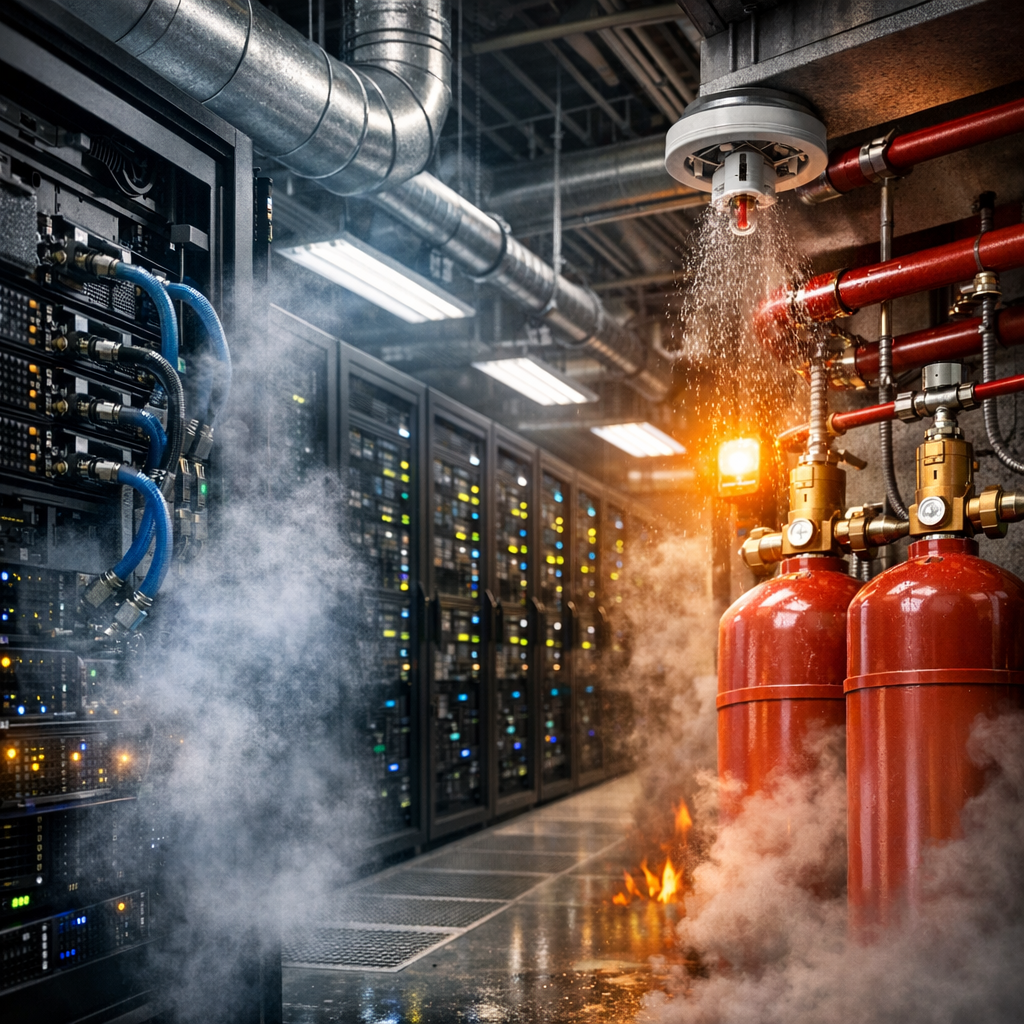
Fire safety is undergoing a parallel evolution. Traditional fire suppression methods, designed for lower-density environments, may not respond effectively to the rapid escalation of heat in AI-driven setups. The report highlights how companies are investing in upgraded fire detection and suppression systems aligned with standards from organizations like the National Fire Protection Association (NFPA), enabling faster and more precise responses that minimize damage to critical equipment while ensuring personnel safety.
Industry experts point out that these infrastructure upgrades are not optional refinements but essential adaptations. The rapid adoption of generative AI, machine learning, and large-scale data processing has created workloads that run hotter and more continuously than previous generations of computing. According to insights from the ASHRAE guidelines, managing thermal loads in modern data centres has become increasingly complex. As a result, downtime risks are rising, and the cost of failure is becoming more severe.
This transformation also carries financial implications. Retrofitting existing data centres with advanced cooling and fire safety systems can require substantial capital expenditure. New builds, meanwhile, are being designed from the ground up to accommodate higher thermal loads, often incorporating modular designs and more resilient materials. Operators must balance these costs against the growing demand for AI processing capacity, which shows little sign of slowing, as also highlighted in analyses by the International Energy Agency.
Beyond individual facilities, the trend signals a broader recalibration of digital infrastructure. Data centres, once optimized primarily for efficiency and uptime, are now being engineered with a sharper focus on resilience under extreme operational conditions. Governments and regulators are also beginning to pay closer attention, particularly as data centres become more energy-intensive and integral to national digital economies.
The developments underscore a key reality: the rise of AI is not just a software phenomenon. It is reshaping the physical backbone of the internet, forcing a reevaluation of how data centres are built, maintained, and safeguarded in an era of unprecedented computational demand.