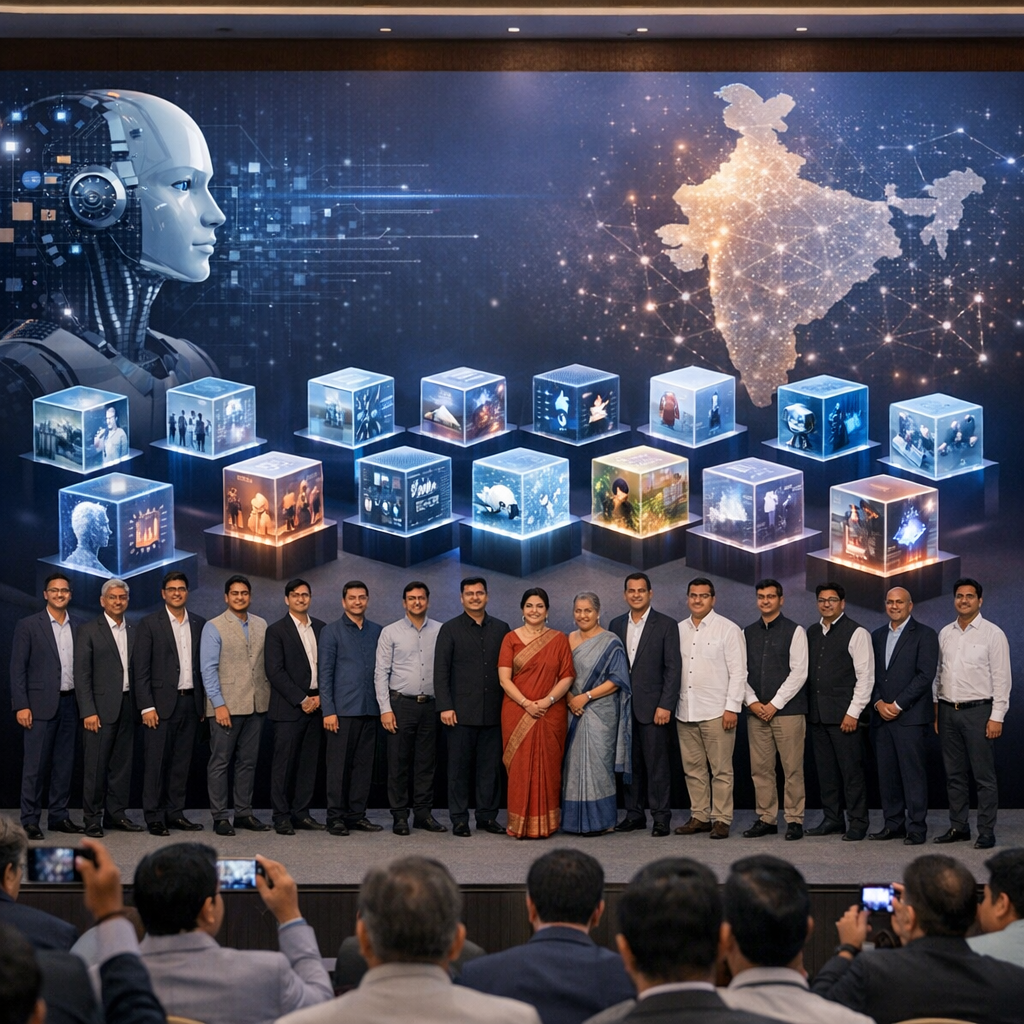
India has taken a significant step in advancing its artificial intelligence ecosystem, with 20 foundational AI models developed under the government-backed IndiaAI Mission, according to senior officials. As reported in the Economic Times article titled “20 foundational AI models created under IndiaAI Mission, 5 released: MeitY secretary,” the initiative reflects a broader push by New Delhi to build indigenous capabilities in a domain currently dominated by global technology firms (McKinsey State of AI report).
Krishnan Raghu, Secretary of the Ministry of Electronics and Information Technology (MeitY), stated that while 20 foundational models have been created so far, five have already been formally released (original report). These models span multiple use cases and are designed to address India-specific challenges, including language diversity, public service delivery, and sectoral needs such as agriculture and healthcare. Officials emphasized that the models are not merely experimental but are intended to be deployed in real-world applications through collaborations with startups, academia, and industry.
The IndiaAI Mission, which has received substantial financial backing from the central government, aims to establish a comprehensive ecosystem covering compute infrastructure, datasets, research, and skill development. A key focus is on developing models trained on Indian datasets, particularly those reflecting the country’s linguistic and cultural diversity. This is seen as critical for ensuring that AI systems are effective and inclusive in the Indian context, where global models often underperform in regional languages or local scenarios (Nature Machine Intelligence on language bias in AI).
The release of these models also underscores the government’s strategic ambition to reduce dependence on foreign AI technologies. By fostering domestic innovation, policymakers hope to position India as both a consumer and producer of advanced AI systems. Industry observers note that the success of this approach will depend on sustained investment, access to high-quality data, and the ability to scale computational resources competitively with international peers (OECD AI policy overview).
At the same time, questions remain about the long-term viability and global competitiveness of these models. While early releases demonstrate progress, experts caution that building foundational models requires continuous iteration, significant compute power, and a robust developer ecosystem. Without these, India risks lagging behind leading AI hubs despite early momentum (Stanford AI Index Report).
Still, the development and release of these 20 foundational models signal a clear policy direction. As highlighted by the Economic Times, the IndiaAI Mission is moving beyond planning into execution, marking an inflection point in the country’s efforts to carve out a meaningful position in the rapidly evolving global AI landscape.