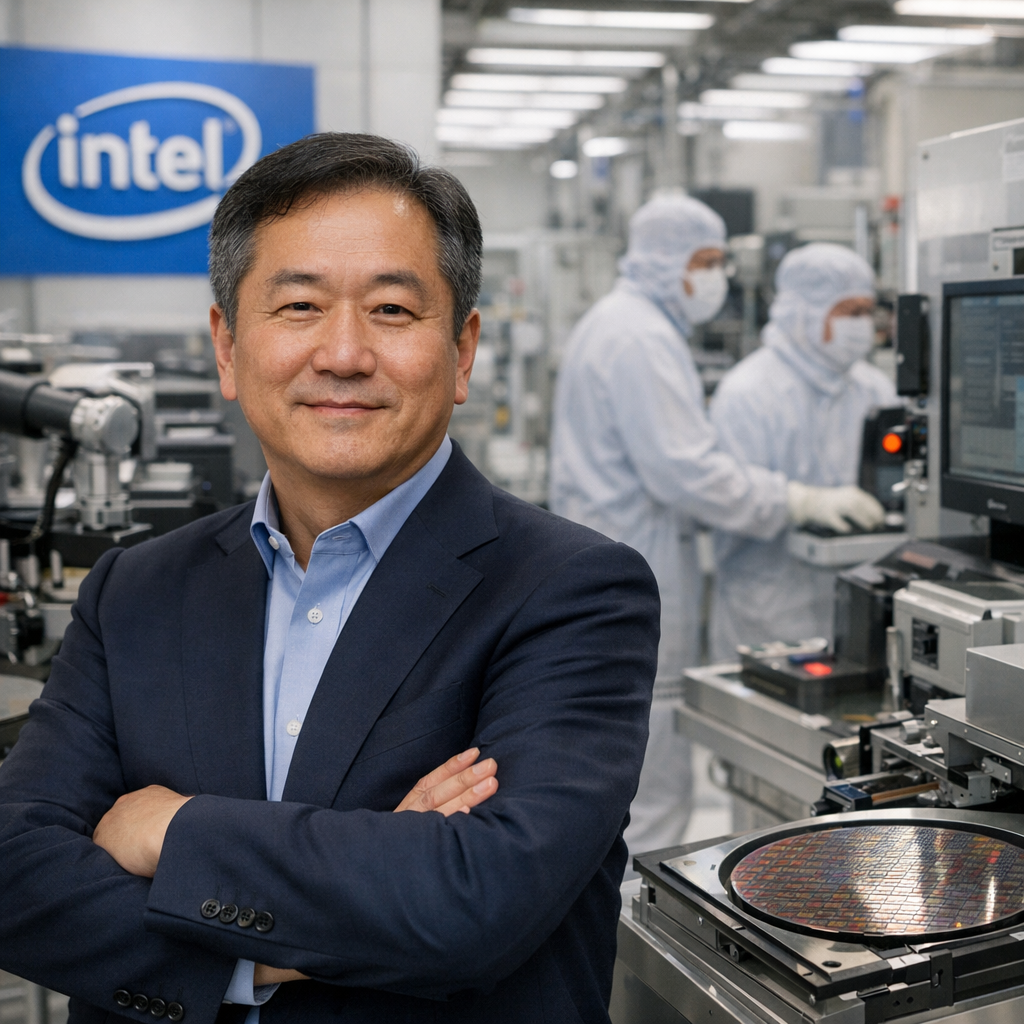
Intel has appointed former SK Hynix chief executive Lee Seok-hee to lead its advanced packaging operations, a move that underscores the U.S. chipmaker’s intensifying focus on next-generation semiconductor manufacturing technologies as it attempts to regain competitiveness in the global market.
According to the article “Intel hires former SK Hynix chief Lee Seok-hee to lead advanced packaging”, published by The Economic Times, Lee will oversee Intel’s expanding efforts in advanced packaging, a critical segment of semiconductor production that enables more powerful and efficient chips by integrating multiple components into a single package. His appointment reflects Intel’s broader strategy to strengthen capabilities beyond traditional chip fabrication as it competes with rivals such as TSMC and Samsung.
Lee brings decades of experience in memory manufacturing and leadership, having served as CEO of SK Hynix, one of the world’s largest memory chipmakers. At SK Hynix, he played a central role in advancing DRAM and NAND technologies and navigating supply chain and market challenges. His expertise is expected to reinforce Intel’s ambitions to scale up its packaging technologies, including 3D packaging and heterogeneous integration—areas increasingly viewed as essential for meeting the performance and energy-efficiency demands of artificial intelligence and high-performance computing.
Intel has been investing heavily in advanced packaging as part of its broader turnaround strategy under CEO Pat Gelsinger. The company has committed billions of dollars to expand manufacturing capacity in the United States and Europe while also positioning itself as a contract manufacturer for other chip designers. Advanced packaging is seen as a key differentiator in that strategy, allowing Intel to offer integrated solutions that combine chips produced in different process nodes or even by different manufacturers.
Industry analysts note that as transistor scaling slows under Moore’s Law, packaging innovation has become a critical lever for improving chip performance. Technologies such as chiplets and 3D stacking allow semiconductor firms to bypass some of the physical limitations of shrinking transistors while maintaining gains in speed and efficiency.
Lee’s appointment also reflects the increasingly global and competitive nature of the semiconductor talent market. Companies are seeking leaders with deep technical expertise and international experience to navigate a rapidly evolving ecosystem shaped by geopolitical tensions, supply chain realignments, and surging demand for AI-driven computing infrastructure.
Intel’s push into advanced packaging comes at a time when the company is working to regain investor confidence after years of manufacturing delays and market share losses. By bringing in a seasoned industry executive with a proven track record in memory and fabrication technologies, Intel is signaling its intent to accelerate innovation and execution in one of the most strategically important areas of chip development.
The move highlights how semiconductor companies are broadening their focus beyond traditional fabrication processes, with advanced packaging emerging as a central battleground in the race to deliver the next generation of computing power.