In an era of proliferating digital content and growing concerns over data privacy, network-attached storage, or NAS, has reemerged as a practical solution for households and small businesses seeking greater control over their data. A recent guide published by Wired, titled “The Best NAS Devices,” surveys the evolving market, highlighting how these compact servers are becoming more accessible while offering increasingly sophisticated features.
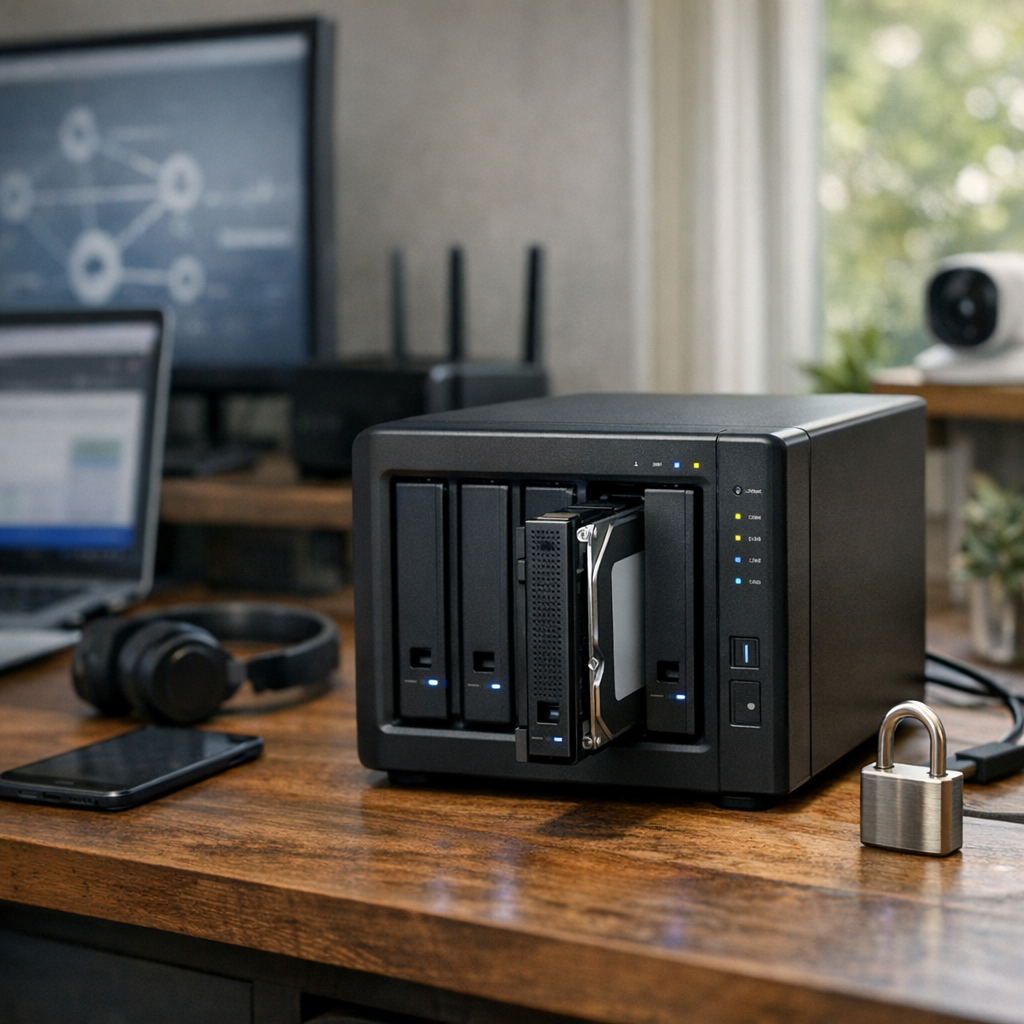
The Wired article underscores a shift in how consumers approach storage. Rather than relying solely on external hard drives or cloud services run by major technology companies, NAS systems allow users to centralize files within their own networks. This approach can reduce recurring subscription costs and provide a level of privacy that cloud-based platforms cannot always guarantee. At the same time, the publication notes that modern NAS devices are not simply passive storage units; many now function as multimedia servers, backup hubs, and even lightweight application platforms.
According to Wired’s assessment, ease of use has improved substantially in recent years. Historically associated with complex setup processes and niche appeal, contemporary NAS devices increasingly feature user-friendly interfaces and streamlined installation. Companies such as Synology and QNAP, both highlighted in the article, have focused on software ecosystems that resemble desktop operating systems, enabling users to manage files, configure backups, and run applications through intuitive dashboards.
Performance and scalability remain key differentiators within the category. Wired points out that entry-level models are suitable for basic tasks like file sharing and automated backups, while more advanced systems offer faster processors, greater memory capacity, and support for multiple drive bays. These higher-end units can handle demanding workloads such as high-resolution video streaming, virtualization, and collaborative workflows in small office environments.
Another emphasis in the Wired guide is redundancy and data protection. NAS systems commonly support RAID configurations, allowing data to be mirrored or distributed across multiple drives. This feature can protect against hardware failure, though it is not a substitute for comprehensive backup strategies. The publication stresses that users should still maintain off-site or cloud backups to guard against data loss from theft, fire, or other catastrophic events.
Security considerations also play a central role. As NAS devices are connected to home or office networks—and, in some cases, accessible remotely—they can become targets for cyberattacks. Wired advises users to keep firmware updated, employ strong authentication methods, and limit unnecessary exposure to the public internet. Manufacturers have responded by integrating encryption tools and security monitoring features, but user vigilance remains essential.
Wired’s overview reflects a broader trend toward decentralized data management. As digital storage needs continue to expand, NAS devices occupy a middle ground between simple external drives and fully cloud-based ecosystems. For consumers willing to invest time in setup and maintenance, they offer a flexible, potentially cost-effective alternative with added control over data.
The publication ultimately portrays NAS not as a niche product for enthusiasts, but as an increasingly mainstream option shaped by improvements in usability, performance, and security. As data continues to accumulate across personal and professional contexts, the appeal of keeping that information closer to home—under one’s own management—appears likely to grow.