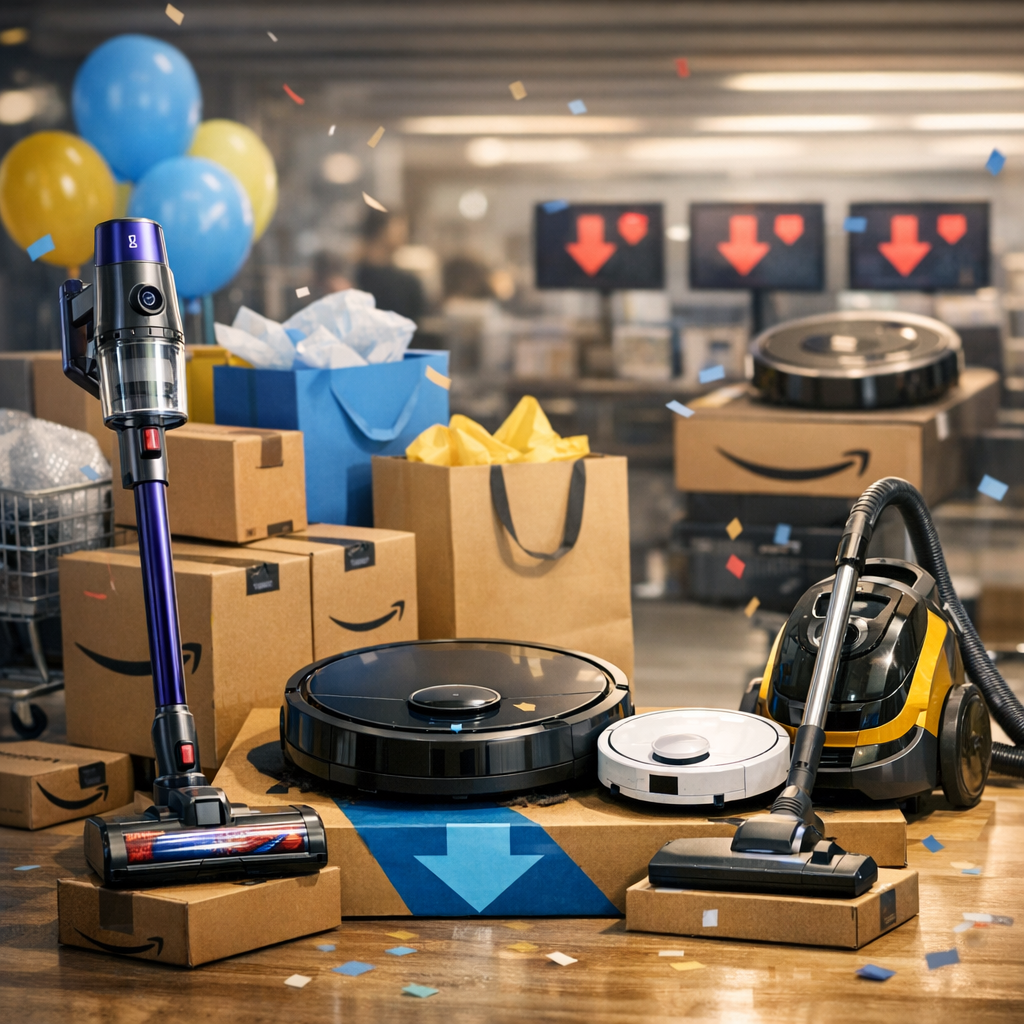
As major retailers compete for midyear consumer spending, Amazon’s annual Prime Day has once again become a focal point for aggressive discounting across home appliances, particularly in the increasingly crowded robot and cordless vacuum market. A recent Wired article, “The Best Prime Day Vacuum Deals (June 2026),” highlights how manufacturers are using the event not only to move inventory but to position newer, higher-end cleaning technologies as accessible to mainstream buyers.
According to Wired, this year’s promotions feature a broad mix of established brands such as Dyson, Shark, and iRobot alongside newer entrants offering lower-cost alternatives with increasingly comparable features. Discounts span both traditional upright vacuums and the fast-growing category of robot vacuums, many of which now include advanced mapping, object detection, and self-emptying capabilities once considered premium add-ons.
The article emphasizes that while list-price reductions can appear steep, shoppers should approach deals with caution. Several of the highlighted products are frequently discounted throughout the year, making it difficult to determine whether Prime Day pricing represents a meaningful bargain or routine markdown. Wired notes that tracking historical pricing through tools like CamelCamelCamel remains one of the most reliable ways to assess true value, particularly for high-ticket items like Dyson cordless models, which often fluctuate in price.
Robot vacuums are a central focus of this year’s sales. Wired reports that models equipped with LiDAR navigation, multi-floor mapping, and hybrid vacuum-mop functions are seeing some of the deepest discounts. These devices, once priced well above $1,000, are increasingly available at midrange price points during promotional periods. The shift reflects both intensifying competition and a maturing product category, where incremental software improvements now play as significant a role as hardware advancements.
Cordless stick vacuums also remain a major draw, with brands emphasizing battery life, suction power, and lightweight design. Wired highlights several models that balance performance with portability, noting that consumer demand continues to favor convenience over the raw power traditionally associated with corded machines. At the same time, the article underscores ongoing trade-offs, particularly in battery longevity and dustbin capacity, which can limit suitability for larger homes.
Another theme explored in the Wired piece is the growing segmentation of the vacuum market. Entry-level robot vacuums are now routinely priced below $200 during sales events, while premium models continue to push into higher price brackets with features like AI-driven obstacle avoidance and automated maintenance systems. This widening range allows retailers to target a broader audience during Prime Day, from first-time buyers to tech enthusiasts seeking incremental upgrades.
Wired also points out that accessories and replacement parts—such as filters, brushes, and batteries—are frequently discounted alongside the devices themselves. For existing owners, these deals can offer practical value without the need for a full replacement purchase, reflecting a more maintenance-oriented approach to consumer spending amid broader economic uncertainty.
While Prime Day remains a marketing-driven event, the Wired analysis suggests it is also a useful snapshot of where the home cleaning technology market is heading. Increased automation, incremental improvements in artificial intelligence, and competitive pricing pressure are reshaping consumer expectations. As a result, what was once considered a luxury appliance is steadily becoming a standard household tool.
The article ultimately frames Prime Day vacuum deals as less about urgency and more about informed timing. For consumers willing to compare prices and assess actual needs, the event can offer legitimate savings. For others, the proliferation of discounts may simply reinforce how normalized these promotions have become in an increasingly competitive retail environment.