Efforts to reshape Europe’s industrial landscape are gaining momentum through a new wave of smart remanufacturing initiatives, according to reporting by Innovation News Network in its article “REWIRE advances smart remanufacturing across Europe.” The project, which brings together industry leaders, research institutions, and policymakers, reflects a broader push within the European Union to reduce waste, strengthen supply chain resilience, and accelerate the transition to a circular economy.
At its core, the REWIRE initiative focuses on transforming how products are designed, used, and reprocessed at the end of their lifecycle. Rather than relying on traditional recycling alone, remanufacturing aims to restore used components and systems to like-new condition, preserving embedded value and significantly lowering material and energy consumption. This approach is increasingly viewed as a strategic tool for addressing both environmental targets and industrial competitiveness, aligning with frameworks such as the European Green Deal.
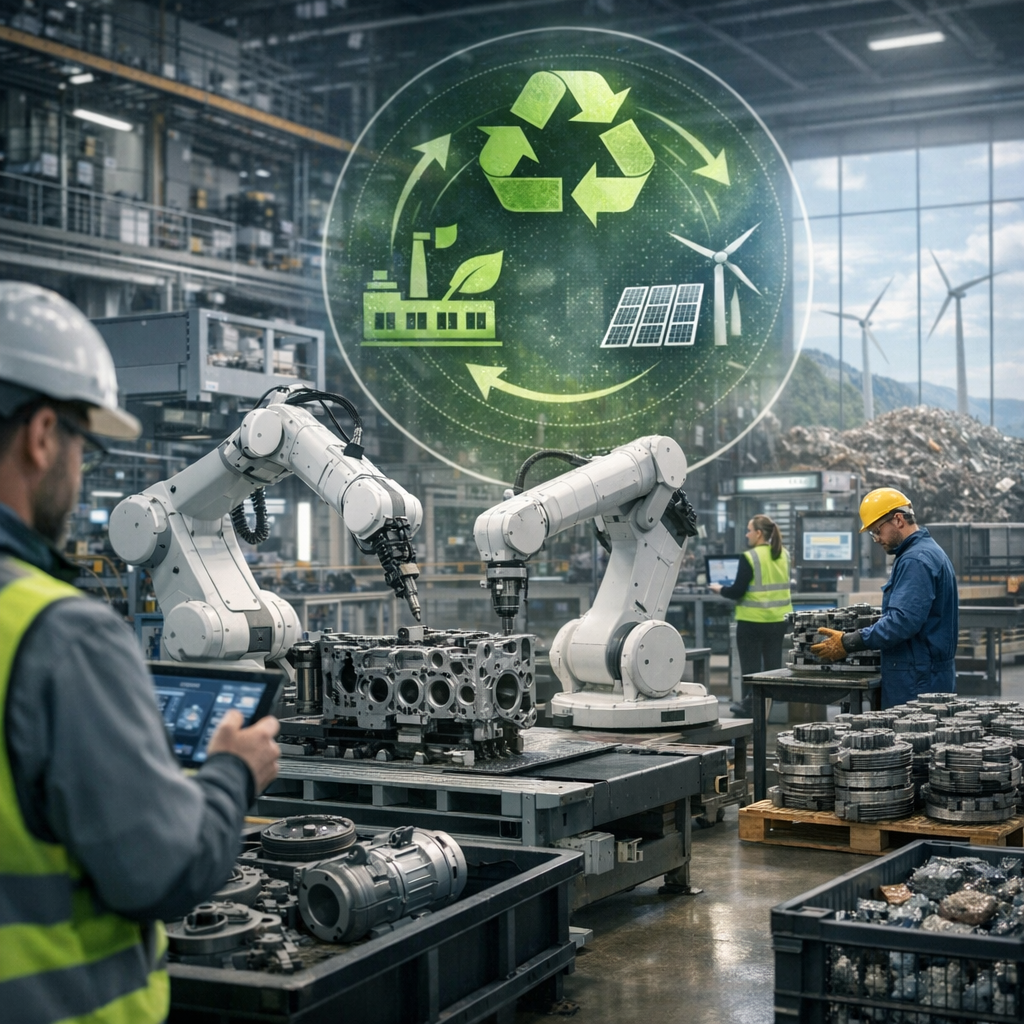
The project operates across multiple sectors, including automotive, electronics, and heavy machinery, where the potential for recovering high-value components is especially significant. By integrating digital technologies such as artificial intelligence, advanced robotics, and data analytics, REWIRE seeks to modernize remanufacturing processes and make them scalable. These tools enable better sorting, diagnostics, and quality control, allowing manufacturers to predict component lifespans and optimize recovery processes with greater precision.
One of the defining features of the initiative is its emphasis on collaboration. Participants from different parts of the value chain are working together to develop standardized practices, share data, and overcome persistent barriers such as inconsistent product design and limited interoperability. This cross-sector coordination is essential for building a viable remanufacturing ecosystem, particularly in a fragmented industrial landscape, as also highlighted by organizations like the Ellen MacArthur Foundation.
Workforce development also plays a central role. As the technologies underpinning remanufacturing evolve, so too must the skills required to operate and manage them. REWIRE includes training and reskilling programs aimed at preparing workers for roles that combine traditional engineering knowledge with digital expertise. This reflects a growing recognition that Europe’s green transition depends not only on innovation, but also on the availability of a suitably trained labor force, an issue emphasized by the World Economic Forum’s Future of Jobs Report.
Policy alignment is another key dimension. The initiative supports broader EU objectives, including the European Green Deal and circular economy action plans, which call for more sustainable production and consumption patterns. By demonstrating practical applications of remanufacturing at scale, REWIRE aims to inform regulatory frameworks and encourage wider adoption across industries.
While challenges remain, including economic viability in certain sectors and the need for clearer regulatory incentives, the project underscores a shift in how industrial systems are being reimagined. As highlighted in Innovation News Network, the advancement of smart remanufacturing represents a convergence of environmental necessity and technological capability, positioning Europe at the forefront of efforts to decouple growth from resource consumption.