A new study suggests that artificial intelligence may rival trained human specialists in assessing certain aspects of young children’s behavior, raising both optimism about expanded access to developmental screening and concern about how such tools should be used in practice.
In an article titled “AI matches human expert in evaluating child behavior,” published by Tech Xplore, researchers describe how a machine learning system trained on video observations demonstrated a level of accuracy comparable to that of experienced clinicians when analyzing children’s behavioral cues. The findings point to the possibility that AI could help address shortages of qualified professionals, particularly in regions where access to developmental assessments remains limited.
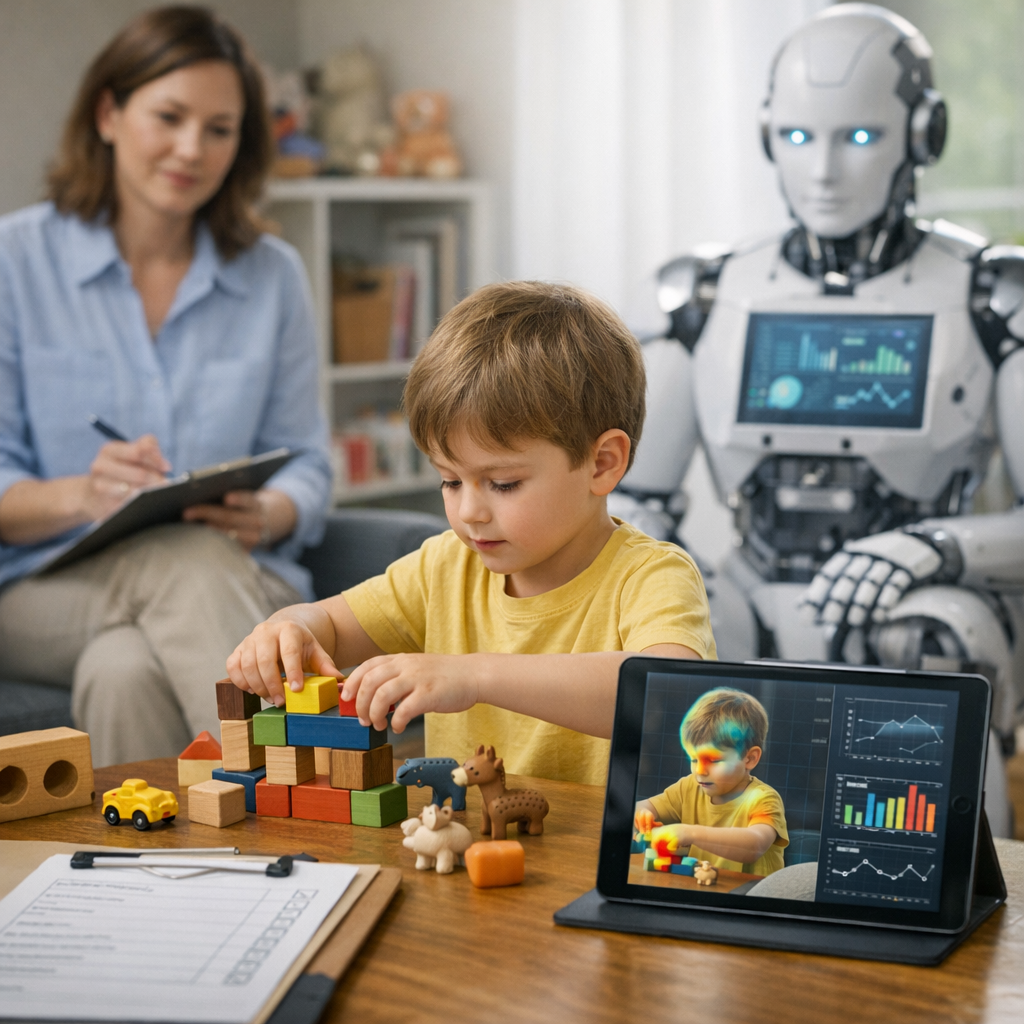
The research focused on structured observations of children engaged in typical activities, such as play or social interaction. By processing visual and behavioral data, the AI system learned to identify patterns associated with developmental markers that specialists commonly assess, including attention, responsiveness, and social engagement. When compared against evaluations conducted by human experts, the AI’s judgments aligned closely in many cases.
Researchers emphasized that the tool is not intended to replace clinicians but rather to support them. One of the main advantages highlighted is the ability to scale assessments. Human-led evaluations are often time-intensive and require highly trained professionals, creating bottlenecks in healthcare and educational systems. An AI-assisted approach could allow for earlier screening and intervention by flagging potential concerns before they become more pronounced, similar to recommendations highlighted by the CDC on developmental screening.
However, the study also underscores important limitations. While the AI performed well in recognizing patterns it had been trained on, experts caution that real-world clinical environments are more complex. Behavioral interpretation often depends on nuanced context, cultural factors, and subtle interpersonal dynamics that may not be fully captured by current models. There is also the risk of overreliance on automated systems, particularly if they are deployed without appropriate oversight, an issue frequently discussed in research on bias in artificial intelligence.
Ethical considerations remain central to the discussion. Questions about data privacy, consent, and potential bias in training datasets must be addressed before such tools can be widely integrated into pediatric care or educational settings. Ensuring that AI systems are trained on diverse populations is especially critical to prevent disparities in assessment outcomes, a concern also raised by organizations like the World Health Organization.
Despite these challenges, the research contributes to a growing body of evidence that AI can play a meaningful role in augmenting human expertise in sensitive domains such as child development. As described in the Tech Xplore report, the authors argue that careful integration of AI tools could enhance early detection efforts while preserving the essential role of trained professionals in interpreting results and guiding interventions, consistent with guidance from the American Academy of Pediatrics.
The findings reflect a broader trend in which AI technologies are increasingly being tested in domains that require judgment traditionally reserved for humans. Whether these systems ultimately become standard tools in developmental assessment will depend not only on their technical performance but also on how effectively their limitations are addressed and how responsibly they are implemented.