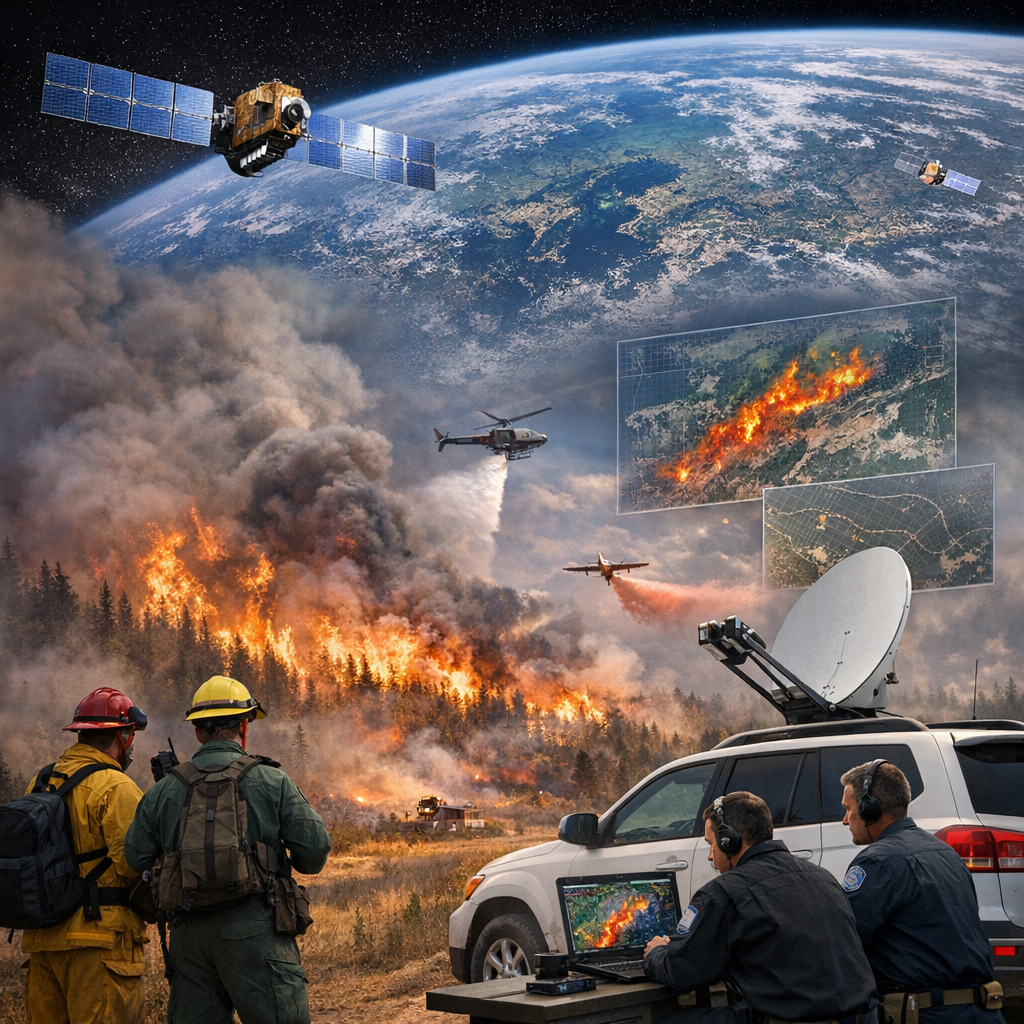
The European Space Agency has launched a new initiative aimed at strengthening wildfire preparedness and response capabilities, signaling a growing reliance on space-based technologies to confront increasingly severe fire seasons across Europe and beyond.
As reported in the article “ESA opens wildfire preparedness call” published by Innovation News Network, the agency is inviting proposals that leverage satellite data and related technologies to improve how wildfires are anticipated, monitored, and managed. The call forms part of ESA’s broader effort to support public authorities, emergency responders, and environmental agencies with more precise and timely information derived from Earth observation systems.
The initiative comes at a moment when wildfires are becoming more frequent and intense, driven by climate change, prolonged droughts, and land-use pressures. In recent years, Southern Europe has experienced particularly destructive fire seasons, underscoring gaps in early warning systems and real-time situational awareness. ESA’s move reflects a recognition that traditional firefighting approaches must be complemented by advanced data analytics and predictive tools.
At the core of the call is the use of satellite-derived data to enhance preparedness before fires ignite, as well as to support decision-making during active incidents. This includes developing services that can identify high-risk zones, monitor vegetation conditions, and assess environmental factors such as soil moisture and temperature patterns. By integrating these insights, authorities can better allocate resources and implement preventive measures.
Beyond prevention, the initiative also emphasizes improving response coordination. Satellite imagery and near-real-time data can help map fire perimeters, track spread dynamics, and assess damage, enabling emergency services to act more efficiently and safely. The call encourages solutions that translate complex datasets into operational tools accessible to non-specialist users in the field.
ESA’s push aligns with a broader European and global trend toward harnessing space infrastructure for climate resilience. Earth observation satellites, including those within the Copernicus programme, already provide a wealth of environmental data. However, translating that data into actionable intelligence remains a challenge that this call aims to address through innovation and collaboration with industry, research institutions, and public agencies.
The initiative also highlights the importance of cross-border cooperation. Wildfires do not respect national boundaries, and coordinated responses are essential, particularly in regions such as the Mediterranean where multiple countries face similar risks. By fostering interoperable tools and shared data frameworks, ESA aims to support a more unified approach to wildfire management, complementing efforts such as the Copernicus Emergency Management Service.
While the call represents a technical and scientific undertaking, it also carries broader societal implications. Improved wildfire preparedness can reduce loss of life, limit economic damage, and protect ecosystems that play a critical role in carbon storage and biodiversity, as highlighted by organizations like the United Nations Environment Programme. As climate-related hazards intensify, investments in predictive and preventive capabilities are increasingly seen as essential rather than optional.
The ESA initiative, as highlighted by Innovation News Network, reflects both urgency and opportunity: urgency in addressing a growing environmental threat, and opportunity in leveraging space-based innovation to build more resilient systems. Whether the effort will translate into widely adopted tools and measurable improvements on the ground will depend on the quality of proposals received and the effectiveness of collaboration between stakeholders.
What is clear is that the intersection of space technology and disaster management is becoming a central arena in the fight against climate-driven risks, with wildfire preparedness emerging as a critical test case.