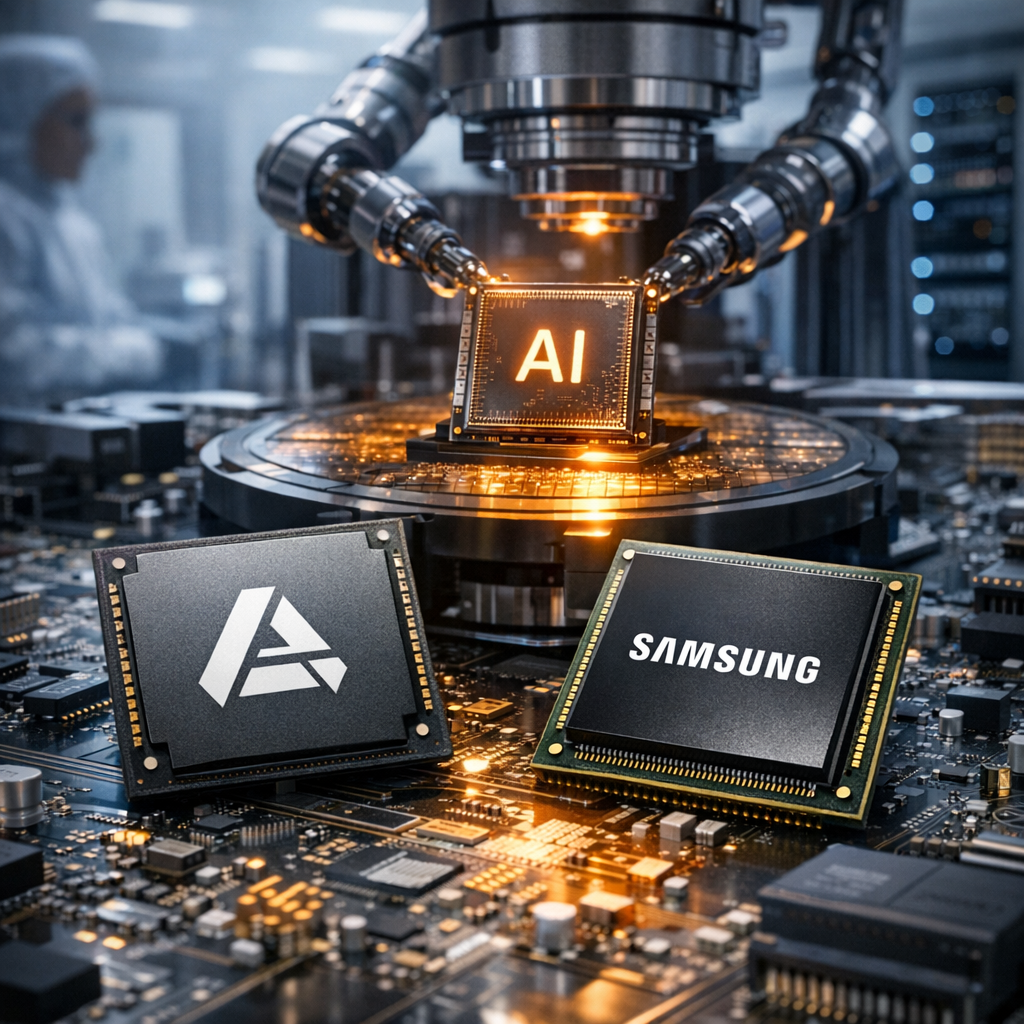
Anthropic is exploring a partnership with Samsung Electronics to develop a custom artificial intelligence chip, according to a report published by The Economic Times titled “Anthropic in talks with Samsung to develop custom AI chip.” The discussions, which remain at an early stage, reflect a broader push among leading AI companies to reduce reliance on third-party semiconductor suppliers and gain greater control over the performance and cost of their systems.
The report indicates that Anthropic, the San Francisco–based AI firm known for its Claude models, has been evaluating options for designing specialized hardware tailored to its computational needs. As demand for generative AI services continues to surge, companies at the forefront of the sector have been forced to confront the limits of existing supply chains, which are heavily dependent on a small number of chipmakers.
Samsung, one of the world’s largest semiconductor manufacturers, would bring advanced fabrication capabilities to any such collaboration. A partnership could allow Anthropic to optimize chips specifically for training and running large language models, potentially improving efficiency and reducing long-term operating expenses. For Samsung, the arrangement would represent an opportunity to strengthen its position in the competitive AI chip market, where it faces strong competition from firms such as Nvidia and TSMC.
The Economic Times report suggests that no final agreement has been reached and that the contours of a potential deal remain under discussion. Industry observers note that designing a custom chip is a complex, capital-intensive endeavor that typically requires years of development and substantial upfront investment. Still, the strategic rationale has become increasingly compelling as AI workloads grow more demanding.
Anthropic’s interest in custom silicon mirrors similar moves by other technology companies seeking to build in-house or semi-custom chips. These efforts aim to address bottlenecks associated with accessing high-performance GPUs, which have become both scarce and expensive amid the rapid expansion of AI applications.
If the talks progress, a partnership between Anthropic and Samsung could signal a shift in how emerging AI firms approach infrastructure, prioritizing deeper integration between software and hardware. While it remains uncertain whether the discussions will lead to a formal collaboration, the prospect underscores the intensifying competition to develop the next generation of AI computing systems.