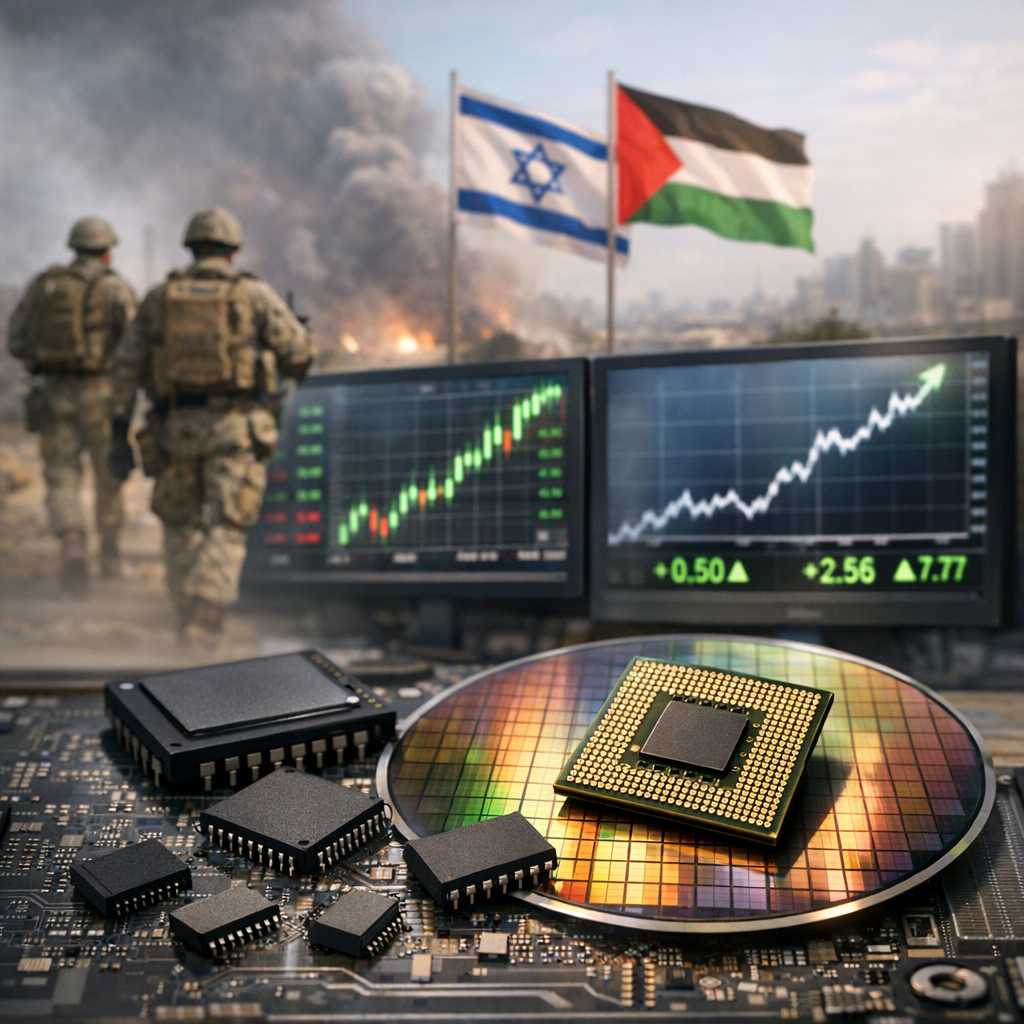
A rally in chip-related shares gathered momentum after a shift in the regional security outlook reduced near-term risk for markets, underscoring how quickly semiconductor valuations can respond to changes in geopolitical temperature as much as to earnings and technology cycles.
Globes, in an article titled “Ceasefire boosts semiconductor stocks,” reported that a ceasefire and the resulting easing of investor anxiety helped lift semiconductor counters, as traders rotated back into risk assets that had been marked down amid heightened uncertainty. The move reflected a familiar pattern in the sector: chipmakers and their suppliers, often priced for growth and sensitive to swings in global demand expectations, tend to be among the first to rise when investors judge that downside scenarios are less likely to materialize.
Market participants cited improving sentiment rather than new company-specific disclosures as a key driver of the upswing. In periods of elevated tension, investors typically demand a higher risk premium, particularly for industries with complex, cross-border supply chains. Semiconductors sit at the center of that web, reliant on globally distributed design, manufacturing, equipment and materials. Any perceived reduction in the probability of disruption can compress risk premia, raising share prices even before fundamentals change.
The gains also highlighted the sector’s positioning going into the move. Semiconductor stocks have been buoyed in recent quarters by optimism around artificial intelligence spending, high-performance computing demand and expectations of a broader recovery in electronics. At the same time, valuations in many chip names have left little margin for surprises, increasing day-to-day sensitivity to macro headlines. A stabilizing geopolitical signal, even if tentative, can therefore trigger an outsized reaction as short-term traders cover hedges and longer-term investors add exposure.
Analysts cautioned that the durability of any rally will depend on whether calmer conditions persist and whether underlying demand trends remain intact. While a ceasefire can reduce immediate tail risks, the semiconductor industry still faces structural uncertainties including export controls, uneven consumer electronics demand, and the pace at which AI-related capital expenditure translates into sustained revenue growth across the supply chain.
Still, the episode served as a reminder that the chip sector’s market performance is not dictated solely by product roadmaps and quarterly guidance. As Globes noted in “Ceasefire boosts semiconductor stocks,” sentiment shifts tied to security and diplomacy can rapidly reprice an industry that, despite its technical complexity, often trades like a barometer for global confidence.