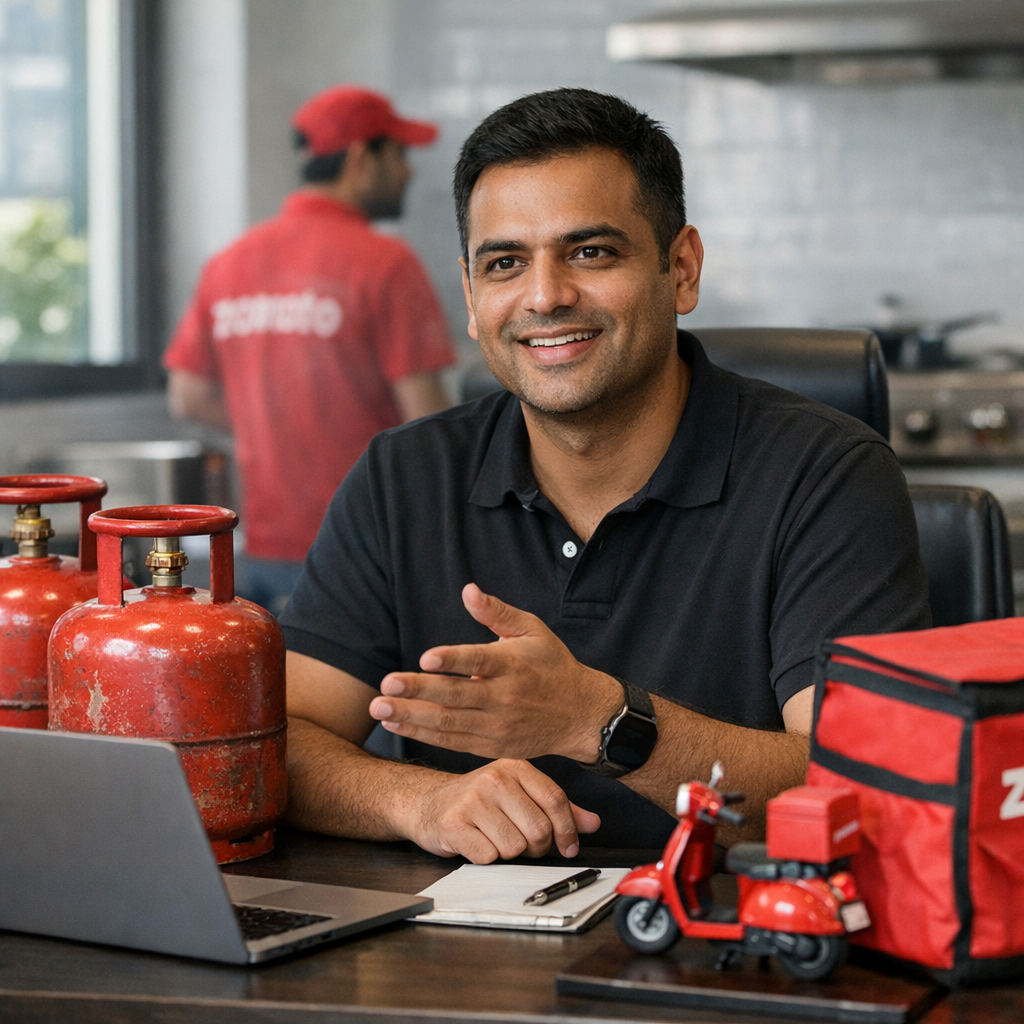
Zomato founder Deepinder Goyal has sought to reassure investors and industry observers that recent concerns around liquefied petroleum gas (LPG) availability are unlikely to pose a meaningful threat to the company’s operations, according to reporting by The Economic Times in its article titled “Zomato founder Deepinder Goyal downplays impact of LPG shortage on business.”
Speaking amid broader discussions about supply constraints affecting commercial kitchens and small food vendors, Goyal indicated that Zomato’s core business model remains largely insulated from fluctuations in LPG supply. The company, which operates primarily as an aggregator connecting consumers with restaurants, does not directly depend on fuel procurement in the same way that food preparation businesses do. As a result, any disruptions in LPG availability would be felt more acutely at the level of restaurant partners rather than within Zomato’s own operational structure.
Goyal’s comments come at a time when periodic concerns about LPG shortages and price volatility have raised questions about cost pressures across India’s food services sector. Smaller restaurants and cloud kitchens, which rely heavily on LPG for daily cooking needs, could face operational strain if supply tightens or prices rise sharply. However, Goyal suggested that the ecosystem has demonstrated resilience in adapting to such challenges in the past, including through fuel substitution or operational adjustments.
He also underscored the diversification of Zomato’s business, which extends beyond food delivery to include quick commerce and other services. This broader portfolio, he implied, helps mitigate risks tied to any single supply chain constraint. Moreover, the company’s scale and network of partners allow it to absorb localized disruptions without significantly affecting overall service levels.
Industry analysts note that while platform companies like Zomato may not be directly exposed to LPG shortages, prolonged supply issues could still have second-order effects. These may include higher menu prices, reduced restaurant participation on delivery platforms, or changes in consumer demand patterns. Even so, Goyal’s remarks signal confidence that such risks remain contained for now.
The Economic Times report situates Goyal’s response within a wider context of ongoing scrutiny of cost structures in the food delivery sector. As companies continue to push for profitability following years of aggressive expansion, sensitivities around input costs and operational stability have come into sharper focus.
For Zomato, the message appears clear: while external pressures on the restaurant industry merit attention, the company does not see LPG shortages as a material threat to its business trajectory at this stage.