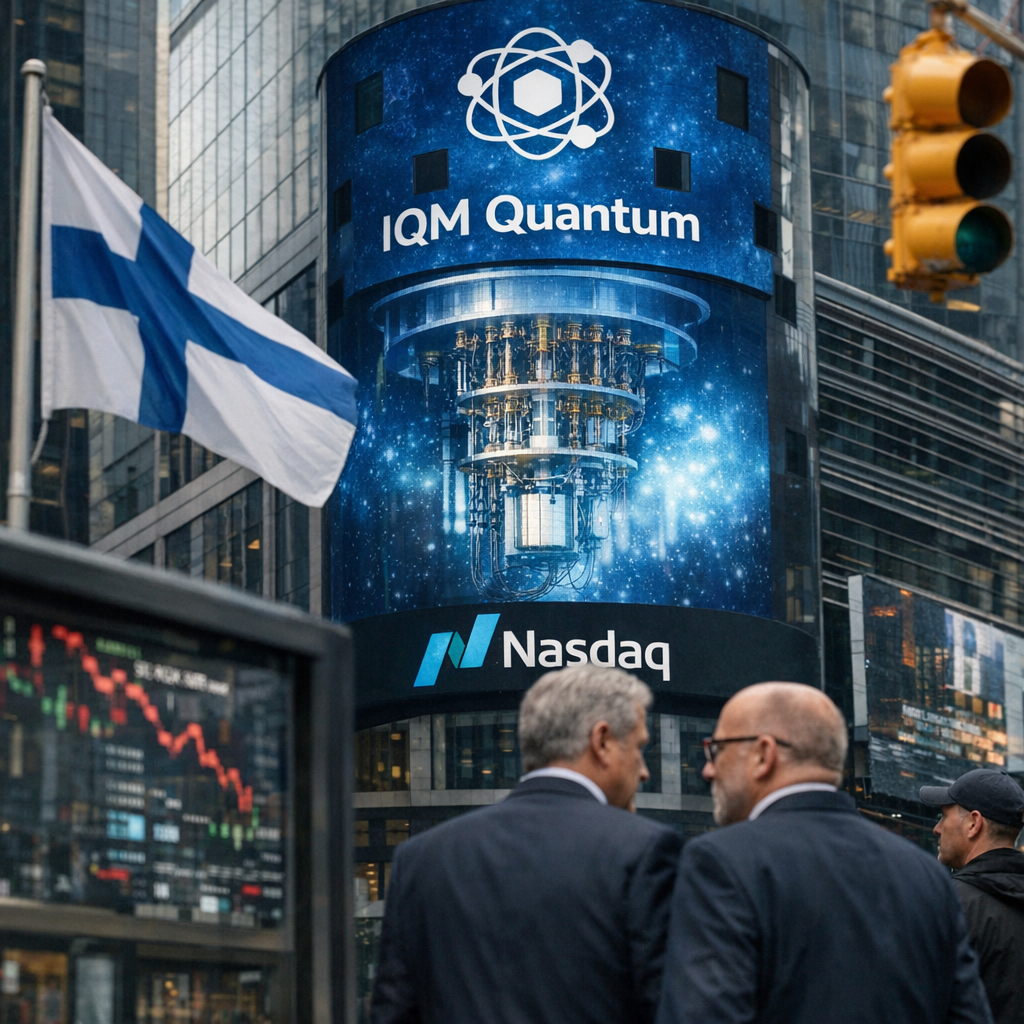
IQM Quantum Computing’s public market debut has drawn a measured response from investors, reflecting both the promise and the uncertainty surrounding the emerging quantum technology sector.
As reported in the StartupNews.fyi article “IQM Quantum Debuts on Nasdaq via SPAC, Shares See Lukewarm Start”, the Finnish quantum hardware company began trading on the Nasdaq through a merger with a special purpose acquisition company. While the listing marked a significant milestone for one of Europe’s leading quantum firms, early trading indicated limited investor enthusiasm, with shares showing only modest movement following the debut.
The subdued reception underscores broader challenges facing quantum computing companies as they transition from research-intensive ventures into publicly traded enterprises. Although the field is widely viewed as transformative—holding potential to revolutionize industries ranging from pharmaceuticals to logistics—commercial viability remains years away, and revenue streams are still nascent for most players. For a broader overview of the technology’s potential, see IBM’s explanation of quantum computing.
IQM has positioned itself as a specialist in superconducting quantum computers, with a growing footprint in Europe and partnerships with research institutions and high-performance computing centers. Its technology roadmap emphasizes scalability and practical integration with existing computing infrastructure, areas seen as critical to the eventual adoption of quantum systems. The company has also benefited from increasing public and private investment in Europe aimed at strengthening technological sovereignty in advanced computing, supported by initiatives such as the European Commission’s quantum technologies strategy.
However, the lukewarm market response reflects investor caution toward SPAC transactions and deep-tech ventures that lack near-term profitability. In recent years, several companies that went public via SPAC have struggled to meet projections, contributing to a more skeptical investment climate. For quantum computing firms in particular, long development timelines and high capital requirements raise questions about valuation and execution risk.
Analysts note that IQM’s listing comes at a time when capital markets are recalibrating expectations for high-growth, pre-revenue technology firms. While interest in quantum computing remains strong at a strategic level, investors are increasingly focused on tangible milestones, partnerships, and credible paths to commercialization, as highlighted in industry analyses like McKinsey’s report on quantum computing use cases.
Despite the muted debut, IQM’s leadership has emphasized that going public provides the company with increased visibility and access to capital necessary to continue scaling its technology. Industry observers suggest that early trading performance may be less indicative of long-term prospects than the company’s ability to demonstrate incremental technical progress and secure sustained customer engagement.
The broader quantum computing sector continues to evolve rapidly, with both startups and established technology firms racing to achieve quantum advantage—the point at which quantum machines outperform classical computers on meaningful tasks. Against this backdrop, IQM’s entry into the public markets represents both an opportunity and a test of investor confidence in the sector’s long-term potential.
For now, the company’s cautious stock market start reflects a balancing act between optimism about the future of quantum computing and realism about the significant hurdles that remain.