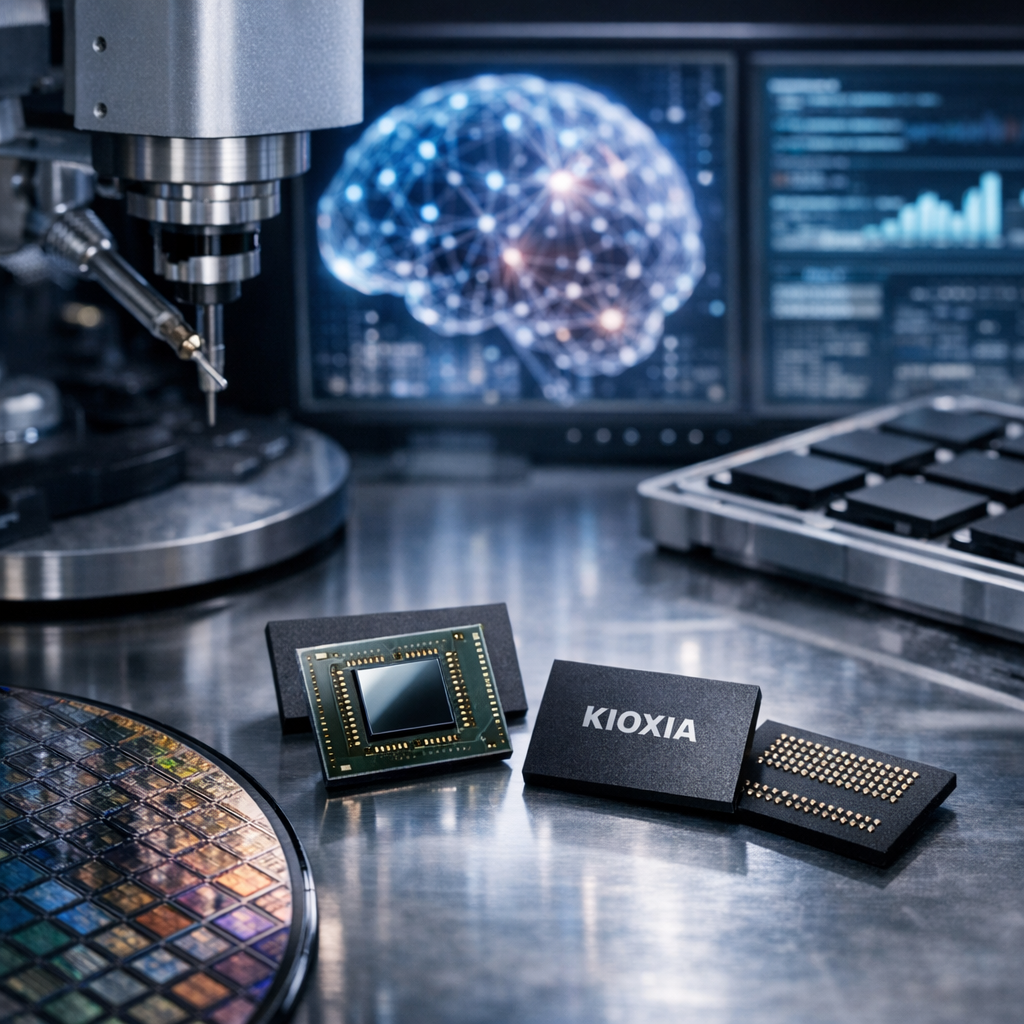
Kioxia has begun shipping samples of its next-generation memory chips, signaling a potential turning point for the Japanese chipmaker as demand driven by artificial intelligence accelerates a broader recovery in the semiconductor industry. The development was reported in the Economic Times article titled “Chipmaker Kioxia ships next-gen memory samples as AI boom fuels dramatic comeback.”
According to the report, the company’s latest memory technology is designed to meet the rapidly evolving requirements of AI workloads, which demand faster data processing and higher storage density. By distributing early samples to customers, Kioxia is positioning itself to capture a share of the resurgent market, where data center operators and AI developers are driving a surge in demand for advanced memory solutions. More on Kioxia’s technology roadmap can be found on the Kioxia official site.
The move comes after a prolonged downturn in the memory sector, marked by falling prices and oversupply that weighed heavily on manufacturers’ financial performance. Kioxia, which was spun out of Toshiba and has since worked to establish itself as a standalone leader in flash memory, has faced similar pressures. Background on its origins is available via Reuters’ company profile of Kioxia. However, the recent uptick in AI-related spending appears to be reshaping the market dynamics in its favor.
Industry analysts cited in the Economic Times report suggest that AI applications—from generative models to large-scale data analytics—are fundamentally altering memory consumption patterns. Unlike traditional computing tasks, these workloads require sustained high-speed access to vast datasets, increasing the importance of cutting-edge NAND flash memory technologies and solid-state storage solutions. Kioxia’s new samples are intended to address these demands, offering improved performance and efficiency.
The company’s timing reflects a broader shift across the semiconductor sector, where major players are racing to align their product roadmaps with AI-driven growth. Industry trends around AI-driven chip demand are also highlighted by McKinsey’s semiconductor industry analysis. Competitors have also accelerated development of high-performance memory technologies, intensifying competition but simultaneously expanding the overall market.
Kioxia’s ability to convert early sampling into large-scale production and long-term contracts will be critical. While the initial shipment of samples marks progress, commercial success will depend on how well these products integrate into customers’ AI infrastructure and whether they can deliver measurable gains in speed, reliability, and cost efficiency.
The Economic Times report indicates that early customer engagement is strong, suggesting that Kioxia’s technology aligns with emerging industry needs. Nonetheless, uncertainties remain, including potential fluctuations in global demand, supply chain constraints, and ongoing geopolitical tensions affecting semiconductor production and trade. Broader supply chain risks in chips are discussed by the Center for Strategic and International Studies.
As the memory market shows signs of recovery, Kioxia’s latest move underscores how AI is reshaping the competitive landscape. What was once a cyclical industry driven largely by consumer electronics is increasingly defined by enterprise and cloud-based demand, with AI at its center. Whether this shift translates into sustained growth for Kioxia will depend on execution, innovation, and its ability to navigate an industry that remains both highly competitive and strategically critical.