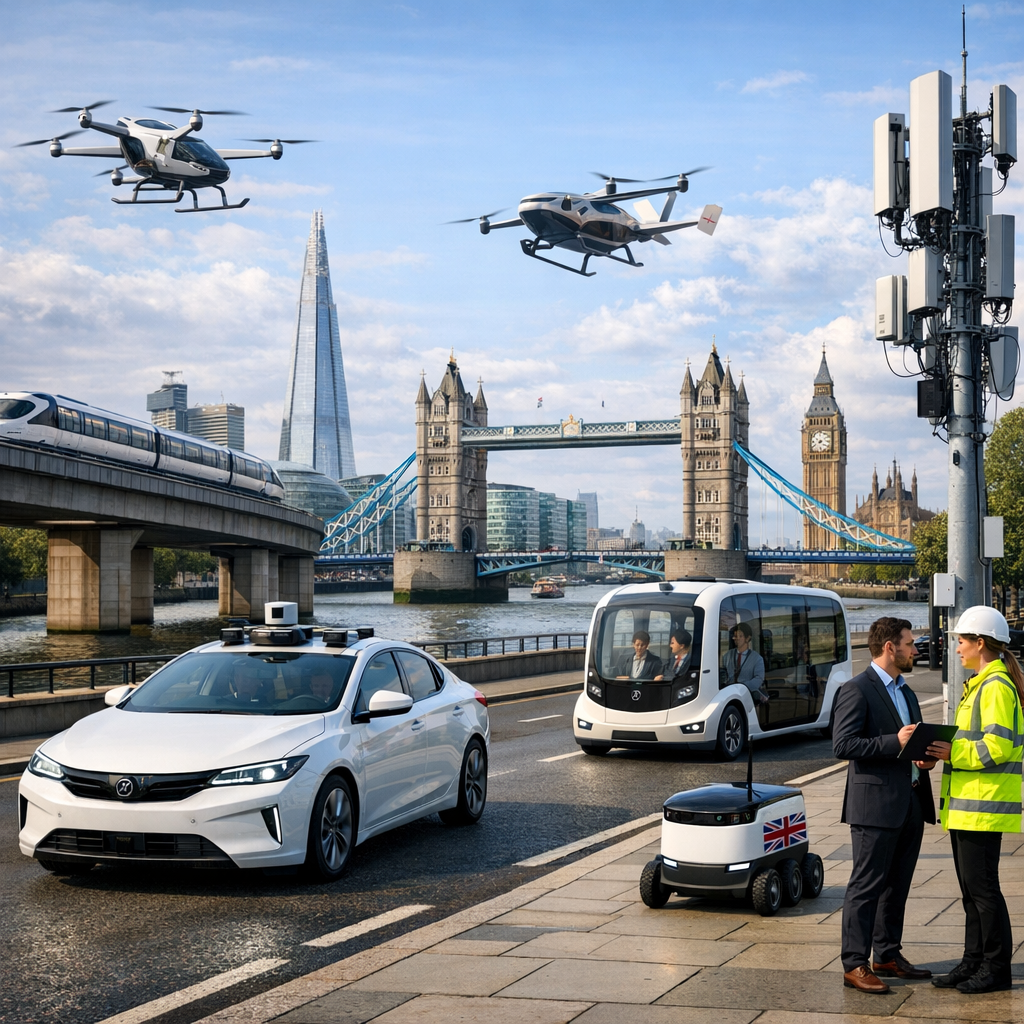
The United Kingdom is positioning itself at the forefront of automated mobility, with government, industry, and research institutions converging to accelerate the development and deployment of self-driving technologies. As highlighted in the article “Shaping the future of automated mobility in the UK”, published by Innovation News Network, the country’s coordinated approach reflects both technological ambition and a broader effort to align regulation, infrastructure, and public trust.
At the center of this effort is a recognition that automated mobility is no longer a distant prospect but an emerging reality with significant implications for transport efficiency, safety, and economic growth. The UK government has backed this transition through bodies such as the Centre for Connected and Autonomous Vehicles (CCAV), alongside sustained investment in research and real-world trials, and the development of regulatory frameworks intended to support innovation while maintaining rigorous safety standards.
A key feature of the UK’s strategy is its emphasis on collaboration. Public-private partnerships have become instrumental in advancing pilot programs, from autonomous shuttle services to testing connected vehicle technologies in urban and rural environments. These initiatives are designed not only to refine the technology itself but also to better understand how automated systems interact with existing transport networks and human behavior.
Innovation News Network’s coverage underscores the role of infrastructure modernization in enabling automated mobility. The integration of digital connectivity, including 5G networks and intelligent traffic systems, is seen as critical to ensuring that autonomous vehicles can operate safely and efficiently. At the same time, policymakers are grappling with the complexities of updating road regulations, insurance frameworks, and liability standards, with ongoing work informed by initiatives like the Law Commission’s automated vehicles review.
Safety remains a central concern, and UK authorities—particularly within the Department for Transport—have sought to differentiate their approach by emphasizing transparency and accountability. Regulatory bodies are working to establish clear approval processes for automated systems, ensuring that deployment is accompanied by robust testing and continuous monitoring. This is intended to build public confidence, which is widely viewed as a determining factor in how quickly automated mobility will gain widespread acceptance.
Economic considerations are also driving the UK’s focus on this sector. Automated mobility is expected to generate significant opportunities in manufacturing, software development, and data services. By fostering a domestic ecosystem of innovation, the UK aims to secure a competitive advantage in a global market that is rapidly evolving. The Innovation News Network article points to the importance of skills development and workforce transition, as new roles emerge alongside the gradual transformation of traditional transport jobs.
However, challenges remain. Technical hurdles, including the reliability of sensors in complex environments and the integration of systems across different vehicle platforms, continue to demand attention. There are also broader societal questions concerning data privacy, cybersecurity, and equitable access to new mobility services. Policymakers and industry leaders alike are aware that resolving these issues—many of which are explored in UK government consultations such as automated vehicles policy proposals—will be essential if automated technologies are to be scaled effectively.
The UK’s approach reflects a balancing act between fostering innovation and ensuring public safety and trust. By aligning regulatory frameworks with technological progress and encouraging collaboration across sectors, the country is attempting to create conditions in which automated mobility can thrive. As the Innovation News Network article makes clear, the trajectory of this effort will not only shape the future of transport in the UK but also contribute to global debates about how best to integrate autonomous systems into everyday life.