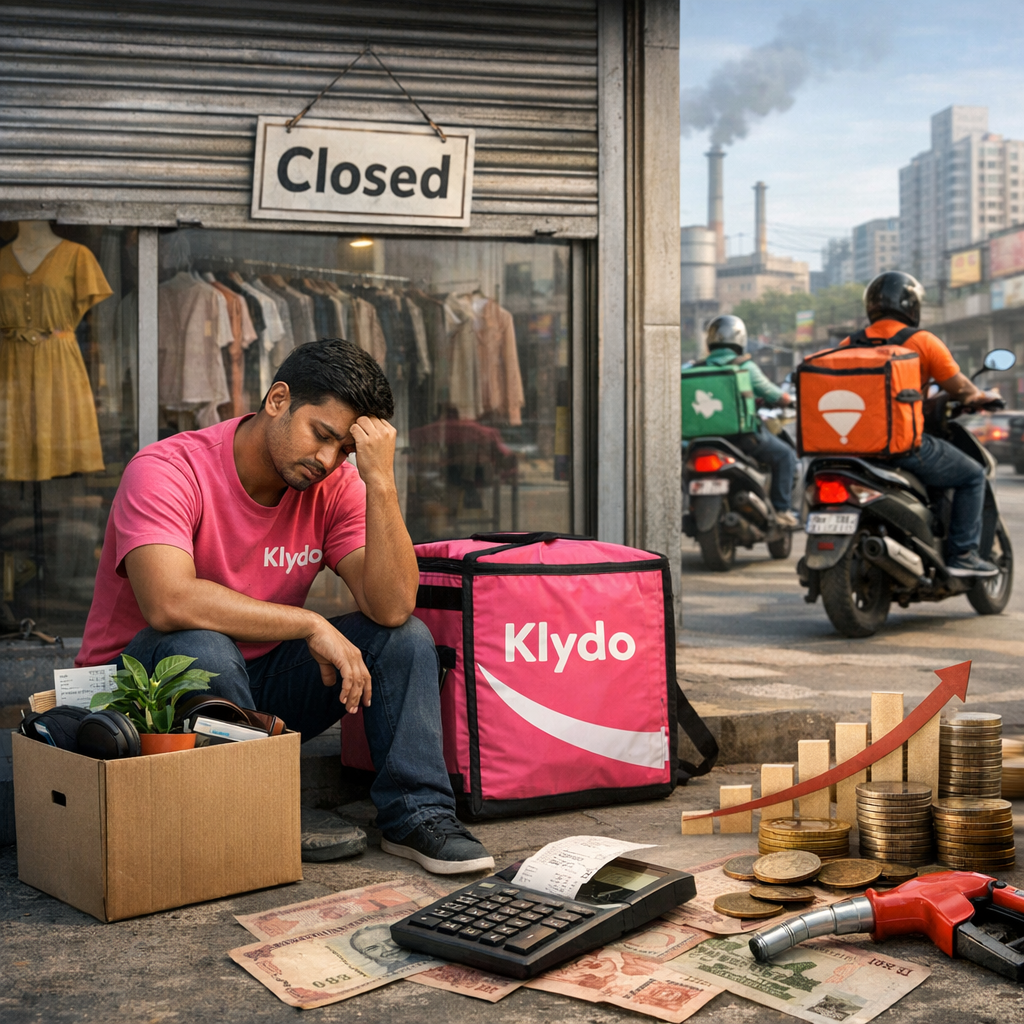
A rapid-fashion delivery venture once positioned as a contender in India’s crowded quick-commerce landscape has ceased operations, underscoring the mounting pressures facing startups in a capital-intensive and fiercely competitive sector.
According to the Economic Times article “Rapid fashion delivery startup Klydo shuts down operations”, the company has halted services after struggling to sustain its business model amid funding constraints and operational challenges. Klydo, which aimed to deliver trendy fashion items to consumers on short timelines, entered a market increasingly shaped by rising customer acquisition costs and the dominance of larger, better-capitalized players such as Reliance and Tata-backed platforms.
The shutdown reflects broader strains within India’s quick-commerce and fashion-tech segments, where several startups have been forced to recalibrate or exit altogether over the past year. While the promise of ultra-fast delivery has driven investor interest, it has also required significant upfront investment in logistics, warehousing, and inventory management—costs highlighted in analyses of the sector by McKinsey’s State of Fashion report as key barriers to profitability.
Klydo’s model depended on anticipating fashion trends and maintaining a ready inventory to enable rapid dispatch, a strategy that carries inherent risks of unsold stock and fluctuating consumer preferences. Combined with stiff competition from established e-commerce platforms like Amazon India and Flipkart, as well as emerging quick-delivery services expanding into fashion, the company struggled to carve out a durable niche.
The Economic Times report indicates that the shutdown comes at a time when venture funding for early-stage consumer startups has become more selective, with investors increasingly prioritizing profitability and unit economics over rapid expansion—a trend noted in recent funding analyses by CB Insights. This shift has left several startups that scaled aggressively during periods of abundant capital exposed to liquidity challenges.
Klydo’s closure serves as a cautionary example of the difficulties in building a sustainable rapid-delivery fashion business in India. While consumer appetite for convenience remains strong, the economics of delivering low-margin products at high speed continue to test even well-funded ventures.
Industry observers note that consolidation in the sector is likely to continue, with only companies capable of balancing speed, cost efficiency, and demand forecasting expected to endure. For smaller players, the path forward may require either significant differentiation or strategic partnerships to survive in an increasingly unforgiving market environment, as also discussed in broader coverage of India’s quick-commerce evolution by Bloomberg.