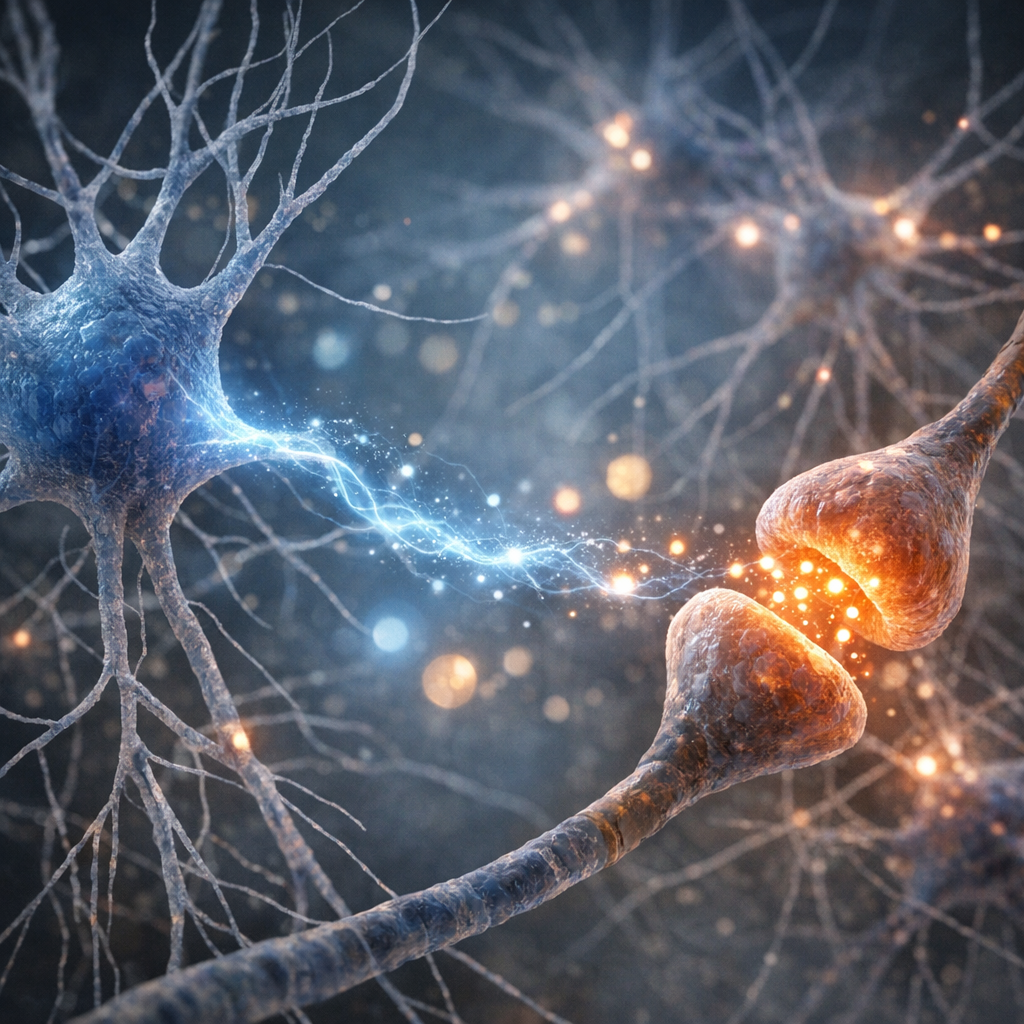
A new study is reshaping scientists’ understanding of how brain cells communicate, suggesting that the exchange of information between neurons may be more complex and versatile than previously believed. The findings, reported in an article titled “How neurons communicate beyond synapses” published by Tech Xplore, point to previously underappreciated mechanisms that could influence everything from learning to neurological disease.
For decades, the dominant model of brain communication has centered on synapses, the junctions where neurons pass chemical or electrical signals to one another. This framework has guided much of modern neuroscience, shaping both basic research and therapeutic development. However, the new research indicates that neurons may also interact through more diffuse and less direct signaling processes, expanding the landscape of neural communication.
According to the Tech Xplore report, researchers observed that certain signaling molecules can travel beyond traditional synaptic confines, affecting neighboring cells in ways that do not rely on tightly structured connections. This form of communication, sometimes described as “volume transmission,” allows chemical signals to diffuse through the extracellular space, influencing multiple neurons simultaneously. Such mechanisms could enable broader coordination across neural networks than synapses alone would permit.
The implications of this work are significant. By demonstrating that neurons are capable of both targeted and wide-ranging communication, the study suggests the brain may operate with a hybrid signaling system. This could help explain phenomena that have long puzzled scientists, such as how large-scale brain states—like attention, mood, or arousal—are regulated across extensive neural circuits.
Researchers also point to potential clinical relevance. If non-synaptic signaling plays a substantial role in brain function, disruptions to these pathways could contribute to neurological and psychiatric disorders. Conditions such as Parkinson’s disease, depression, or epilepsy might involve not only faulty synapses but also abnormalities in how signaling molecules spread through neural tissue. Understanding these processes could open new avenues for treatment, including drugs designed to modulate extracellular signaling rather than synaptic transmission alone.
At the same time, the findings raise questions about how neural communication is measured and interpreted. Many experimental techniques are optimized for detecting synaptic activity, potentially overlooking broader signaling dynamics. The study highlighted by Tech Xplore underscores the need for tools capable of capturing these more diffuse interactions, which may operate on different spatial and temporal scales.
While the research does not overturn the central importance of synapses, it challenges the notion that they are the sole or even dominant means of neuronal communication. Instead, the brain may rely on a layered system in which precise point-to-point signaling coexists with more global chemical influences.
As investigations continue, scientists are likely to refine models of brain function that incorporate both synaptic and non-synaptic processes. The emerging picture is of a more flexible and interconnected system than previously understood, one in which communication is not confined to discrete संपर्क points but extends across a dynamic cellular environment.