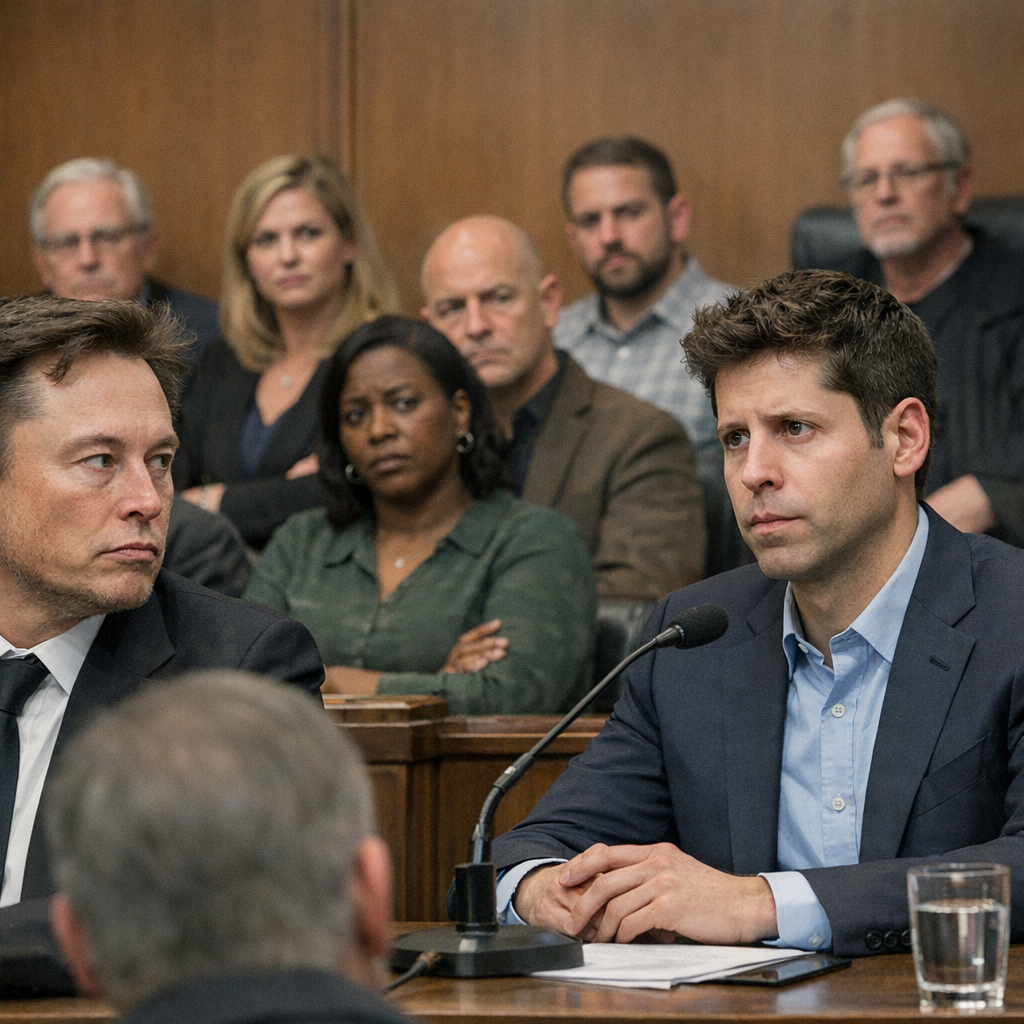
Early reactions from potential jurors in a closely watched legal battle involving Elon Musk and OpenAI CEO Sam Altman suggest that Musk’s public persona could present challenges as proceedings move forward. According to reporting in Wired’s article “Some Musk v. Altman Jurors Don’t Like Elon Musk,” several members of the prospective jury pool expressed skepticism or unfavorable views of the billionaire entrepreneur, underscoring the difficulty of empaneling an impartial jury in a case shaped by high-profile figures and intense public scrutiny.
The case, which centers on Musk’s dispute with OpenAI and its leadership, has drawn significant attention not only because of its implications for the future of artificial intelligence but also due to the outsized public profiles of those involved. Musk, who co-founded OpenAI before later criticizing its direction, has cultivated a polarizing image through his business ventures, political commentary, and activity on social media. That visibility appears to be influencing how potential jurors perceive him before hearing any legal arguments.
During jury selection, some candidates reportedly described Musk in terms that suggested distrust or fatigue with his public behavior. Others indicated that their opinions had been shaped by his statements online or by coverage of his leadership at companies such as Tesla and SpaceX. While familiarity with prominent figures is common in high-profile cases, expressions of preexisting bias present a challenge for both sides, which must work to identify jurors capable of evaluating the evidence impartially.
Legal experts note that jury selection in such cases often becomes a critical battleground. Attorneys typically seek to exclude individuals whose opinions could unduly influence deliberations, while also attempting to assemble a panel receptive to their arguments. In this instance, Musk’s notoriety may complicate that process, as widespread recognition increases the likelihood that potential jurors arrive with preconceived views.
The reporting in Wired highlights a broader issue facing courts in an era of celebrity executives and constant media exposure. As business leaders increasingly operate in the public eye, their reputations—carefully cultivated or otherwise—can follow them into the courtroom, shaping perceptions before testimony even begins.
The outcome of the Musk-Altman dispute could have significant ramifications for governance and competition in the artificial intelligence sector. Yet as jury selection unfolds, it is becoming clear that the personalities involved may be as consequential to the case as the legal questions at its core.