A growing cohort of Indian startups is turning to egocentric data—first-person audio, video and sensory inputs—to accelerate advances in artificial intelligence and robotics, reflecting a shift away from traditional, third-person datasets toward more immersive, real-world training environments.
As reported in “Egocentric data collection fuels AI, robotics growth in India” by The Economic Times, companies are increasingly focusing on capturing data that mirrors how humans perceive and interact with their surroundings. This approach is seen as critical for developing systems capable of performing complex, real-world tasks, from warehouse automation to assistive robotics.
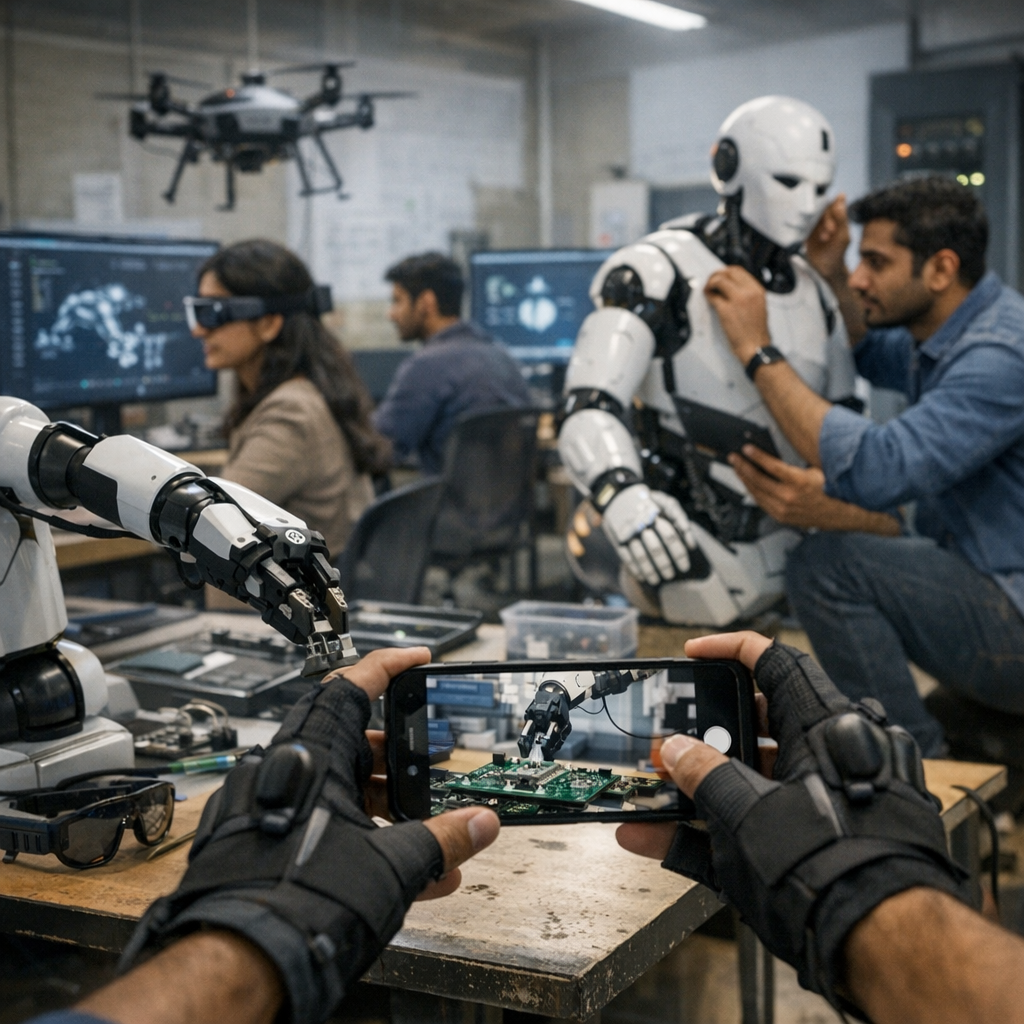
Unlike conventional datasets sourced from static cameras or curated online repositories, egocentric data provides a continuous, human-like perspective. Industry participants say this allows AI models to better understand context, intent and physical interaction—elements that are difficult to infer from detached viewpoints. Startups are deploying wearable devices, body-mounted cameras and sensor arrays to capture such data across diverse environments, including homes, factories and urban settings.
The push aligns with broader global trends, as robotics and embodied AI gain momentum. However, companies in India are positioning themselves competitively by leveraging cost advantages and access to varied real-world scenarios. Founders and investors cited in The Economic Times report argue that India’s scale and diversity provide a unique training ground for AI systems that must operate reliably in unpredictable conditions.
At the same time, the approach raises operational and ethical challenges. Collecting egocentric data at scale requires significant investment in hardware, data storage and annotation infrastructure. Ensuring privacy and securing informed consent are also critical concerns, particularly when capturing data in personal or semi-private spaces. Industry participants acknowledge that regulatory clarity and responsible data practices will be essential for sustained growth.
Investors are showing increasing interest in startups operating at the intersection of robotics and data collection, viewing egocentric datasets as a defensible asset in an increasingly competitive AI landscape. Some companies are developing proprietary data pipelines as a core differentiator, while others are partnering with global firms to supply training data for advanced models.
The momentum suggests that India could play a larger role in shaping the next generation of AI systems, particularly those designed to operate beyond digital environments. As highlighted by The Economic Times, the emphasis on egocentric data signals a broader evolution in how machines are trained to perceive and act, with implications spanning industrial automation, consumer technology and human-machine interaction.