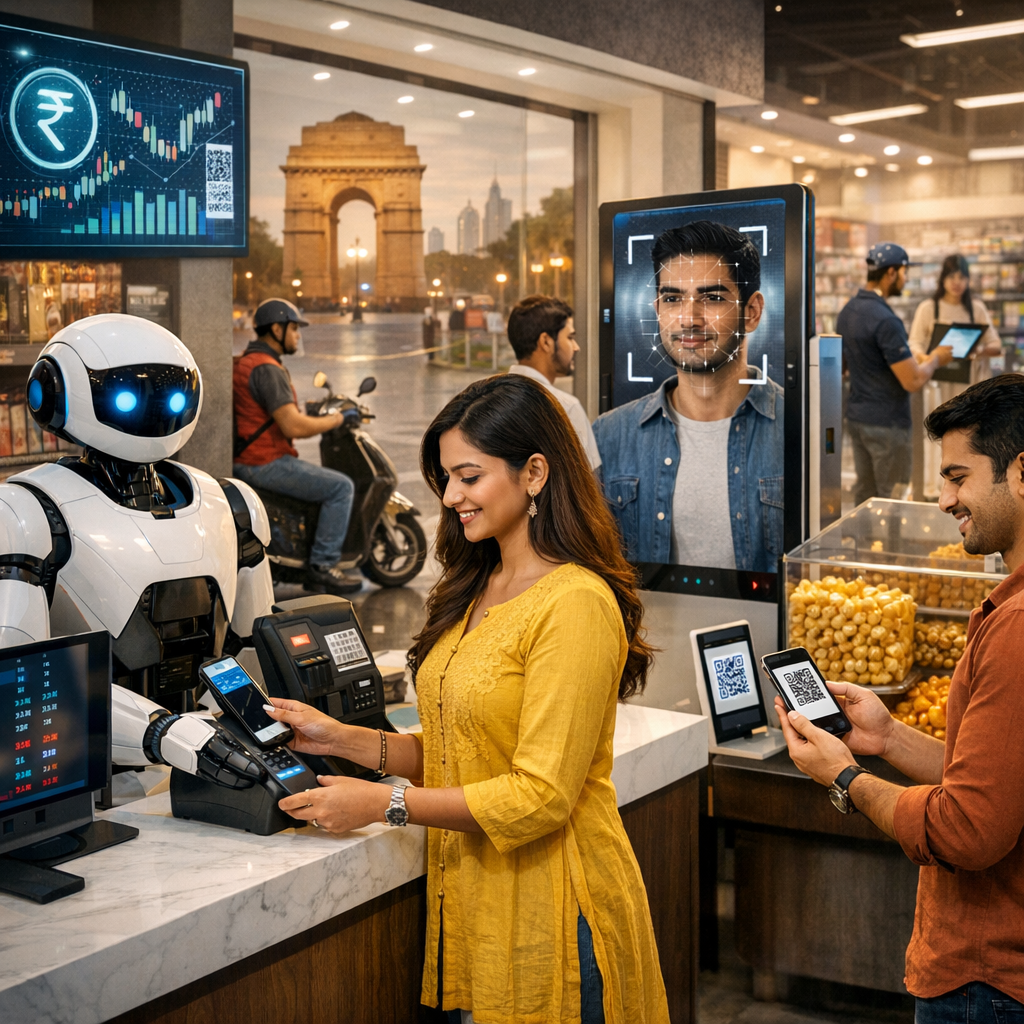
A growing convergence of artificial intelligence and retail infrastructure is reshaping how businesses present themselves to digital consumers, according to a recent report by The Economic Times in its article “Inside AI-led digital storefronts; Lalit Keshre’s big ET Awards win.” The piece highlights how startups and established players alike are deploying AI-driven tools to transform online storefronts into adaptive, data-rich environments designed to personalize user experiences and drive sales.
At the center of this shift is the emergence of intelligent storefront systems that go well beyond static e-commerce pages. These platforms integrate machine learning models to analyze user behavior in real time, enabling dynamic product recommendations, personalized layouts, and targeted promotional strategies. The approach reflects a broader ambition within the tech sector to replicate, and in some cases surpass, the responsiveness of physical retail environments.
The report also draws attention to Lalit Keshre, co-founder and CEO of Groww, whose leadership earned recognition at the ET Awards. While Groww is primarily known as a fintech platform, Keshre’s acknowledgment underscores a wider trend in India’s technology ecosystem: the increasing overlap between financial technology, consumer platforms, and AI infrastructure. His recognition signals how leadership in digital innovation is being evaluated not just by scale, but by the ability to leverage emerging technologies effectively.
Industry participants cited in the article suggest that AI-led storefronts are becoming critical for businesses navigating a competitive digital marketplace. By automating merchandising decisions and optimizing user journeys, companies can reduce customer acquisition costs and improve engagement metrics. At the same time, the technology raises questions about data privacy, algorithmic transparency, and the concentration of technological advantage among firms with access to large datasets.
The Economic Times report places these developments within the broader trajectory of India’s digital economy, where rapid internet penetration and a growing base of online consumers are accelerating experimentation. Companies are investing in AI not only to capture demand but also to anticipate it, using predictive analytics to shape inventory, pricing, and marketing strategies.
However, the transition is not without friction. Smaller businesses may face challenges in adopting sophisticated AI tools due to cost and technical complexity, potentially widening the gap between large platforms and independent sellers. Additionally, as storefronts become increasingly automated, maintaining consumer trust will depend on transparent practices and consistent user experiences.
The article ultimately frames AI-driven storefronts as part of a larger transformation in how commerce is conducted and experienced. As highlighted by The Economic Times, the integration of artificial intelligence into customer-facing platforms is no longer experimental but foundational, signaling a shift that could redefine competitive dynamics across industries in the coming years.