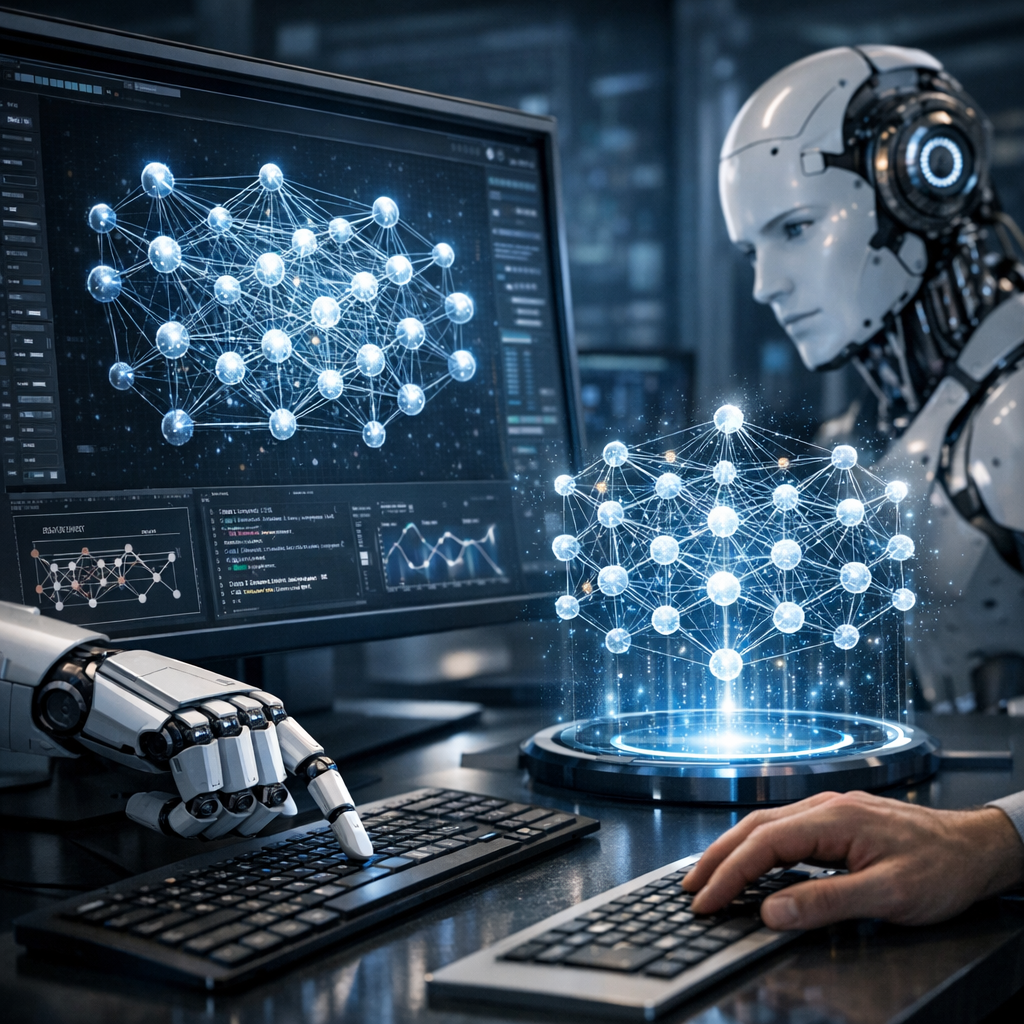
A new artificial intelligence framework that can autonomously refine how models are trained is drawing attention for outperforming human-designed systems, signaling a shift in how AI itself may be developed in the future.
In an article titled “New AI framework autonomously optimizes training data, architectures and algorithms, outperforming human baselines,” VentureBeat reports on a system that goes beyond traditional automated machine learning by jointly optimizing multiple layers of the AI development process. Rather than focusing on a single dimension—such as hyperparameters or architecture—the framework simultaneously adjusts training data selection, model structure, and learning algorithms, areas that have typically required extensive human expertise.
Researchers behind the system describe it as a step toward more self-directed AI engineering. By iteratively experimenting and evaluating performance, the framework identifies combinations that exceed those crafted by human engineers. This marks a departure from current workflows, where improvements often depend on incremental, manually guided tuning. The reported results suggest that integrating these decisions into a unified optimization loop can unlock performance gains that are difficult to achieve through conventional methods.
The implications extend beyond performance metrics. If systems can reliably design better models than human teams, the bottleneck in AI advancement could shift from expertise to computational resources. That raises both opportunities and concerns. On one hand, it may accelerate innovation by reducing the need for highly specialized knowledge. On the other, it could concentrate power among organizations with the infrastructure to run large-scale automated experiments.
The VentureBeat report also highlights how such frameworks could reshape the economics of AI development. Companies may rely less on large teams of researchers fine-tuning models and more on automated pipelines that continuously improve themselves. However, this increased autonomy introduces questions about transparency and control. As systems become more complex and less interpretable, understanding why a particular design works—or fails—may become more difficult.
While the technology is still emerging, its early success underscores a broader trend: AI systems are increasingly being used to design and optimize other AI systems. If these approaches continue to outperform human-led methods, they could redefine both the pace and the structure of progress in the field.