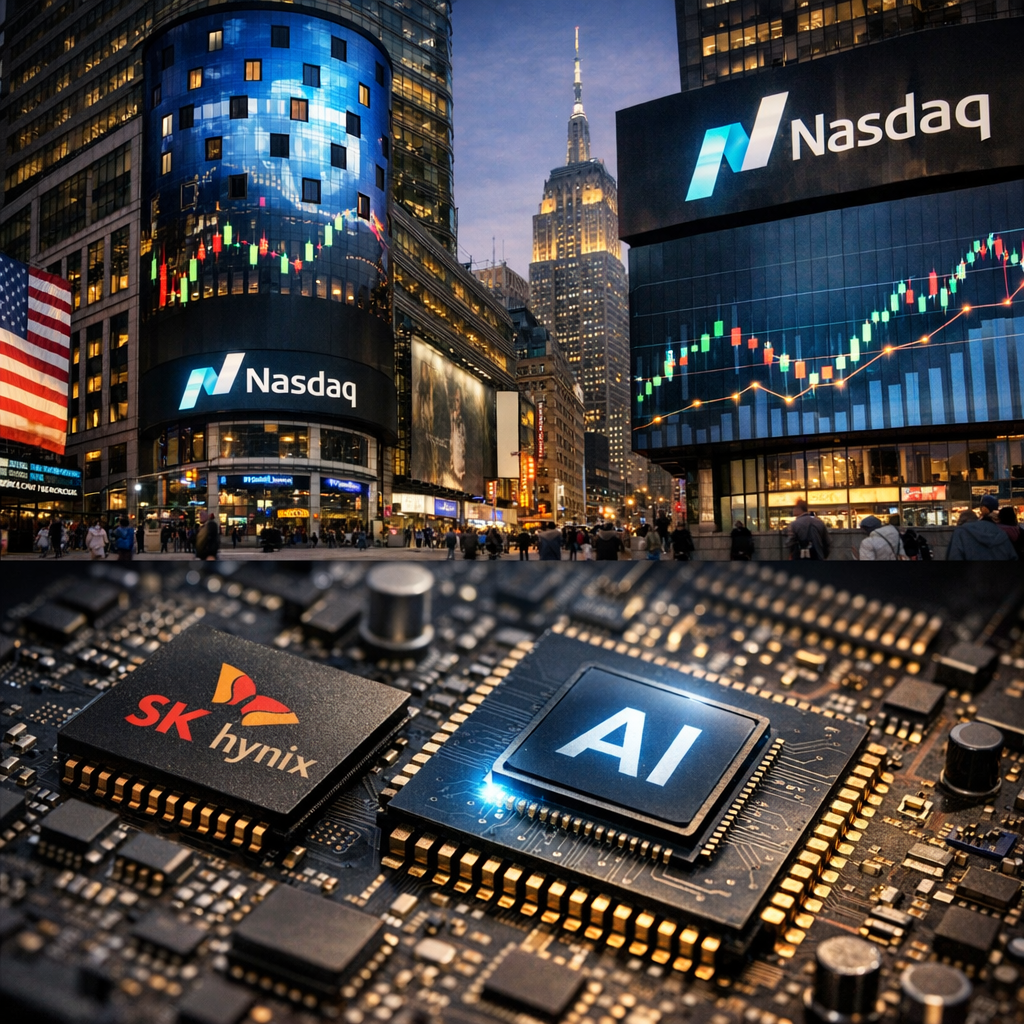
South Korean chipmaker SK Hynix is preparing to pursue a U.S. stock market debut and is leaning toward listing on the Nasdaq exchange, according to people familiar with the matter, a move that underscores the company’s ambition to strengthen its global investor base amid intensifying competition in the semiconductor industry.
The development was first reported in the article titled “South Korea’s SK Hynix to opt for Nasdaq for planned US listing, sources say,” published by The Economic Times. The report indicates that the world’s second-largest memory chip producer, SK Hynix, is evaluating options for raising capital overseas, with Nasdaq emerging as the preferred venue due to its deep liquidity and strong investor appetite for technology stocks.
A U.S. listing would mark a significant strategic step for SK Hynix, which has been expanding aggressively into advanced memory technologies, including high-bandwidth memory (HBM) chips used in artificial intelligence systems. Demand for such products has surged alongside the rapid growth of artificial intelligence, benefiting companies positioned across the semiconductor supply chain.
Nasdaq’s reputation as a hub for leading technology companies appears to have weighed heavily in the deliberations. By listing there, SK Hynix could potentially enhance its visibility among global institutional investors and align itself more closely with major U.S.-listed peers and customers, many of whom are central to AI innovation.
Sources cited in the Economic Times report suggested that discussions remain at an early stage and that details, including timing and deal size, have not been finalized. The company has not publicly confirmed the plan, reflecting the preliminary nature of internal considerations and the sensitivity of cross-border listings in a volatile market environment.
The prospective listing comes at a time when semiconductor firms worldwide are navigating geopolitical tensions, shifting supply chains, and increasing scrutiny over technology export controls. For South Korean companies in particular, balancing economic ties between the United States and China remains a delicate exercise, especially as Washington continues to tighten restrictions on advanced chip technologies.
A U.S. offering could provide SK Hynix with additional financial flexibility to invest in next-generation fabrication facilities and research initiatives, areas that demand substantial capital as the industry moves toward more advanced nodes and packaging technologies. It could also help diversify its investor base beyond South Korea, potentially stabilizing its valuation over the long term.
Market analysts note that while global equity conditions have improved relative to prior periods of volatility, investor sentiment toward semiconductor stocks remains closely tied to the trajectory of AI demand and broader macroeconomic trends. Any listing would therefore need to be carefully timed to maximize investor interest and valuation.
If SK Hynix proceeds with a Nasdaq listing, it would join a growing group of non-U.S. technology firms seeking access to American capital markets, reflecting both the scale of funding required in the semiconductor sector and the strategic importance of visibility among global investors.