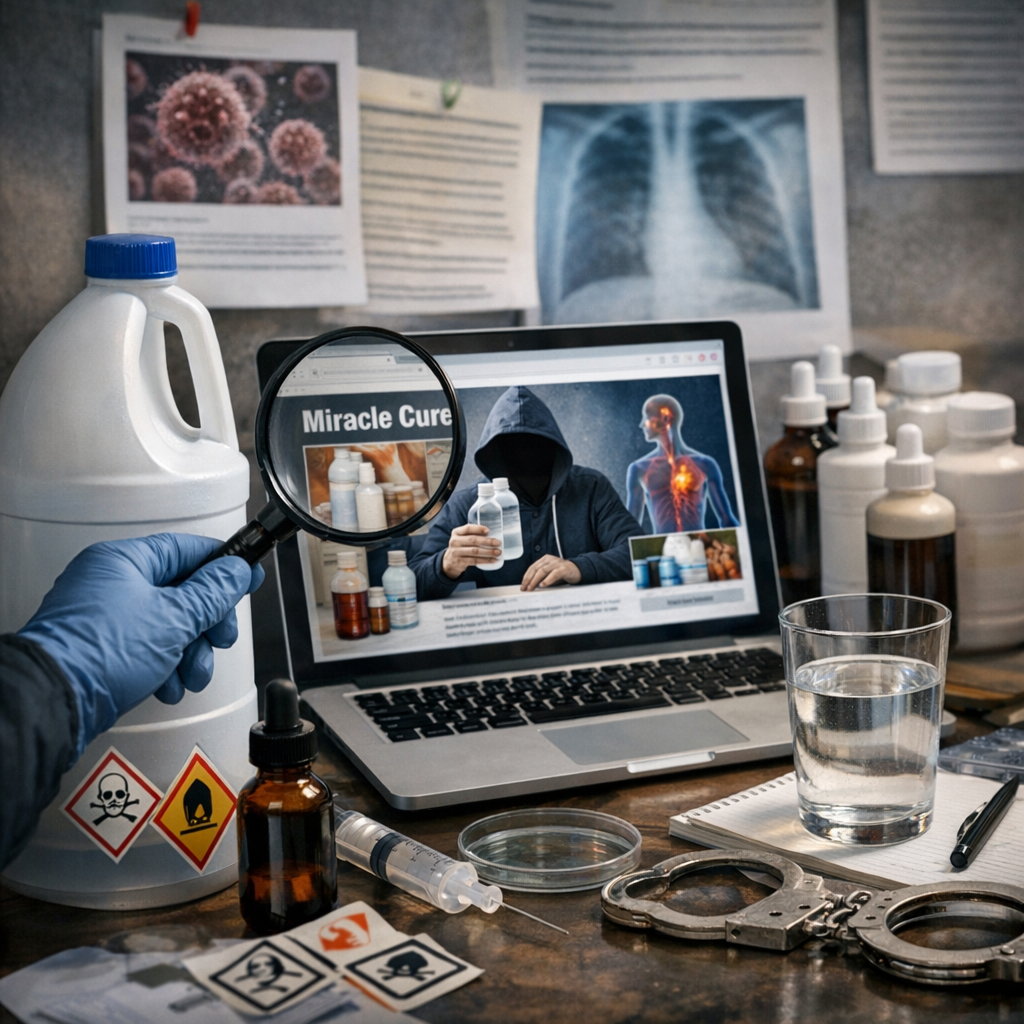
A recent investigation by Wired has brought renewed attention to a dangerous pseudoscientific practice being promoted as a cancer treatment, underscoring the persistent challenge of medical misinformation in the digital age. The article documents how fringe groups are advocating a method that exposes individuals to chlorine dioxide gas, a compound industrially used as a bleach and disinfectant, despite clear evidence of its toxicity.
According to reporting from Wired, practitioners behind this method instruct individuals to sit unclothed in enclosed plastic spaces while the chemical releases fumes. Proponents falsely claim that the gas can eliminate cancer cells and detoxify the body. Medical experts, however, warn that chlorine dioxide is a hazardous substance that can cause severe respiratory damage, chemical burns, and even death when inhaled or absorbed through the skin, as outlined by agencies such as the Centers for Disease Control and Prevention.
Public health authorities, including the U.S. Food and Drug Administration, have repeatedly issued warnings against chlorine dioxide use in any medical context. The compound has previously appeared in other discredited health schemes, most notably under the label “Miracle Mineral Solution,” which has been the subject of enforcement actions and criminal prosecutions. Despite this, its use continues to circulate within online communities that distrust conventional medicine.
The Wired report illustrates how these communities often operate through encrypted messaging platforms and social media channels, allowing promoters to bypass moderation and reach vulnerable individuals, including those with serious illnesses seeking alternative treatments. In many cases, participants are encouraged to avoid standard medical care, raising the risk of untreated or worsening disease, contrary to guidance from institutions like the National Cancer Institute.
Experts say the persistence of such practices reflects broader issues in the information ecosystem. The combination of algorithm-driven content distribution, declining trust in institutions, and the emotional vulnerability of patients with life-threatening conditions creates an environment in which unproven and dangerous treatments can gain traction. Health professionals emphasize that desperation can make individuals particularly susceptible to claims framed as suppressed or “natural” cures, a trend also highlighted by the World Health Organization in its work on health misinformation.
Regulatory agencies face ongoing challenges in addressing these schemes, especially when they originate in decentralized or international networks. While enforcement actions have disrupted some operations, new iterations often emerge rapidly, adapting their messaging and methods to evade scrutiny.
The case highlighted by Wired serves as a stark reminder of the real-world consequences of misinformation. Physicians and public health officials continue to stress that cancer treatments must be grounded in rigorous clinical evidence and administered under qualified medical supervision. For patients and families navigating serious diagnoses, experts recommend consulting licensed healthcare providers and relying on established medical guidance rather than unverified claims circulating online, as emphasized by organizations like the American Society of Clinical Oncology.
As the digital landscape evolves, the tension between open information sharing and the spread of harmful misinformation remains a critical concern, particularly when it directly affects health and safety.