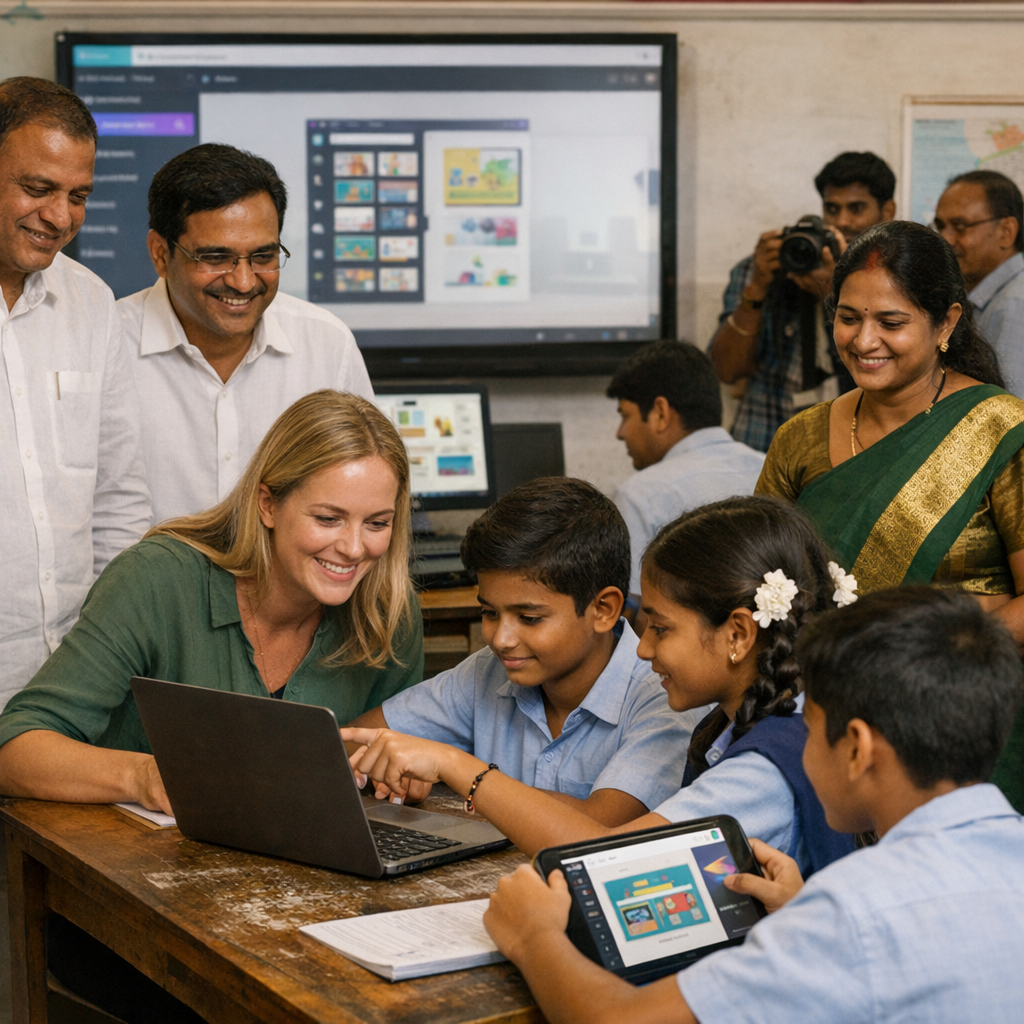
The Andhra Pradesh government has entered into a partnership with design platform Canva to strengthen visual communication capabilities in government schools, a move aimed at modernizing classroom engagement and improving digital literacy among students and educators.
According to the Economic Times article titled “Andhra Pradesh govt inks deal with Canva for visual communication in govt schools,” the initiative will provide access to Canva’s suite of design tools for teachers and students across the state’s public education system. The collaboration is intended to help integrate visual storytelling into everyday learning, enabling educators to create more dynamic instructional materials while allowing students to express ideas through digital media.
Officials indicate that the program aligns with broader efforts to digitize education infrastructure and bridge gaps in access to modern learning resources, as emphasized by initiatives like India’s Digital Education initiatives. By introducing user-friendly design tools, the state aims to empower teachers to move beyond traditional text-based instruction and adopt more interactive teaching methods. The platform is expected to support presentations, infographics, lesson plans, and other educational content that can make complex subjects more accessible.
The initiative comes at a time when Indian states are increasingly exploring partnerships with technology companies to upgrade public schooling systems. Visual communication tools are seen as particularly valuable in multilingual and diverse learning environments, where imagery and design can help overcome linguistic barriers and cater to varied learning styles, a concept supported by research from UNESCO on digital learning and Edutopia.
For Canva, the agreement reflects a growing focus on education-sector partnerships in emerging markets. The company has been expanding its presence in India by promoting its tools for classrooms, positioning itself as a platform that can enhance creativity and collaboration at scale, in line with broader trends in education technology adoption.
State officials suggest that implementation will include teacher training programs to ensure effective adoption. Without adequate support, such tools risk being underutilized, particularly in government schools where educators may have limited prior exposure to digital platforms. Training will therefore play a critical role in determining whether the initiative translates into meaningful improvements in classroom outcomes.
While the partnership has been welcomed as a forward-looking step, its long-term impact will depend on execution, including infrastructure readiness, internet access, and sustained engagement from both educators and students. If successfully implemented, the initiative could serve as a model for integrating creative digital tools into public education systems across India.