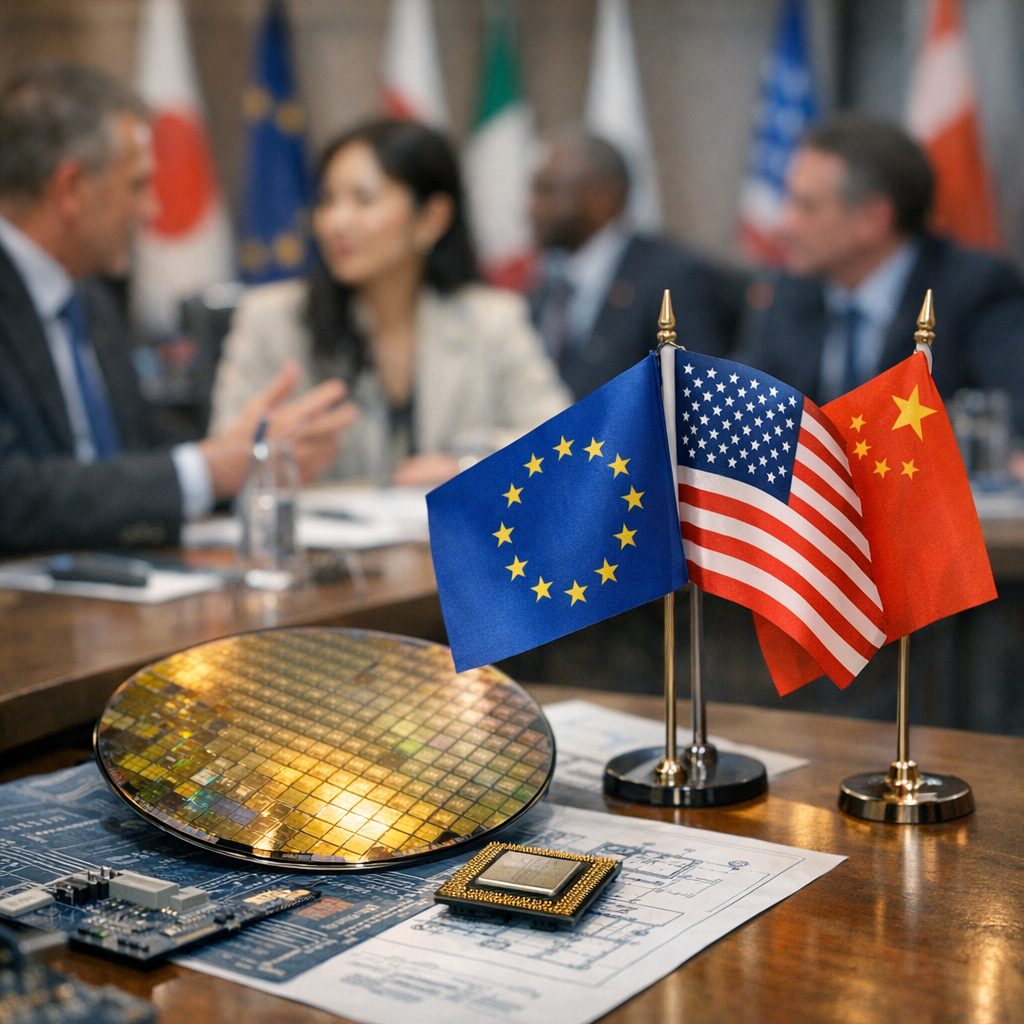
The European Commission has taken a symbolic but strategically framed step in the evolving debate over technological sovereignty and global stability, signing what it calls the “Pax Silica Declaration,” according to an announcement published on the European Commission’s Digital Strategy website in the article titled “Commission signs Pax Silica Declaration.”
The declaration, as outlined by the European Commission, is intended to promote the responsible development and use of semiconductor technologies, emphasizing cooperation, transparency, and the avoidance of geopolitical escalation tied to critical digital infrastructure. While largely declaratory in nature, the initiative reflects growing concern within the European Union about the central role of advanced chips in both economic competitiveness and security policy.
Semiconductors have become a focal point of international tension, particularly as major powers invest heavily in domestic production and impose export controls. Against this backdrop, the Pax Silica Declaration appears designed to position the EU as an advocate for stability and rules-based coordination in the digital domain, rather than purely competitive industrial policy.
The Commission’s move aligns with its broader digital strategy, which has increasingly combined industrial support measures—such as the European Chips Act—with calls for international cooperation. By endorsing a framework that stresses peaceful collaboration and shared norms, Brussels is attempting to balance its push for technological autonomy with the realities of global interdependence in semiconductor supply chains.
Details in the Commission’s communication suggest that the declaration is not legally binding but instead serves as a political commitment among its signatories. Its language centers on principles such as resilience, trust, and the minimization of disruptions that could arise from conflicts or coercive practices involving semiconductor production and distribution.
Critically, the initiative also highlights Europe’s ambition to act as a convening power in digital governance. By framing semiconductor policy within a broader normative context, the EU is seeking to extend its influence beyond its domestic market, encouraging alignment among like-minded partners.
However, the practical impact of the declaration remains uncertain. Analysts have noted that while such frameworks can shape expectations and foster dialogue, they often lack enforcement mechanisms. Much will depend on whether key global players engage with or endorse similar principles, particularly in a landscape already marked by strategic rivalry and protectionist tendencies.
Still, the Commission’s endorsement of the Pax Silica Declaration underscores a continued effort to define Europe’s role in the digital age—not only as a regulator and market, but also as a standard-setter advocating for stability in one of the world’s most critical technological sectors.