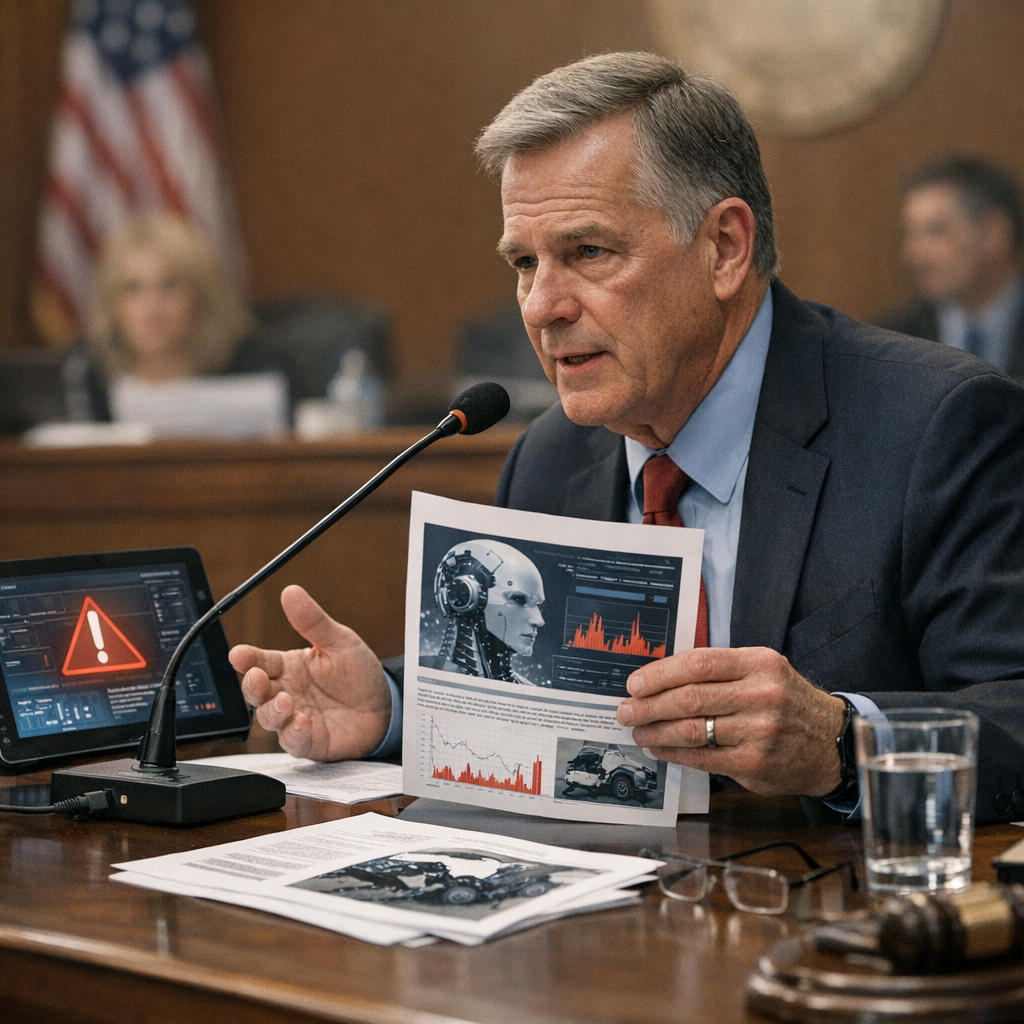
A U.S. lawmaker has introduced legislation aimed at tightening oversight of artificial intelligence systems by requiring companies to disclose serious failures, reflecting mounting concern in Washington over the risks posed by rapidly advancing AI technologies.
According to the Economic Times article “US lawmaker proposes bill to require AI companies to report critical incidents”, the proposed measure would mandate that developers of advanced AI systems report “critical incidents” to federal authorities. These incidents could include events in which AI systems cause significant harm, behave unpredictably, or are exploited in ways that threaten public safety or national security.
The bill is part of a broader push by policymakers to establish clearer accountability frameworks for AI companies, many of which have released increasingly powerful generative models with limited external oversight. Lawmakers have expressed concern that without mandatory reporting, dangerous failures may go undisclosed, hindering efforts to understand systemic risks and prevent recurrence, an issue also highlighted in frameworks like the NIST AI Risk Management Framework.
Under the proposal, companies would be required to notify regulators within a specified time frame after becoming aware of a qualifying incident. The reporting requirements are intended to mirror safety disclosure practices already common in industries such as aviation and pharmaceuticals, where transparency is seen as essential to risk management, as demonstrated by programs like NASA’s Aviation Safety Reporting System and the FDA’s MedWatch adverse event reporting system.
Supporters of the bill argue that the measure would help federal agencies build a more comprehensive picture of how AI systems behave in real-world conditions. By collecting standardized incident data, regulators could identify patterns, issue guidance, and potentially impose corrective measures when necessary. Advocates also contend that such requirements would incentivize companies to invest more heavily in safety testing and monitoring before deploying new systems.
Critics, however, have raised concerns about the scope and implementation of the reporting rules. Some industry representatives warn that overly broad definitions of “critical incidents” could create compliance burdens or expose proprietary information. Others question how regulators will ensure that reported data is used effectively without stifling innovation.
The proposal comes amid a global debate over AI governance, with governments in Europe and elsewhere already advancing regulatory frameworks such as the European Union’s approach to AI regulation. In the United States, efforts have so far been more fragmented, combining executive actions, voluntary commitments from companies—such as those outlined in the White House AI safety commitments—and emerging legislative proposals such as this one.
As AI systems become more deeply embedded in sectors ranging from healthcare to finance and defense, the question of how to monitor and mitigate their risks has taken on increasing urgency. Whether the proposed bill gains traction in Congress remains uncertain, but it underscores a growing bipartisan recognition that stronger oversight mechanisms may be needed to keep pace with technological change.