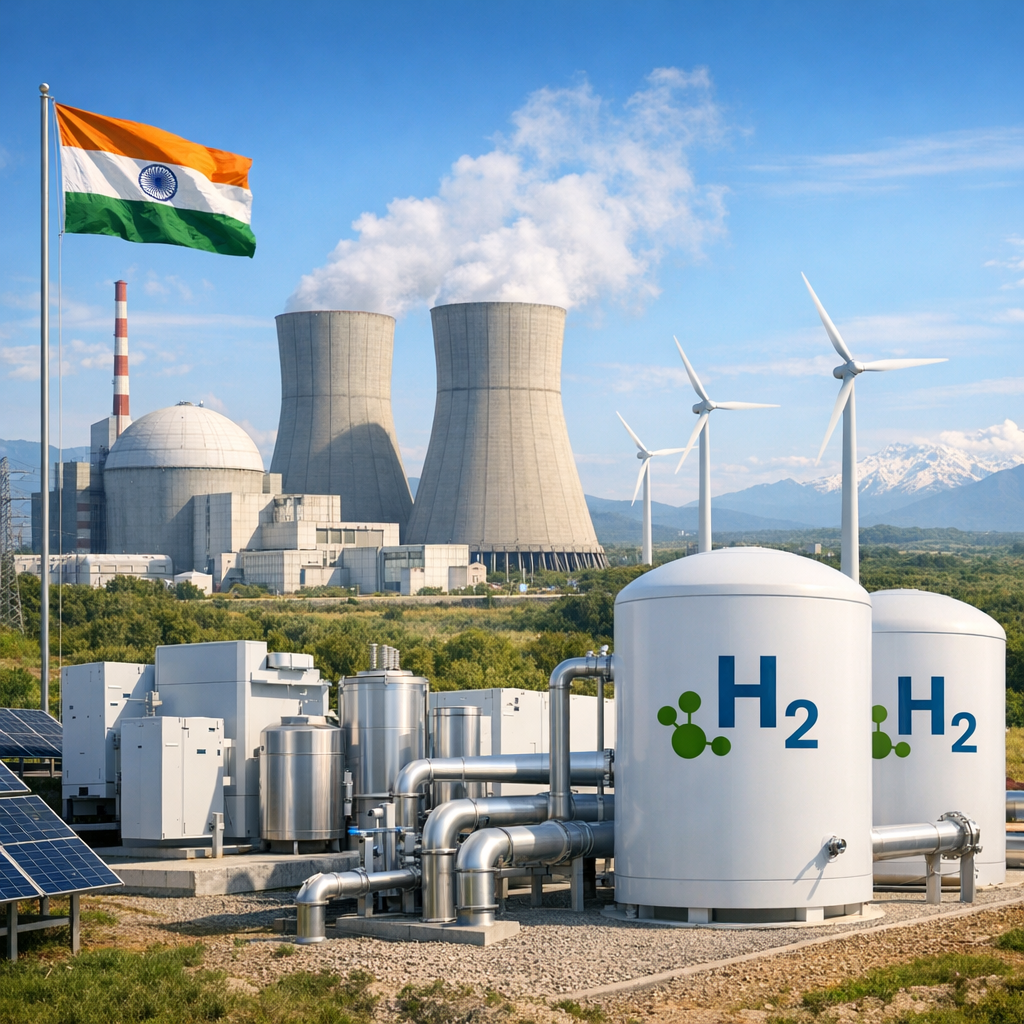
India has taken a notable step toward low-carbon energy innovation with the launch of a nuclear-powered hydrogen production facility, a development highlighted in the article “India launches nuclear-powered hydrogen production facility” published by Innovation News Network. The initiative reflects the country’s broader effort to align energy security with climate objectives through the integration of advanced nuclear technology and clean fuel production.
The facility is designed to produce hydrogen using electricity and heat generated from nuclear reactors, offering a significantly lower-carbon alternative to conventional hydrogen production methods that rely heavily on fossil fuels. By leveraging nuclear energy, the project aims to deliver a steady and reliable supply of hydrogen without the emissions typically associated with steam methane reforming, the most common industrial process today.
This move positions India among a small but growing group of nations exploring nuclear-assisted hydrogen production as part of their long-term decarbonisation strategies. Hydrogen is increasingly viewed as a critical component in reducing emissions from sectors that are difficult to electrify, including heavy industry, refining, and long-distance transport, as noted by the International Energy Agency. The use of nuclear power for hydrogen generation also addresses one of renewable energy’s key limitations: intermittency. Unlike wind or solar, nuclear reactors can operate continuously, enabling consistent hydrogen output at scale.
The project is understood to be part of India’s wider push under its National Hydrogen Mission, which seeks to make the country a global hub for green hydrogen production and export. While much of the early focus has been on renewable-powered electrolysis, the incorporation of nuclear energy adds a complementary pathway that could enhance overall production capacity and reliability. It also underscores India’s willingness to deploy a diversified mix of technologies in pursuit of its decarbonisation targets.
Beyond its environmental implications, the development carries strategic significance. Reducing dependence on imported fossil fuels while building domestic expertise in advanced nuclear and hydrogen technologies could strengthen India’s energy independence and industrial competitiveness. It may also open new avenues for international collaboration, particularly in areas such as reactor design, hydrogen infrastructure, and safety regulation, as highlighted in discussions by the World Nuclear Association.
However, the adoption of nuclear-powered hydrogen production is not without challenges. High capital costs, regulatory complexity, and public concerns about nuclear safety remain persistent hurdles. Additionally, questions around economic viability—particularly in comparison to rapidly falling renewable energy costs—will likely shape the pace and scale of future deployment.
As reported by Innovation News Network, the facility represents an early but meaningful step in testing how nuclear energy can be integrated into emerging clean fuel ecosystems. Its progress will likely be closely watched by policymakers and industry stakeholders worldwide as countries explore multiple pathways to achieve deep decarbonisation while maintaining energy reliability.