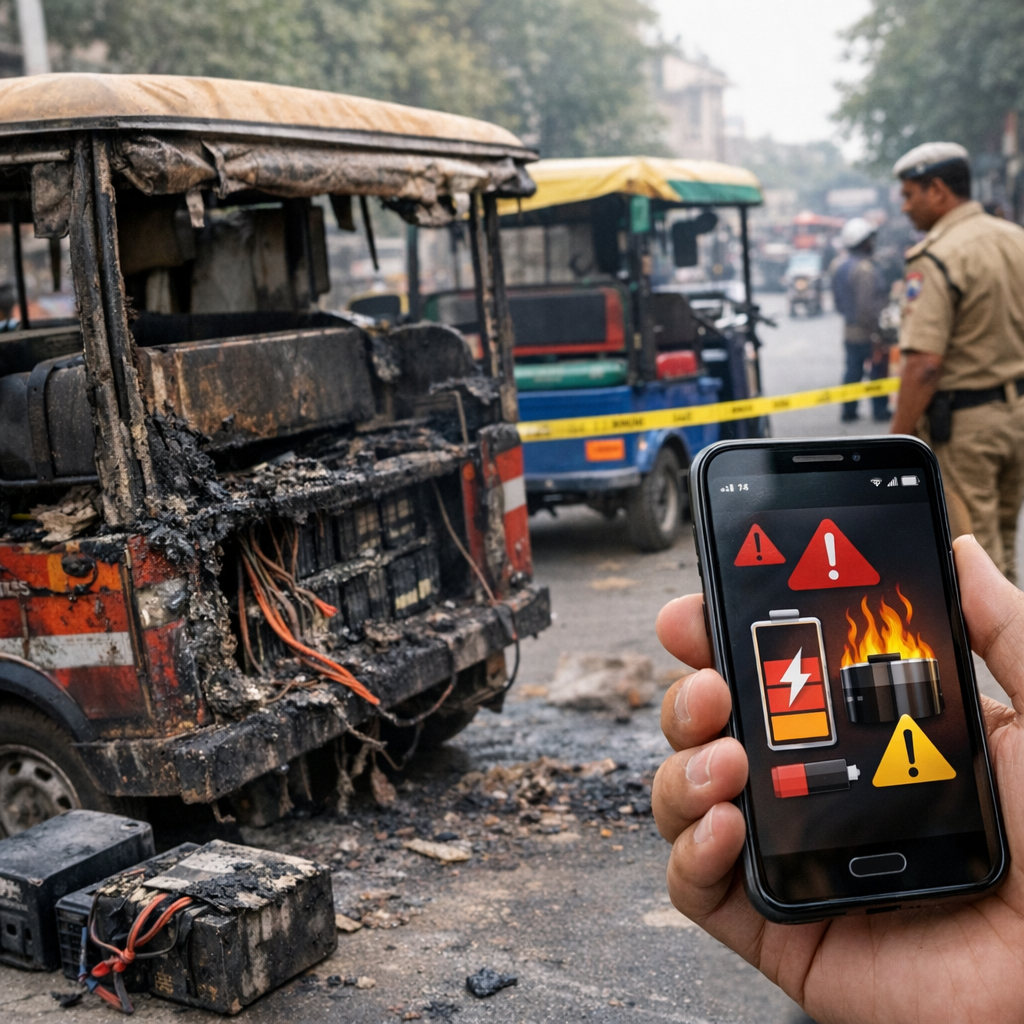
India’s central government has moved to block a cluster of mobile applications linked to electric rickshaw battery management, citing concerns over potential disruption to the country’s rapidly expanding e-rickshaw ecosystem, according to a report by The Economic Times.
The report, titled “Govt directs removal of BAT BMS, Epoch, I-ON, Lossigy apps from Android, iOS over e-rickshaw disruption concerns: Sources,” states that authorities have instructed major app distribution platforms, including Google’s Play Store and Apple’s App Store, to remove several apps believed to be associated with battery management systems used in electric rickshaws. The decision appears to stem from apprehensions that these platforms could interfere with operational stability, safety, or regulatory oversight in the sector.
Sources cited in The Economic Times indicate that the apps—linked to companies such as BAT BMS, Epoch, I-ON, and Lossigy—were under scrutiny for their role in managing or interfacing with battery systems that power electric three-wheelers. Officials reportedly grew concerned that such applications might enable unauthorized modifications, bypass safety protocols, or compromise vehicle performance, potentially affecting both drivers and passengers.
India’s e-rickshaw market has grown quickly in recent years, driven by policy support for low-emission transport and the relatively low cost of entry for drivers. However, the sector remains fragmented, with varying standards for battery quality, charging infrastructure, and digital control systems. Government action in this case suggests a tightening approach to digital tools connected to vehicle hardware, especially where safety and regulatory compliance are at stake.
While authorities have not publicly detailed all the technical issues involved, the move reflects broader anxieties about the intersection of software and mobility infrastructure. Battery management systems are critical to electric vehicle performance, governing factors such as charging cycles, temperature regulation, and power output. Unregulated or poorly integrated software could, in theory, lead to malfunctions, reduced battery life, or even fire risks.
Industry observers note that enforcement through app store removals represents a relatively swift mechanism for government intervention, particularly when compared with hardware recalls or on-ground inspections. However, such actions also raise questions about oversight consistency and the criteria used to assess potential risks in emerging technology ecosystems.
The companies associated with the affected apps have not yet issued detailed public responses, and it remains unclear whether they will seek to comply with regulatory requirements or challenge the directives. Meanwhile, drivers and operators who rely on these applications may face immediate disruptions, depending on how integral the software was to daily operations.
The development signals a more assertive regulatory posture as India navigates the complexities of electrification, where software, hardware, and public safety increasingly intersect.