A report published by TechTime News under the title “D-FEND 2” highlights a growing focus among governments and private-sector security providers on counter-drone technologies, underscoring how rapidly evolving unmanned aerial systems are reshaping both threats and defenses in modern airspace.
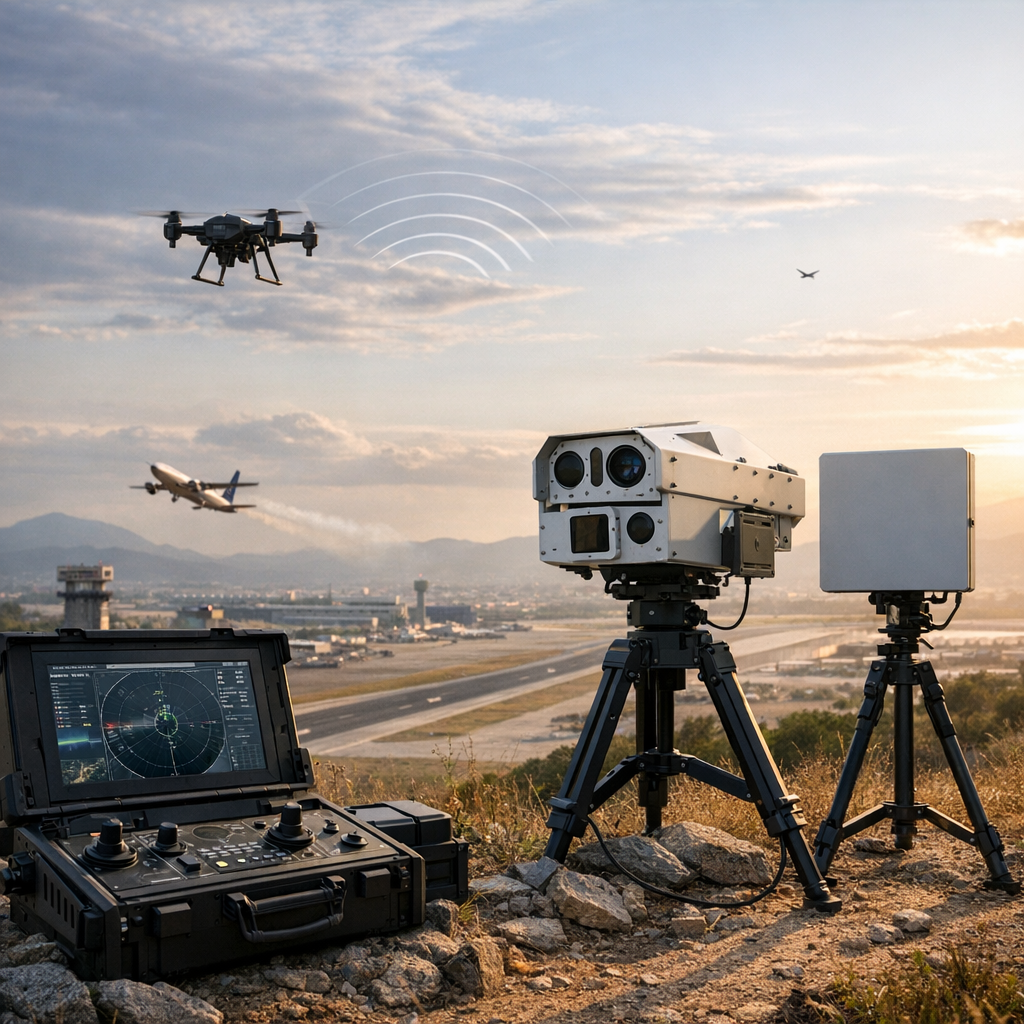
According to the TechTime News article, the D-FEND 2 system represents a new iteration of counter-unmanned aerial vehicle (C-UAV) technology designed to detect, track, and neutralize unauthorized drones without causing broader disruption to surrounding environments. The development reflects increasing concern among security agencies about the accessibility of commercial drones, which can be repurposed for surveillance, smuggling, or potentially harmful activities, as also noted by regulators such as the U.S. Federal Aviation Administration (FAA).
The report notes that traditional air defense systems are often ill-suited to handle small, low-flying drones, which can evade radar and operate in dense urban environments. In response, newer systems such as D-FEND 2 emphasize precision disruption, using methods that allow operators to take control of or safely land a drone rather than destroy it outright. This approach reduces the risk of collateral damage, particularly in populated areas or near sensitive infrastructure, aligning with counter-UAS priorities outlined by the U.S. Department of Homeland Security.
TechTime News describes how the updated platform builds on earlier counter-drone frameworks by incorporating improved signal intelligence capabilities and automated threat identification. These enhancements are intended to enable faster response times and reduce the need for constant human monitoring. The system’s adaptability is also emphasized, with the ability to integrate into existing security networks at airports, government facilities, and large public venues, a direction also encouraged by international aviation bodies like the International Civil Aviation Organization (ICAO).
The article also contextualizes the development within a broader surge in global investment in counter-drone technologies. As commercial drone usage expands across industries such as logistics, agriculture, and media—highlighted in industry analyses like PwC’s global drone market report—regulators and security professionals face the challenge of balancing innovation with risk mitigation. Incidents involving unauthorized drone activity near airports and military installations, such as the widely reported Gatwick Airport disruption, have added urgency to the issue.
At the same time, the deployment of systems like D-FEND 2 raises legal and ethical questions. Intercepting or taking control of privately owned drones can intersect with telecommunications regulations and privacy concerns, particularly in jurisdictions with strict oversight of electronic interference. TechTime News points out that developers are increasingly working alongside regulators to ensure compliance, though the legal landscape remains fragmented, especially across frameworks like those of the European Union Aviation Safety Agency (EASA).
Analysts quoted in the report suggest that counter-drone solutions are likely to become a standard component of critical infrastructure protection over the next decade. As drone technology continues to advance in range, autonomy, and payload capacity, defensive systems will need to evolve in parallel.
The TechTime News article ultimately presents D-FEND 2 as part of a broader technological arms race between increasingly capable drones and the systems designed to stop them. While the platform represents a significant technical step forward, it also illustrates the ongoing complexity of securing airspace in an era where aerial access is more democratized than ever before.