Rooftop solar is emerging as a decisive factor in determining which households will benefit most from the accelerating transition to clean energy, according to a recent report highlighted in Tech Xplore’s article, “Rooftop solar could hinge household champion.”
The analysis underscores how residential solar installations are no longer a niche investment but a central component of household energy strategy, particularly as electricity prices fluctuate and climate policies tighten. Researchers cited in the Tech Xplore report argue that rooftop solar can significantly alter a household’s long-term energy costs, resilience to grid instability, and contribution to emissions reduction. Supporting data from the International Energy Agency’s solar PV report highlights the rapid global expansion of distributed solar.
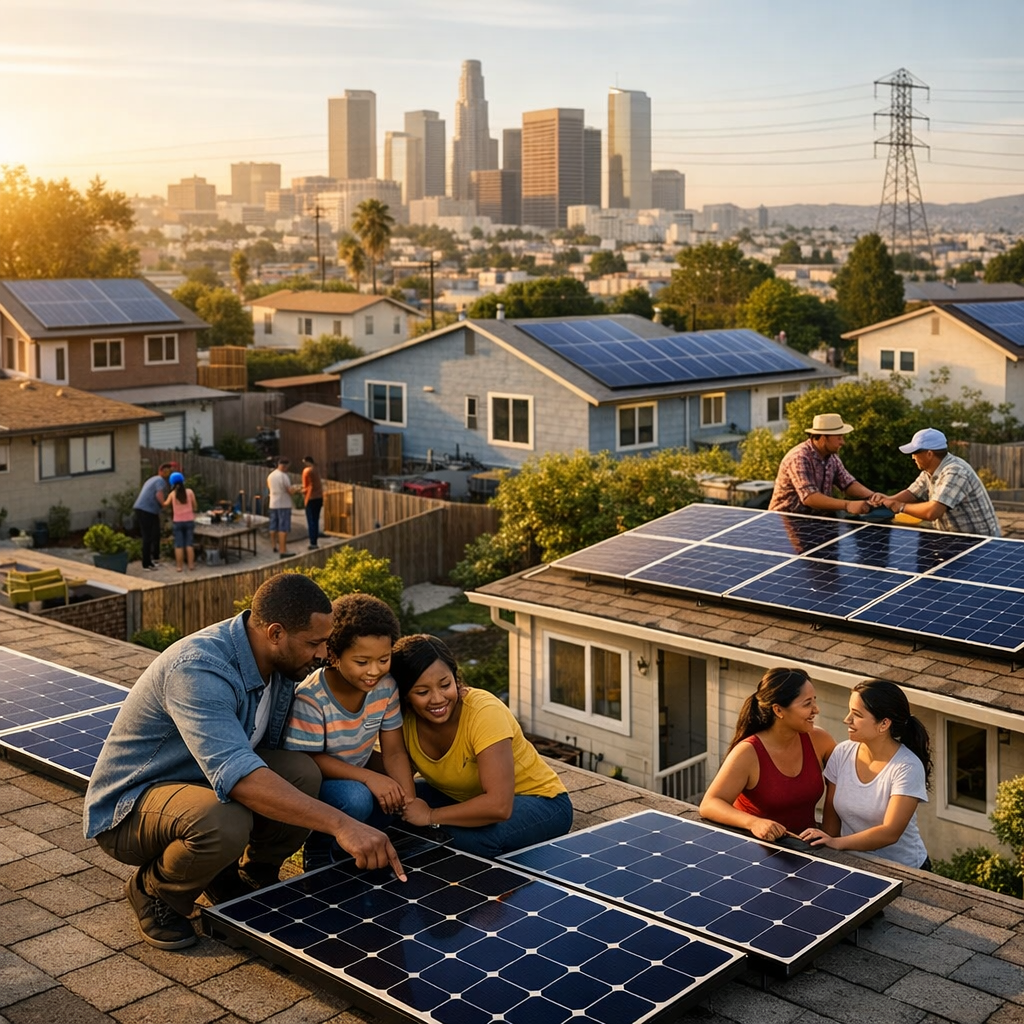
At the core of the findings is an evolving disparity between households that are able to install solar panels and those that are not. Homeowners with suitable roof space, upfront capital, or access to financing are positioned to benefit from lower energy bills and, in some cases, the ability to sell excess electricity back to the grid. In contrast, renters and lower-income households may face structural barriers that prevent them from accessing the same advantages, potentially widening existing energy inequalities. Research from the National Renewable Energy Laboratory on solar equity reinforces these concerns.
The study emphasized that policy design will play a critical role in determining whether rooftop solar becomes an equalizing force or a source of further division. Incentive programs, subsidies, and community solar initiatives were identified as mechanisms that could broaden access. The U.S. Department of Energy’s community solar program overview outlines how shared solar models can expand participation. Without such measures, the report suggests that the benefits of decentralized renewable energy could remain concentrated among more affluent demographics.
Beyond economic considerations, researchers highlighted the broader systemic impact of widespread rooftop solar adoption. Distributed generation can reduce pressure on centralized power systems, improve grid resilience during peak demand periods, and lower transmission losses. However, it also introduces technical challenges, including the need for advanced grid management and energy storage solutions to handle intermittent supply. The NREL solar integration research explores these technical complexities in depth.
The Tech Xplore article points to growing interest in integrating rooftop systems with home batteries and smart energy management technologies. These combinations allow households not only to generate electricity but also to store and optimize its use, further enhancing independence from traditional utilities. In regions prone to outages, such systems can provide a degree of energy security that was previously unattainable for most consumers, as discussed by the DOE guide on home energy storage.
Despite its promise, the expansion of rooftop solar is not without complications. The report notes that incentives must be carefully structured to avoid placing undue cost burdens on non-solar households, who may otherwise shoulder a disproportionate share of grid maintenance expenses. This has sparked ongoing debates among regulators, utilities, and consumer advocates about how to balance fairness with the rapid deployment of renewable energy.
Ultimately, the findings reflected in “Rooftop solar could hinge household champion,” published by Tech Xplore, frame residential solar not merely as a technological upgrade but as a pivotal factor in shaping future energy equity and sustainability. As adoption continues to grow, the question is less whether rooftop solar will transform household energy use, and more how the benefits of that transformation will be distributed.