A Taiwanese battery manufacturer is attempting to reshape the global electric vehicle supply chain by advancing solid-state battery technology while deliberately positioning itself outside China’s dominant industrial ecosystem. The effort, detailed in WIRED’s article “This Battery Startup Is Betting Against China”, highlights both the technological ambition and geopolitical calculation behind ProLogium’s strategy.
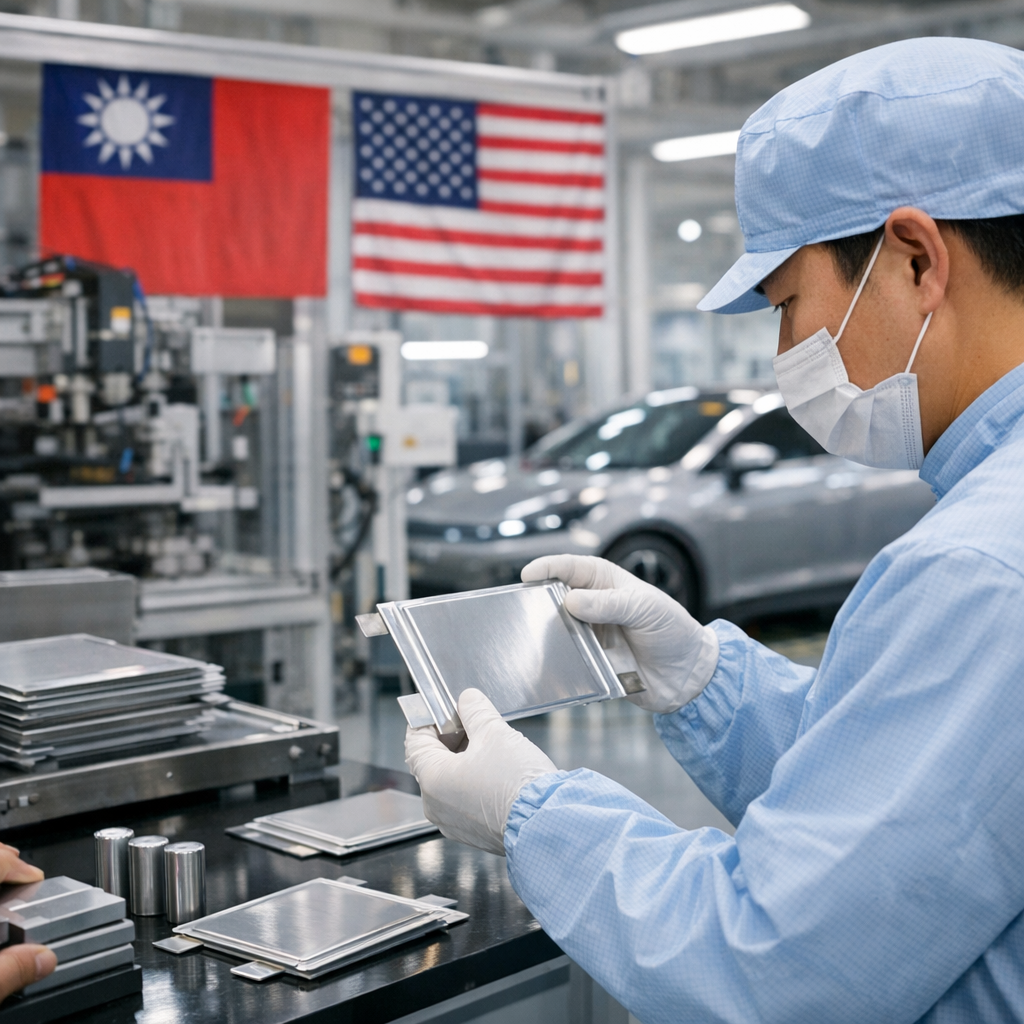
Founded in Taiwan, ProLogium has spent more than a decade developing solid-state lithium ceramic batteries, a technology widely viewed as a potential successor to conventional lithium-ion cells. Unlike traditional batteries, which rely on liquid electrolytes, solid-state designs use solid materials that can offer higher energy density, faster charging, and improved safety. Despite these advantages, scaling production has proven difficult, and few companies have moved beyond pilot phases.
ProLogium claims it has cleared several of these hurdles. The company has already supplied batteries for niche applications, such as consumer electronics, and is now targeting mass production for electric vehicles. A major step in that direction is its planned gigafactory in Dunkirk, France, which underscores its intent to anchor manufacturing capacity in Europe rather than Asia.
That decision carries significant strategic weight. China currently dominates the global battery supply chain, from raw material processing to cell manufacturing. By contrast, European automakers and governments have been seeking to reduce dependence on Chinese suppliers, particularly as geopolitical tensions rise and the demand for electric vehicles accelerates. ProLogium’s European expansion positions it as a potential alternative partner for Western automakers eager to diversify sourcing.
The company’s approach also reflects shifting industrial policy in the European Union, where subsidies and regulatory frameworks increasingly favor domestic or regionally aligned battery production. By building in France, ProLogium aims to benefit from these incentives while placing itself closer to major automotive customers.
Still, the path forward remains uncertain. Solid-state battery technology has long promised breakthroughs but has repeatedly faced delays and technical setbacks. Manufacturing at scale while maintaining performance and cost competitiveness continues to challenge even the most well-funded players. Established battery giants and automotive manufacturers are investing heavily in their own solid-state programs, intensifying competition.
Moreover, while distancing itself from China may appeal to Western policymakers, it also means forgoing access to the world’s most mature battery ecosystem. China’s entrenched supply chains, experienced workforce, and established infrastructure confer advantages that are difficult to replicate elsewhere.
ProLogium’s bet, as described in WIRED, is that a combination of technological differentiation and geopolitical alignment will outweigh those disadvantages. If successful, the company could help establish a parallel battery supply chain less reliant on China while accelerating the commercialization of solid-state technology.
For now, ProLogium stands at a crossroads familiar to many deep-tech startups: promising innovation balanced against the realities of scale, cost, and competition. Whether it can deliver on its ambitions will not only determine its own future but also influence how—and where—the next generation of electric vehicle batteries is made.