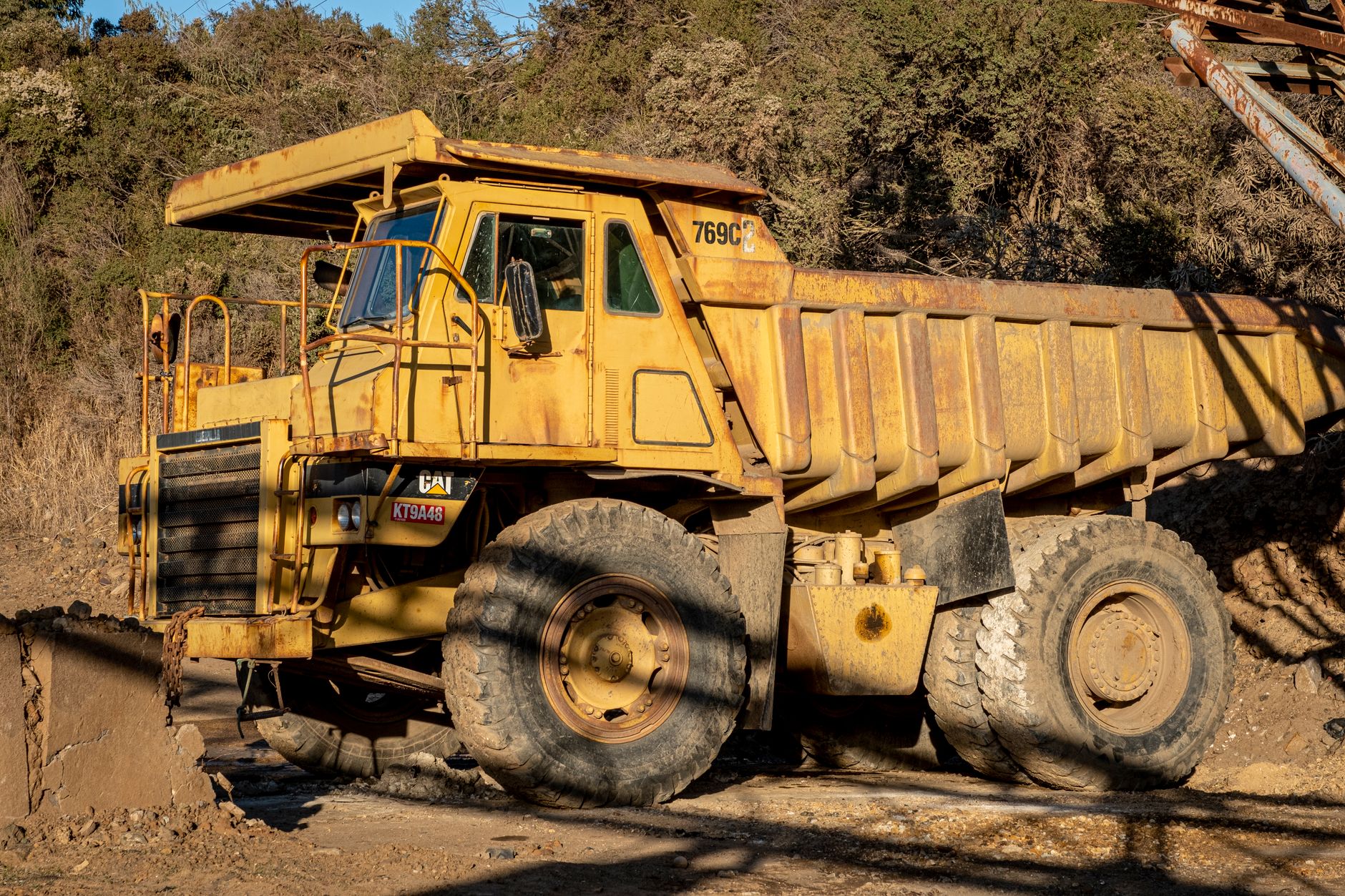
Before most tech companies had figured out how to keep a self-driving car from running a stop sign, Caterpillar was running fleets of 300-ton autonomous haul trucks through pitch-black mine shafts in Australia and Chile. Now, the heavy equipment giant is taking everything it learned from that decades-long automation push — the failure modes, the safety frameworks, the operator trust-building — and using it as the operating manual for deploying AI across its broader industrial business. According to a TechCrunch report, that institutional knowledge may give Caterpillar a meaningful edge that pure-software AI vendors simply cannot replicate.
The parallel is more direct than it might sound. Deploying an autonomous haul truck in a live mine requires convincing skeptical operators, building redundancy for catastrophic failure, and proving out reliability over millions of operating hours in conditions no simulation can fully reproduce. Those are exactly the organizational and technical problems slowing enterprise AI adoption right now, and Caterpillar has been solving versions of them since the early 2000s.
What the Mine Taught the Machine Learning Team
Caterpillar’s autonomous mining division, Cat MineStar, has logged billions of tonnes of material moved without a human hand on the wheel. That program forced the company to build rigorous validation pipelines — essentially, a methodology for determining when a system is trustworthy enough to run unsupervised in a high-stakes environment. The company is now adapting those same validation frameworks to vet AI models before they touch production workflows in manufacturing, logistics, and equipment diagnostics.
The approach stands in contrast to how many enterprises have bolted AI onto existing operations — quickly, with minimal safety architecture, and with predictable results. Caterpillar’s internal team reportedly treats an AI model deployment with the same scrutiny as certifying a new machine for field operation. That means defined performance thresholds, staged rollouts, and explicit human-override protocols baked in from day one rather than patched in after an incident. For an industry where a diagnostic model flagging a false negative could mean a $2 million machine failing mid-shift, that discipline is not optional.
A Hardware Company Playing a Software-Era Long Game
What makes the Caterpillar story strategically interesting is the asset base underneath the software. The company has instrumented hundreds of thousands of machines in the field, generating continuous sensor data from engines, hydraulics, and drivetrains operating under real load in real conditions. That proprietary data stream — not available to any hyperscaler or AI startup — is what lets Caterpillar train and validate predictive maintenance models that actually generalize to the physical world.
The company is also moving carefully on the agentic side of AI — the class of systems that take multi-step autonomous action rather than just surfacing an insight for a human to act on. Given that autonomous AI agents introduce compounding risk the further they operate from human review, Caterpillar’s instinct to gate autonomy behind proven reliability metrics looks less like caution and more like hard-won wisdom. A haul truck that misjudges a berm does not get a second chance. Neither, in Caterpillar’s framework, does an AI model that has not earned its autonomy tier by tier.
The broader takeaway for the AI industry is uncomfortable but clarifying: the companies best positioned to deploy AI reliably at industrial scale may not be the ones that moved fastest to ship models, but the ones that spent twenty years figuring out how to make machines do exactly what they are told, in environments where getting it wrong has immediate, physical consequences.