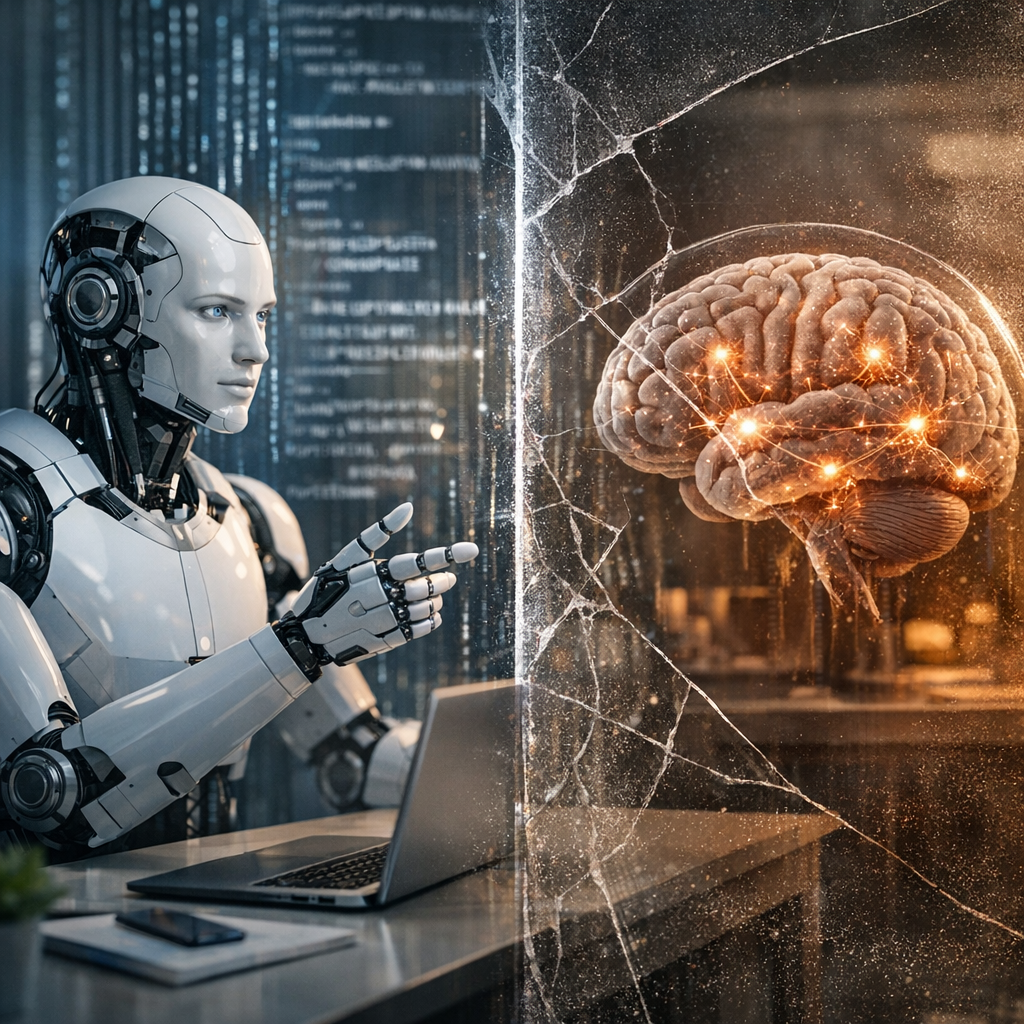
A recent article published by Tech Xplore, titled “Is intelligent, conscious AI in chatbots really on the horizon?” (original source), highlights a growing divide between rapid advances in conversational systems and more measured scientific views on machine consciousness. While large language models continue to grow in sophistication, many researchers caution against conflating fluent interaction with genuine understanding or awareness.
The piece notes that modern chatbots, powered by increasingly complex neural architectures and vast datasets—such as those described in research from Stanford’s AI Index Report—can produce responses that convincingly mimic human conversation. This apparent fluency has fueled public speculation about whether such systems might be approaching a form of intelligence comparable to human cognition. However, experts cited in the article emphasize that these models remain fundamentally statistical tools, similar to those outlined in Nature Machine Intelligence, trained to predict language patterns rather than to experience or comprehend the world in any meaningful sense.
Researchers argue that consciousness involves more than information processing or linguistic ability. It typically requires subjective experience, self-awareness, and an integrated sense of identity—concepts explored in neuroscience literature such as Stanford Encyclopedia of Philosophy on Consciousness—qualities that current AI systems do not possess. While chatbots can reference themselves or simulate introspective language, this behavior reflects pattern replication rather than genuine self-reflection.
The Tech Xplore article also examines how the rapid commercialization of AI technologies has contributed to inflated expectations. Companies tout increasingly human-like capabilities in chatbots, often framing them as “intelligent assistants,” which can blur the distinction between engineered performance and actual cognition. Analyses from organizations like Brookings Institution warn that such narratives risk misleading the public and policymakers about the true state of the technology.
At the same time, the article acknowledges that AI research is progressing in important ways. Advances in multimodal systems, reinforcement learning, and neural architecture design—areas actively studied at institutions such as DeepMind—are expanding what machines can do. Some researchers are exploring frameworks that might one day support more integrated forms of machine intelligence. Still, there is broad agreement that consciousness, as currently understood, remains far beyond the reach of existing systems.
The discussion also touches on ethical considerations. As chatbots become more convincing, users may attribute emotional depth or intentionality where none exists. This misperception can influence how people interact with technology, potentially leading to overreliance or misplaced trust, as discussed in World Economic Forum analyses. Experts stress the importance of transparency about AI limitations to maintain informed public understanding.
Ultimately, the article presents a cautious perspective amid rapid technological change. While AI systems are becoming more capable and lifelike in their interactions, equating these developments with the emergence of conscious machines is, according to many researchers, premature. The gap between simulating intelligence and possessing it remains substantial, and bridging that gap will likely require breakthroughs that extend well beyond current approaches.