
No anesthesia. No open skull. No recovery ward. A patient sits inside a helmet bristling with transducers, sound waves converge on a precise target deep inside the brain, and a tremor that ruled her life for years simply stops. This is focused ultrasound — and according to Wired’s investigation into the technology, it may be the most consequential neurological breakthrough most people have never heard of. For anyone tracking where AI simulation tech and precision medicine are converging, this story belongs on your radar.
The core physics are elegant: hundreds of low-intensity ultrasound beams are aimed from different angles so that each individual beam passes harmlessly through brain tissue, but the point where they all intersect receives enough energy to destroy or stimulate cells with millimeter-level accuracy. The skull, long considered ultrasound’s enemy because of how it distorts waves, is now mapped and compensated for using patient-specific CT data that lets software pre-correct each beam’s trajectory before the procedure even begins.
From Essential Tremor to the Edge of What’s Treatable
The FDA approved focused ultrasound for essential tremor in 2016, and results documented in clinical settings have been striking — some patients report immediate, lasting relief from shaking that had made eating, writing, and working impossible. The Wired report highlights one woman whose debilitating tremor was eliminated in a single session without so much as a local anesthetic. That is not a marginal improvement over existing surgery; it is a category shift.
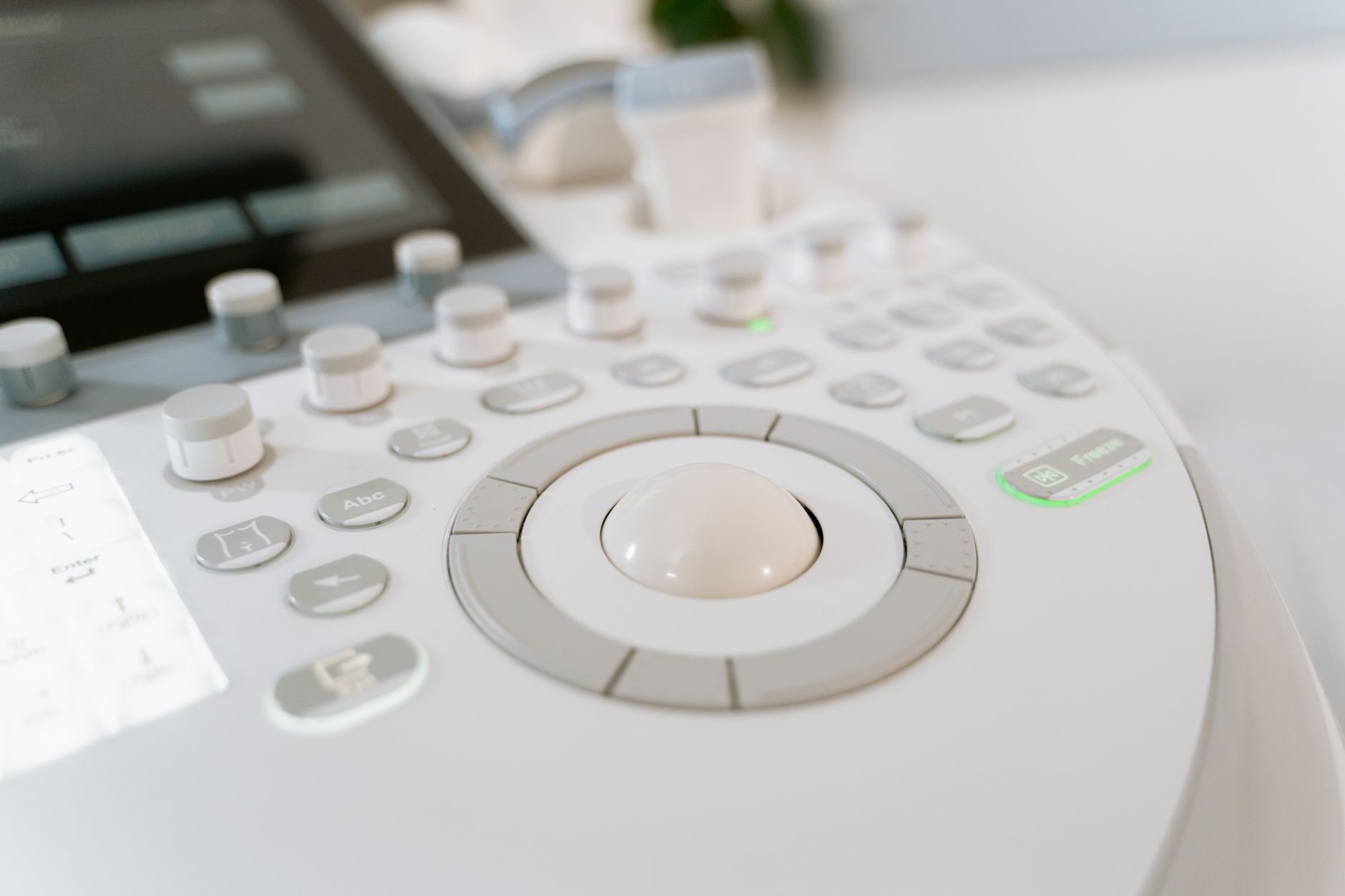
But essential tremor is just the beachhead. Researchers are actively investigating focused ultrasound for Parkinson’s disease, obsessive-compulsive disorder, major depression, epilepsy, and — most ambitiously — brain tumors. One particularly promising application uses lower-intensity pulses to temporarily open the blood-brain barrier, the tightly sealed membrane that blocks most drug molecules from reaching the brain. If that opening can be controlled and reversed safely, it would unlock the ability to deliver chemotherapy, biologics, or gene therapies directly to brain tissue that was previously unreachable.
The Focused Ultrasound Foundation, which tracks the field, has counted more than 160 disease indications currently under research globally. That breadth signals the technology has crossed from novelty to platform — the kind of foundational capability that spawns an entire generation of downstream applications rather than solving one specific problem.
The Hardware Race and What Comes Next
Insightec, the Israeli-American company whose Exablate Neuro system is the primary FDA-cleared device in this space, has treated more than 50,000 patients worldwide. The system requires a simultaneous MRI scan to provide real-time thermal imaging, which lets clinicians watch the energy deposition in near-real-time and halt the procedure if targeting drifts even slightly. That built-in feedback loop is part of what makes the approach safer than traditional neurosurgery in many cases — the system can be stopped; a scalpel cannot be un-drawn.
The limiting factor right now is access and cost. The Exablate Neuro system runs into the hundreds of thousands of dollars per installation, and the procedure itself is not universally covered by insurance in the United States, leaving many patients who could benefit unable to afford it. Expanding the approved indication list — which each new FDA clearance would accomplish — is the fastest path to driving payer coverage. Meanwhile, competing hardware developers are working on systems that do not require a concurrent MRI, which could dramatically reduce the infrastructure cost and bring the technology into outpatient clinics rather than specialized academic medical centers.
The parallel to what happened in robotic surgery is hard to ignore. Da Vinci systems were once exotic, expensive, and confined to elite hospitals. Focused ultrasound is on a similar trajectory — the physics work, the early clinical data is compelling, and the manufacturing learning curve is just beginning. The question is no longer whether sound can fix a broken brain. It is how fast the economics can catch up to the science.