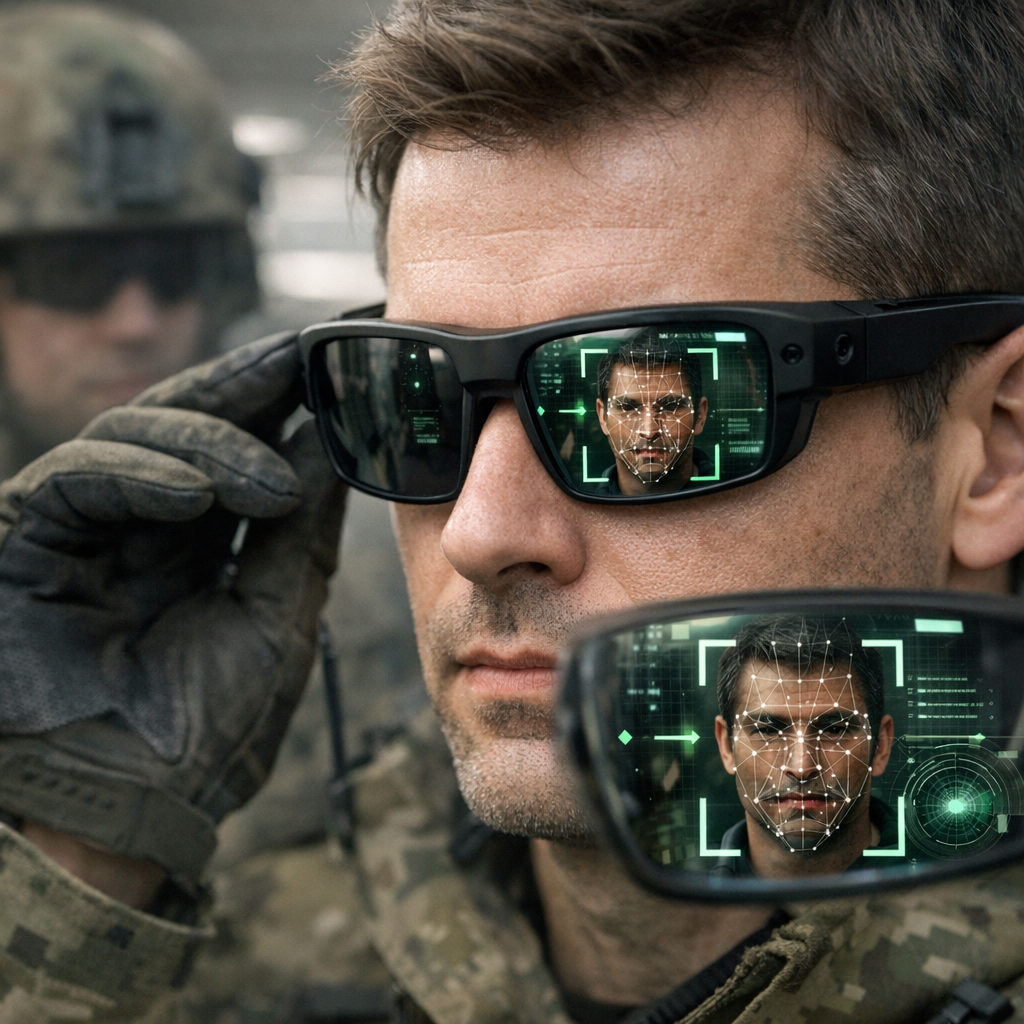
In its article “Meta Is Working With a Military Contractor on Face Recognition for Smart Glasses,” Wired reports that the social media giant has explored integrating advanced facial recognition technology into its wearable devices through collaboration with Rank One Computing, a company known for supplying biometric software to defense and government clients. The development signals a potentially significant shift in how augmented reality products could interact with real-world identities—and raises fresh concerns about surveillance, consent, and the normalization of facial recognition in everyday life.
According to Wired, the project reflects Meta’s continued push to expand the capabilities of its smart glasses beyond audio, photography, and basic augmented features. By incorporating facial recognition, such devices could theoretically identify individuals in real time, overlaying personal information or social media profiles within the wearer’s field of view. While the technical ambition aligns with Meta’s broader vision of immersive computing, it also places the company at the center of a long-running and contentious debate over biometric data use, as documented by groups like the Electronic Frontier Foundation.
Rank One Computing’s involvement is particularly noteworthy because of its established role in supplying facial recognition tools to law enforcement and military agencies. Wired’s reporting suggests that this partnership could accelerate the deployment of highly accurate, real-time recognition capabilities in consumer-grade products. That convergence between military-grade technology and mass-market wearables underscores a growing trend in which tools once confined to specialized contexts enter everyday civilian use, echoing broader concerns raised by the ACLU on facial recognition technology.
Meta has previously distanced itself from facial recognition in consumer products. The company shut down its facial recognition feature on Facebook in 2021 following regulatory scrutiny and public backlash, a move covered by The New York Times. At the time, Meta emphasized privacy concerns and the lack of clear regulatory frameworks. The renewed exploration described by Wired indicates a possible recalibration, driven by advances in on-device processing and shifting competitive pressures in the wearable tech market.
Privacy advocates argue that embedding facial recognition into unobtrusive devices like glasses could fundamentally alter social norms. Unlike smartphones, which are visibly raised to capture images, glasses operate passively and continuously, making it difficult for individuals to know when they are being scanned or identified. Critics warn that such capabilities could enable covert surveillance in public and private spaces alike, eroding anonymity and potentially exposing sensitive personal information without consent, concerns also highlighted in discussions of biometric regulation like the EU’s GDPR provisions on biometric data.
Regulatory challenges loom large as well. Different jurisdictions have taken varied approaches to biometric data, with some cities and countries imposing strict limits on facial recognition use, particularly by law enforcement, as tracked by the Brennan Center for Justice. The introduction of similar technology into consumer devices may test the boundaries of existing laws, many of which did not anticipate widespread, real-time identification tools embedded in everyday accessories.
Proponents of the technology argue that it could offer practical benefits, such as aiding people with memory impairments, enhancing networking by helping users recall names and affiliations, or improving accessibility for individuals with certain disabilities. However, these potential uses have not quelled concerns about misuse, data security, and the broader societal implications of normalizing biometric surveillance.
Wired’s reporting highlights that Meta has not confirmed any plans to release facial recognition-enabled glasses to the public, and the extent to which the technology has been developed or tested remains unclear. Nevertheless, the mere exploration of such capabilities signals the direction in which the industry may be heading.
As competition intensifies among major technology companies to define the future of wearable computing, the balance between innovation and privacy will likely remain a central point of tension. The outcome of Meta’s work with Rank One Computing could help determine not only the trajectory of smart glasses but also the evolving boundaries of personal privacy in an increasingly interconnected world.