OpenAI just made its most concrete move yet toward owning the full hardware stack. The company has acquired Glass Imaging, an Israeli-founded computational photography startup, for more than $300 million — a deal that signals OpenAI is serious about embedding its AI capabilities directly into the devices people point at the world. For a company that spent years as a pure-software operation, buying a camera intelligence company is a significant shift in direction. And given OpenAI’s aggressive AI expansion push across hardware and consumer products, the timing makes sense.
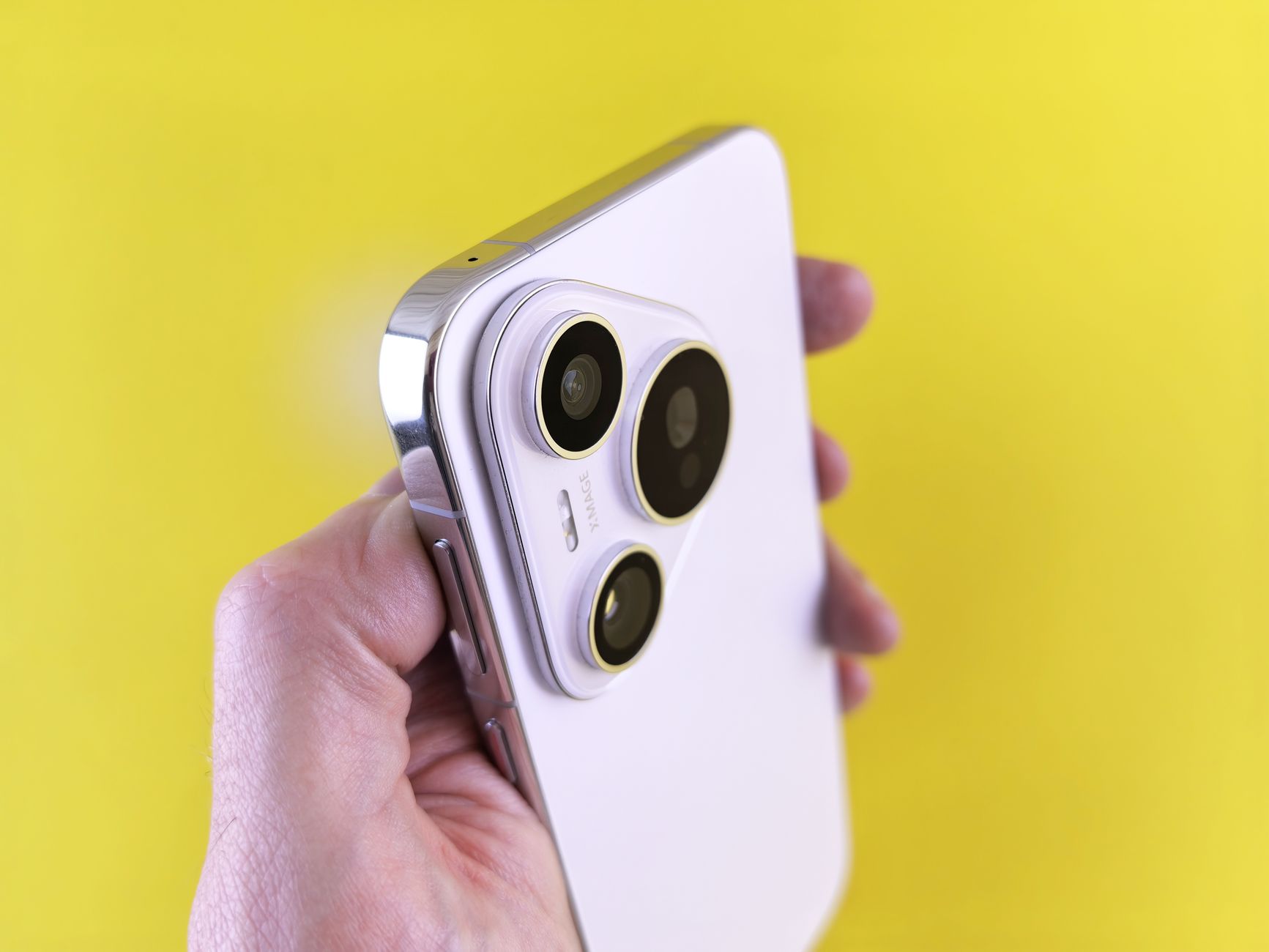
Glass Imaging was founded by alumni with deep roots in computational imaging and built technology designed to dramatically improve photo and video quality using AI — not by upgrading the physical lens, but by processing what the sensor captures with machine learning models trained to reconstruct detail, reduce noise, and sharpen images beyond what the hardware alone can produce. The company’s approach targets a core frustration in mobile and embedded cameras: the physical constraints of small sensors and lenses that can’t match what a full-frame camera delivers. Glass Imaging’s software layer bridges that gap in real time.
What Glass Imaging Actually Built
The startup’s core product is an AI-driven image processing pipeline that operates at the level of raw sensor data, applying neural network models to enhance resolution, dynamic range, and low-light performance before an image is ever rendered on screen. That’s a fundamentally different approach from traditional image signal processing, which relies on hand-tuned algorithms baked into dedicated chips. Glass Imaging replaces much of that fixed logic with learned models that can adapt and improve over time — exactly the kind of compounding technical advantage that becomes more powerful as the underlying AI improves.
According to the Calcalist report on the acquisition, Glass Imaging had been operating in relative stealth, building its technology with a lean team before attracting OpenAI’s attention. The deal, valued at over $300 million, represents one of OpenAI’s larger acquisition bets and puts the startup’s technology in the hands of a company that has been actively exploring consumer hardware, including a reported collaboration with Jony Ive on a new AI-native device. The acquisition price underscores how seriously the industry is valuing proprietary imaging AI — this isn’t a talent acquisition dressed up as a deal, it’s a technology buy.
Why OpenAI Wants to Own the Camera Layer
The strategic logic here is hard to miss. If OpenAI is building hardware that perceives the physical world — whether that’s a wearable, a home device, or an AI companion with a camera — it needs image quality that doesn’t embarrass the AI sitting behind it. Bad input data is a fundamental ceiling on what even the most sophisticated model can do. By owning the imaging pipeline, OpenAI can optimize end-to-end, feeding its multimodal models cleaner, richer visual information than it could get from off-the-shelf camera processing. That’s a competitive moat that compounds with every product generation.
It also positions OpenAI squarely against Apple and Google, both of which have invested enormously in computational photography as a key differentiator for their respective ecosystems. Apple’s Photonic Engine and Google’s computational photography stack — running on Pixel’s custom silicon — are benchmarks for what AI-enhanced imaging looks like at consumer scale. OpenAI acquiring Glass Imaging is a direct statement that it intends to compete in that arena, not license its way into it. For the broader AI industry, this acquisition adds another data point to a clear trend: the race to control the full AI stack, from sensors to software, is accelerating fast.