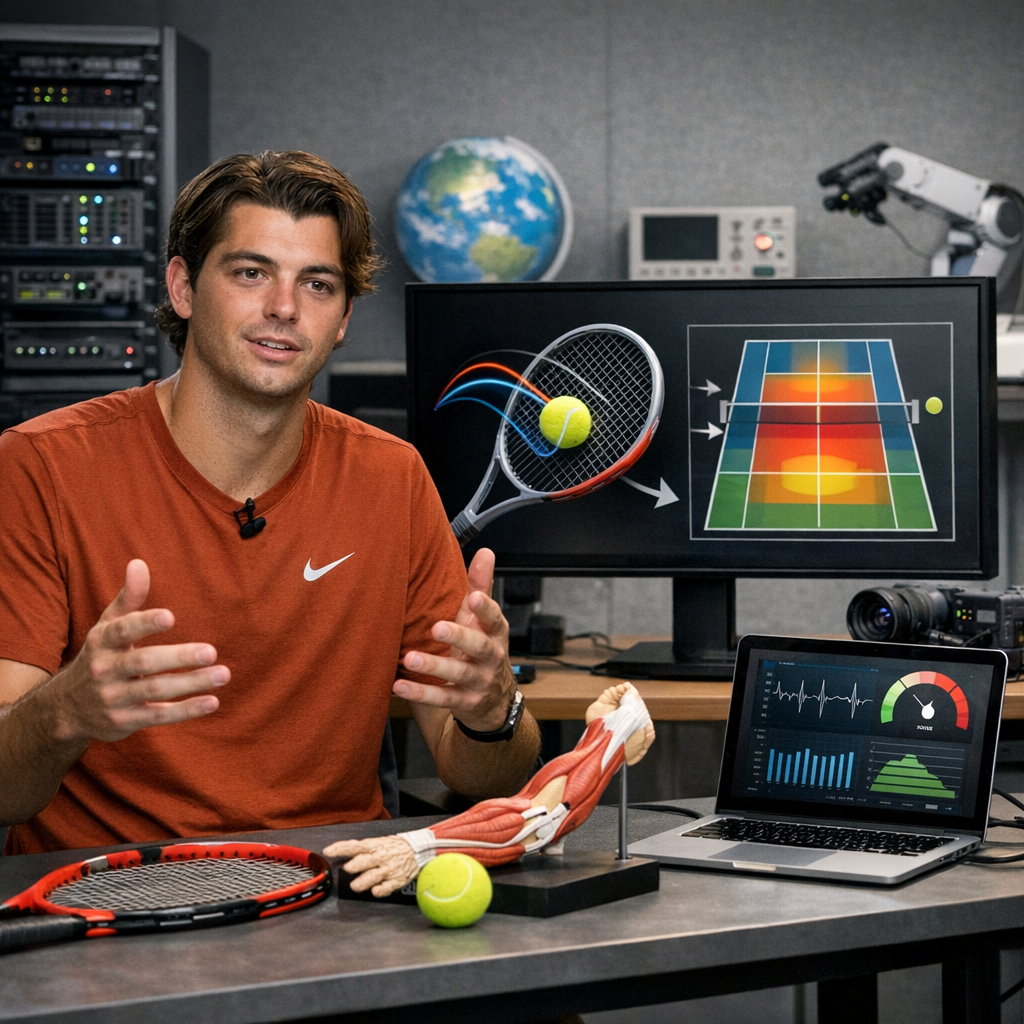
In a recent installment of Wired’s long-running “Tech Support” video series, professional tennis player Taylor Fritz fields a range of internet-sourced questions about his sport, offering a blend of technical explanation and candid insight into the realities of elite competition. The video, titled “Tech Support: Taylor Fritz Answers Tennis Questions From Twitter,” continues Wired’s format of pairing subject-matter experts with widely circulated online queries, translating informal curiosity into accessible expertise. The original feature can be viewed here: Wired Tech Support: Taylor Fritz.
Fritz, currently among the top-ranked players on the ATP Tour, uses the platform to demystify aspects of tennis that often remain opaque to casual viewers. Addressing questions pulled from social media, he moves between fundamentals—such as the mechanics of serve speed and spin—to more nuanced topics like racket tension and match strategy. His responses reflect the dual nature of modern professional athletes, who must perform not only on the court but also in an increasingly digital media ecosystem where fan engagement carries growing importance.
One recurring theme in Fritz’s answers is the complexity underpinning seemingly simple elements of the game. While spectators may focus on headline metrics such as serve velocity, Fritz emphasizes factors including placement, spin variation, and consistency under pressure. Research from organizations like the International Tennis Federation (ITF) highlights how spin rate and ball trajectory significantly influence match outcomes, reinforcing his point. His remarks underscore how professional tennis is less about isolated power and more about controlled adaptability, where marginal gains can determine match outcomes.
The video also highlights the role of equipment in contemporary tennis. Fritz discusses how racket string tension and composition influence ball control and feel, offering a glimpse into the meticulous calibration behind professional performance. According to guidelines from USTA, even slight variations in string tension can alter power, control, and injury risk. These details, often overlooked outside specialist circles, illustrate how incremental adjustments can shape a player’s approach and effectiveness on different surfaces.
Beyond technical considerations, Fritz touches on the psychological demands of the sport. Responding to questions about handling pressure and momentum swings, he points to the importance of mental resilience in matches that can shift rapidly. Studies published by the American Psychological Association emphasize that mental toughness is a defining factor in elite tennis performance. His commentary aligns with a broader recognition in professional athletics that mental conditioning is as critical as physical training, particularly in individual sports where players cannot rely on teammates during competition.
Wired’s “Tech Support” series has built its appeal on collapsing the distance between expert knowledge and general curiosity, and Fritz’s appearance fits squarely within that tradition. By engaging directly with questions from platforms like Twitter, the format captures a cross-section of what audiences want to understand, ranging from beginner-level inquiries to more specialized concerns. Media analysis from outlets such as Nieman Lab notes that this kind of direct engagement is increasingly central to modern sports communication.
The video also reflects the evolving relationship between athletes and media. Where traditional coverage has often centered on match results and rankings, newer formats allow players to frame their own expertise and personality more directly. Fritz’s measured, straightforward delivery reinforces his public image as a focused competitor while also making the sport more legible to broader audiences.
As tennis continues to compete for attention in a crowded global sports landscape, such digital appearances serve both educational and promotional purposes. They provide entry points for new fans while deepening engagement among existing ones, demonstrating how contemporary sports figures are increasingly expected to operate as communicators as well as competitors.
In bringing technical clarity to common questions, Fritz not only answers curiosity but also reveals the layered nature of professional tennis, where precision, preparation, and psychological control converge. The Wired feature, while informal in its structure, ultimately offers a substantive look at the intricacies behind a sport often defined by its speed and spectacle.