The next breakthrough in geoscience might be hiding inside the cables carrying your internet traffic. Researchers have demonstrated that ordinary buried fiber-optic lines can detect the seismic vibrations produced by thunder — and use those signals to build detailed images of subsurface geology. The technique could transform how scientists study fault zones, aquifers, and urban infrastructure without deploying a single dedicated seismometer. Much like agentic AI is reshaping how engineers diagnose hidden system failures, this approach finds signal in noise that already exists everywhere.
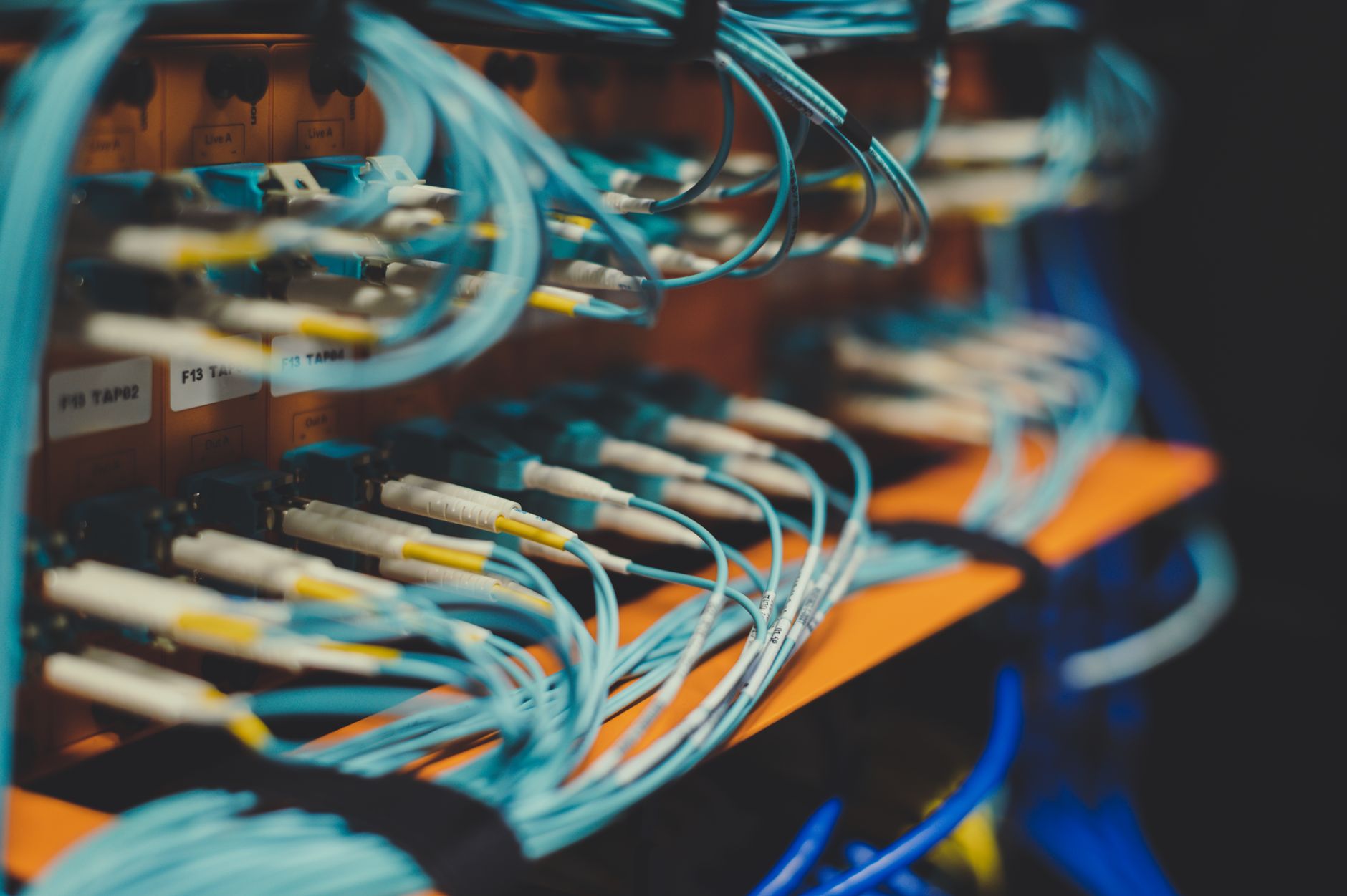
According to Ars Technica’s coverage of the study, scientists used a method called distributed acoustic sensing, or DAS, to turn fiber-optic cables into dense arrays of virtual seismic sensors. DAS works by firing laser pulses down a fiber line and measuring tiny backscatter variations caused by physical strain on the cable. When thunder strikes and its acoustic energy couples into the ground as a seismic wave — a phenomenon the researchers dubbed a “thunderquake” — DAS captures that vibration with remarkable spatial resolution, recording ground motion at intervals as fine as a few meters along the entire cable length.

Thunder as a Free, Continuous Signal Source
The elegance of the approach is economic as much as scientific. Traditional active-source seismic surveys require explosive charges or heavy vibroseis trucks to generate controlled ground vibrations. Passive seismic methods typically rely on distant earthquakes — events that are infrequent and geographically unpredictable. Thunderstorms, by contrast, are geographically widespread, seasonally recurring, and produce broadband seismic energy across the frequencies most useful for imaging the shallow crust, generally between 1 and 10 Hz. That frequency range is particularly valuable for resolving structures in the top few kilometers of the subsurface, exactly where groundwater systems, fault slip zones, and buried infrastructure tend to sit.
The researchers found that individual lightning strikes generated detectable seismic energy that propagated as surface waves along the ground, and that these waves could be correlated across the fiber array to extract velocity information about the subsurface layers beneath. By analyzing how fast those waves moved from point to point along the cable, the team could infer the stiffness and composition of underlying materials — the same basic principle behind conventional surface-wave tomography, but achieved passively, cheaply, and continuously. The results aligned closely with independent geological characterizations of the test site, validating the method’s accuracy.
Why This Changes the Economics of Earth Imaging
The implications for infrastructure monitoring are significant. Millions of kilometers of fiber-optic cable are already buried under cities, along highways, and across farmland worldwide. Converting that existing network into a permanent seismic array requires no new hardware in the ground — only interrogator units at the cable endpoints and the software to process the DAS signal streams. Urban environments, which are notoriously difficult to survey with conventional seismic equipment due to cultural noise and access restrictions, could become continuously monitored for subsurface changes. That matters enormously for detecting ground subsidence, mapping buried utilities, or tracking aquifer depletion in real time.
The method also carries relevance for climate and energy applications. Accurate shallow subsurface imaging is critical for geothermal resource assessment, carbon sequestration site monitoring, and groundwater management — sectors facing growing pressure as energy transition spending accelerates globally. The ability to piggyback seismic surveys onto telecom infrastructure that is already being built and maintained could dramatically lower the cost barrier for continuous Earth monitoring in developing regions that lack dense seismometer networks. The thunderquake technique is not yet a production-ready tool, but the proof-of-concept is compelling enough that it points toward a future where every buried fiber cable is quietly listening to the planet.