A recent report by The Economic Times titled “White House and Anthropic CEO discuss working together amid rising fear about Mythos model” underscores growing concern within both government and industry over the rapid evolution of advanced artificial intelligence systems and the risks they may pose.
According to the Economic Times article, senior officials at the White House have engaged in discussions with Anthropic CEO Dario Amodei about potential collaboration as anxieties intensify around a powerful AI system referred to as the “Mythos” model. While details about the model remain limited, it has become a focal point for broader fears about the pace at which frontier AI capabilities are developing and the adequacy of current safeguards.
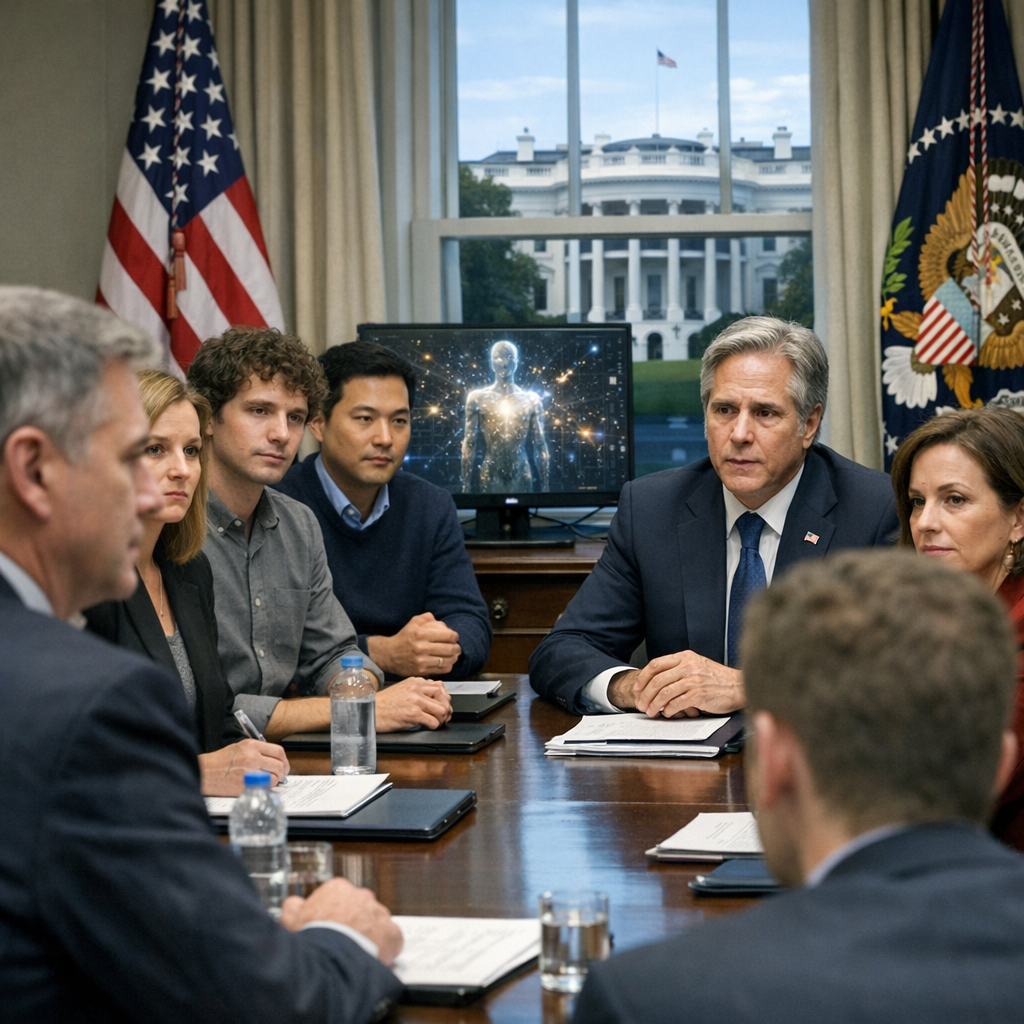
The meeting reflects an increasingly proactive posture from U.S. policymakers, who are seeking closer coordination with leading AI firms to better understand emerging technologies and to anticipate possible societal and security implications. Anthropic, which has positioned itself as a company emphasizing AI safety and interpretability, appears to be a natural counterpart in these discussions, particularly as governments look for partners willing to engage on governance frameworks.
The Economic Times report suggests that concerns surrounding the Mythos model are emblematic of a wider unease in Washington and beyond: that next-generation AI systems may reach levels of autonomy, reasoning, or influence that outpace existing regulatory tools. Although no specific incident has been publicly attributed to the model, its mention in high-level discussions signals how even prospective or partially disclosed technologies can shape policy urgency.
This development comes amid a broader global race among technology companies to build increasingly sophisticated AI systems, often referred to as frontier models. As capabilities expand, so too do questions about misuse, alignment with human values, and the risk of unintended consequences. Governments have responded with a mix of voluntary agreements, executive directives, and exploratory legislation, but the speed of technological change continues to challenge traditional oversight mechanisms.
The dialogue between the White House and Anthropic also highlights a deeper strategic concern: maintaining U.S. leadership in AI while ensuring that innovation proceeds responsibly. Industry leaders have repeatedly called for clearer guidelines, arguing that predictable regulatory environments are essential for both safety and competitiveness. At the same time, policymakers face pressure to act decisively in the face of uncertain but potentially high-impact risks.
As reported by The Economic Times, the engagement around the Mythos model illustrates how hypothetical or emerging threats can catalyze real-world policy coordination. Whether these discussions lead to concrete regulatory measures or new public-private partnerships remains uncertain, but they mark another step in the ongoing effort to balance technological ambition with precaution.
In this evolving landscape, the interaction between government and AI developers is likely to become more frequent and more consequential. The Economic Times article suggests that the Mythos-related concerns, while still not fully defined in public detail, are already shaping the contours of that relationship.