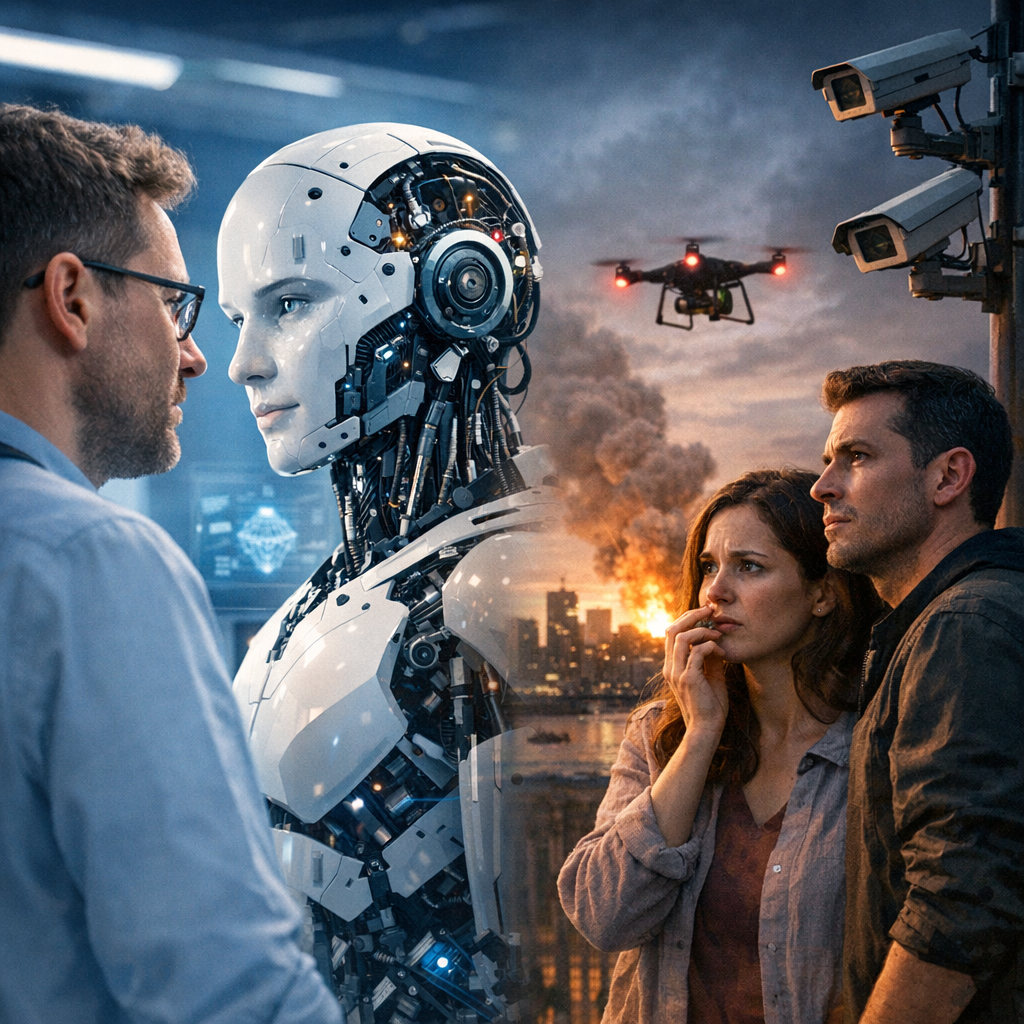
A recent analysis highlighted in KQED’s article, “Stanford Study: AI Experts Are Optimistic About AI. The Rest of Us? Not So Much,” underscores a growing divide between those who build artificial intelligence systems and the broader public that must live with their consequences.
The study, conducted by researchers affiliated with Stanford University, draws on survey data comparing attitudes toward artificial intelligence among experts in the field and ordinary users. Its findings point to a consistent pattern: while AI researchers tend to hold relatively optimistic views about the technology’s benefits and long-term potential, members of the public are markedly more cautious, often emphasizing risks related to job loss, misinformation, and loss of control.
Experts surveyed in the study generally expressed confidence that AI systems will produce net positive outcomes, particularly in areas such as medicine, scientific research, and productivity. Many reported believing that concerns about catastrophic risks, while worth monitoring, are often overstated or manageable through technical safeguards and policy frameworks.
By contrast, public respondents displayed significantly higher levels of skepticism. Concerns about the misuse of AI tools, especially in generating misleading or deceptive content, ranked prominently. Economic anxieties also loomed large, with many participants worried about automation displacing workers across a wide range of industries. In addition, issues of accountability and transparency emerged as key points of unease, especially as AI systems become more complex and less interpretable.
The gap in perception appears to stem in part from differences in familiarity. Experts, who are intimately involved in building and testing these systems, may have a more grounded understanding of their current limitations. Members of the public, encountering AI primarily through headlines and consumer-facing tools, often experience the technology as unpredictable and opaque. This divergence can amplify fears, particularly when high-profile incidents highlight potential harms.
The study also suggests that demographic factors influence attitudes. Younger respondents and those with higher levels of education tended to be somewhat more optimistic than older or less technically engaged participants, though skepticism remained widespread overall. Meanwhile, trust in institutions—governments, technology companies, and researchers—played a significant role in shaping views about whether AI will be developed and deployed responsibly.
The KQED report notes that this divide poses a challenge for policymakers and industry leaders. If public concerns are not addressed, resistance to AI adoption could intensify, complicating efforts to integrate the technology into critical sectors. At the same time, unchecked optimism within the expert community may risk underestimating legitimate societal impacts.
Bridging this gap will likely require more than technical solutions. Transparency about how AI systems are trained and deployed, clearer communication about risks and limitations, and stronger regulatory frameworks could help build public trust. Equally important is incorporating diverse perspectives into the development process, ensuring that the benefits and burdens of AI are more equitably distributed.
As artificial intelligence continues to expand its influence, the divergence in perception documented by the Stanford study serves as a reminder that technological progress alone does not guarantee public confidence. Aligning expert expectations with societal concerns may prove to be one of the defining challenges of the AI era.