A new study suggests that the sensors embedded in modern smartphones may be capable of tracking users in ways that few people realize, raising fresh questions about digital privacy and the limits of consumer device safeguards.
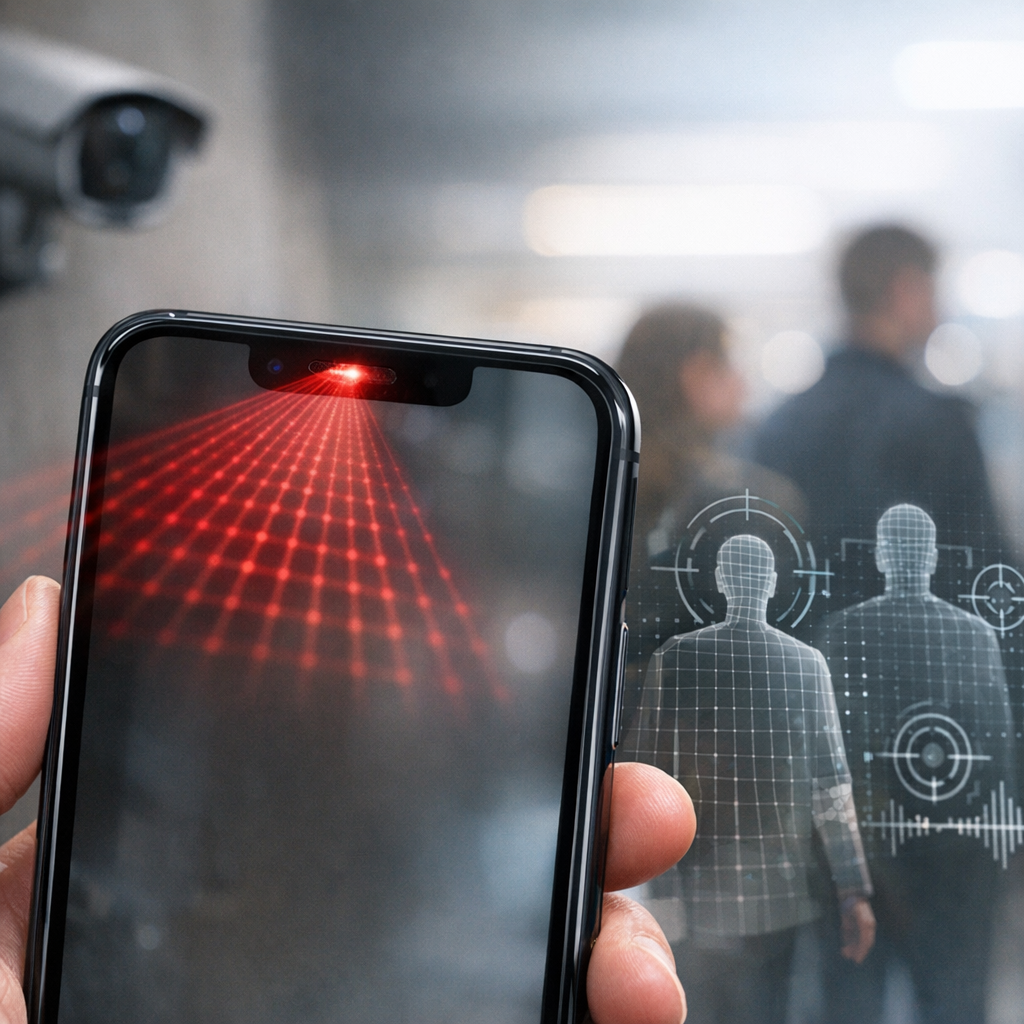
According to an article published by Tech Xplore, titled “Smartphones can track you with hidden LiDAR, study finds,” researchers have demonstrated that the LiDAR sensors increasingly found in high-end devices can be repurposed to monitor a user’s movements and surroundings with surprising precision. Originally designed to improve photography, enable augmented reality applications, and assist with depth sensing, these sensors emit pulses of light to measure distances and construct detailed spatial maps.
The researchers found that, under certain conditions, LiDAR systems can capture subtle patterns in nearby environments that may indirectly reveal sensitive information about a user’s behavior. For example, by analyzing reflected light and motion over time, it may be possible to infer gestures, keystrokes, or even aspects of a user’s activity without relying on traditional camera or microphone access. Because LiDAR operates differently from conventional imaging systems, its data streams may not be subject to the same scrutiny in existing mobile privacy frameworks.
The findings highlight a broader issue in consumer technology: as devices incorporate more advanced and specialized sensors, the potential for unintended data collection grows. Many privacy protections on smartphones are designed around well-understood components such as cameras, microphones, and location services. Less visible hardware, including LiDAR, may fall outside the scope of strict permission controls, creating gaps that could be exploited if not addressed.
Experts caution that the research does not necessarily indicate widespread abuse of LiDAR data in current applications. Instead, it underscores a theoretical vulnerability that could become more relevant as software techniques advance. In most cases, accessing and interpreting LiDAR data at the level demonstrated in the study would require sophisticated applications or malicious intent, neither of which is currently common in mainstream app ecosystems.
Nonetheless, the study’s implications are likely to prompt renewed discussions among regulators, device manufacturers, and privacy advocates. One potential response could involve expanding operating system permissions to cover a broader range of sensor types, ensuring users are explicitly informed when such data is being accessed. Another approach might include technical safeguards that limit the resolution or frequency of LiDAR data available to third-party applications.
As smartphones continue to evolve into increasingly complex sensing platforms, the line between helpful functionality and intrusive capability becomes more difficult to define. The research highlighted by Tech Xplore serves as a reminder that even benign features can carry unforeseen risks, particularly when innovation outpaces the development of corresponding privacy protections.