A recently disclosed messaging vulnerability affecting iPhones on Verizon’s network has raised fresh concerns about the security of widely used communication systems, highlighting how complex interactions between carriers and device software can expose users to unexpected risks.
According to the Tech Xplore report “Verizon, Apple face scrutiny over hidden texting flaw”, the issue stems from an obscure flaw that allowed certain text messages to be routed or accessed in unintended ways. While not a conventional “hack” in which attackers directly break into devices, the vulnerability appears to exploit behind-the-scenes messaging processes, underscoring the fragility of systems that handle billions of messages every day.
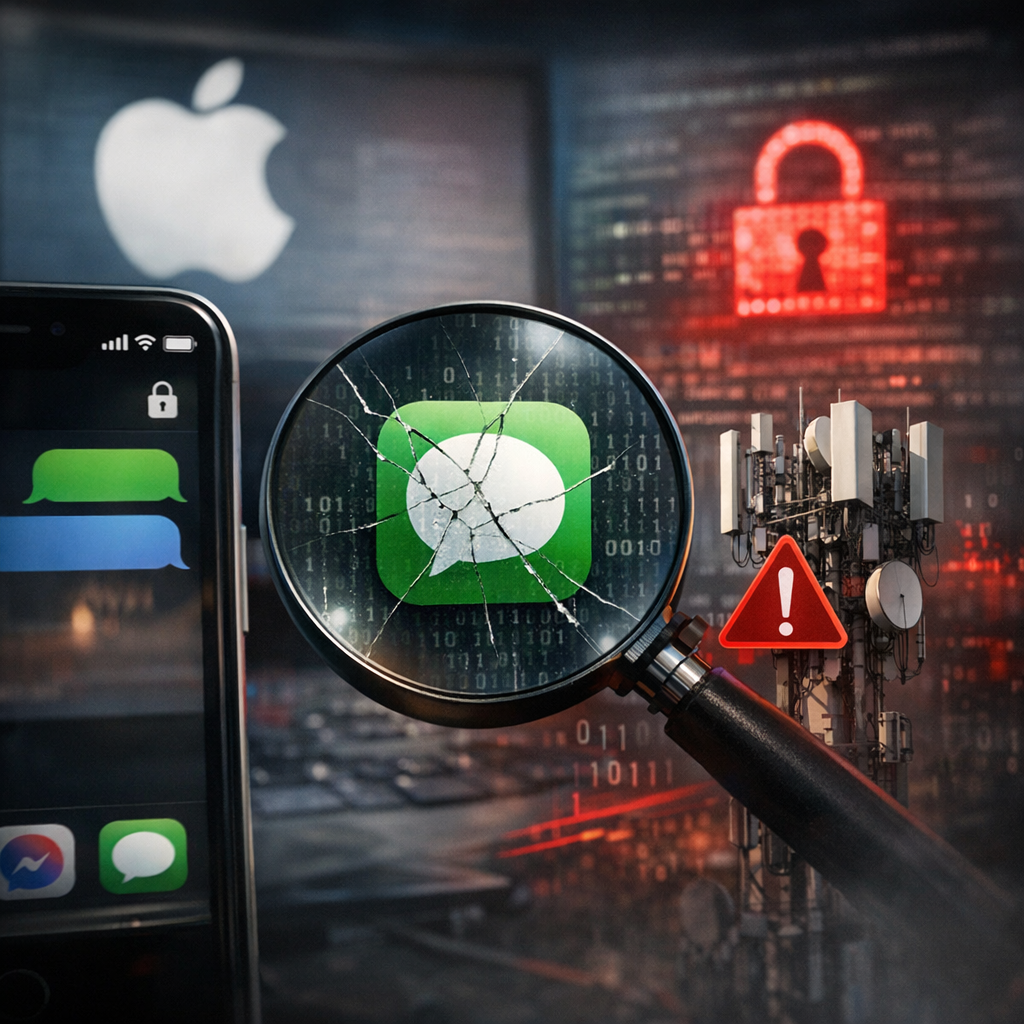
The flaw reportedly involves interactions between Apple’s iMessage infrastructure and Verizon’s network handling of SMS messaging and iMessage fallback mechanisms. Under specific conditions, messages that users believed were securely delivered could be misdirected or exposed. Experts cited in the report suggest the problem lies in the transitional pathways messages take when switching between encrypted and unencrypted channels, particularly when connectivity conditions change.
Security researchers say such edge-case vulnerabilities are especially difficult to detect because they do not behave like traditional exploits. Instead, they emerge from the interplay of multiple systems, each functioning as designed but collectively producing unintended consequences. In this instance, messages could potentially be accessed or rerouted during moments when devices shift from Apple’s encrypted iMessage service to standard SMS protocols handled by the carrier.
Verizon and Apple have both faced questions about how long the issue may have existed and whether users were ever knowingly exposed. While there is no clear evidence that the flaw was widely exploited, the mere possibility of message leakage raises concerns about privacy protections, particularly for sensitive personal or business communications.
Apple has long marketed iMessage as a secure, end-to-end encrypted platform, while SMS remains inherently less secure due to its reliance on carrier infrastructure. The reported flaw highlights the vulnerabilities that can arise when devices automatically switch between these systems without user awareness. Analysts note that most users are unlikely to distinguish between message types in everyday use, even though the underlying security models differ significantly.
In response to the disclosure, both companies are expected to review and strengthen safeguards around message routing and fallback behavior. Security professionals emphasize that transparency will be key, urging companies to clearly communicate when messages are sent via encrypted versus unencrypted channels and to minimize ambiguous transitions between them. Apple’s broader stance on user data protection can be found on its privacy page.
The incident also reflects broader challenges facing the telecommunications and technology sectors as they attempt to integrate legacy systems with modern encrypted services. While end-to-end encryption has become a standard expectation among consumers, it often coexists uneasily with older infrastructure designed decades earlier.
As digital communication continues to evolve, experts warn that similar hybrid vulnerabilities may surface elsewhere unless companies adopt more unified and transparent approaches to messaging security. For users, the episode serves as a reminder that even familiar tools can harbor hidden complexities that affect privacy in ways not immediately visible.