A powerful El Niño event in the Pacific Ocean is once again reshaping global weather patterns, intensifying extremes and testing the resilience of communities and infrastructure worldwide. As detailed in the Wired article “Super El Niño Turns the World’s Weather Upside Down”, scientists warn that this phase of the El Niño–Southern Oscillation is not only amplifying familiar disruptions but doing so against the backdrop of a warmer-than-average planet.
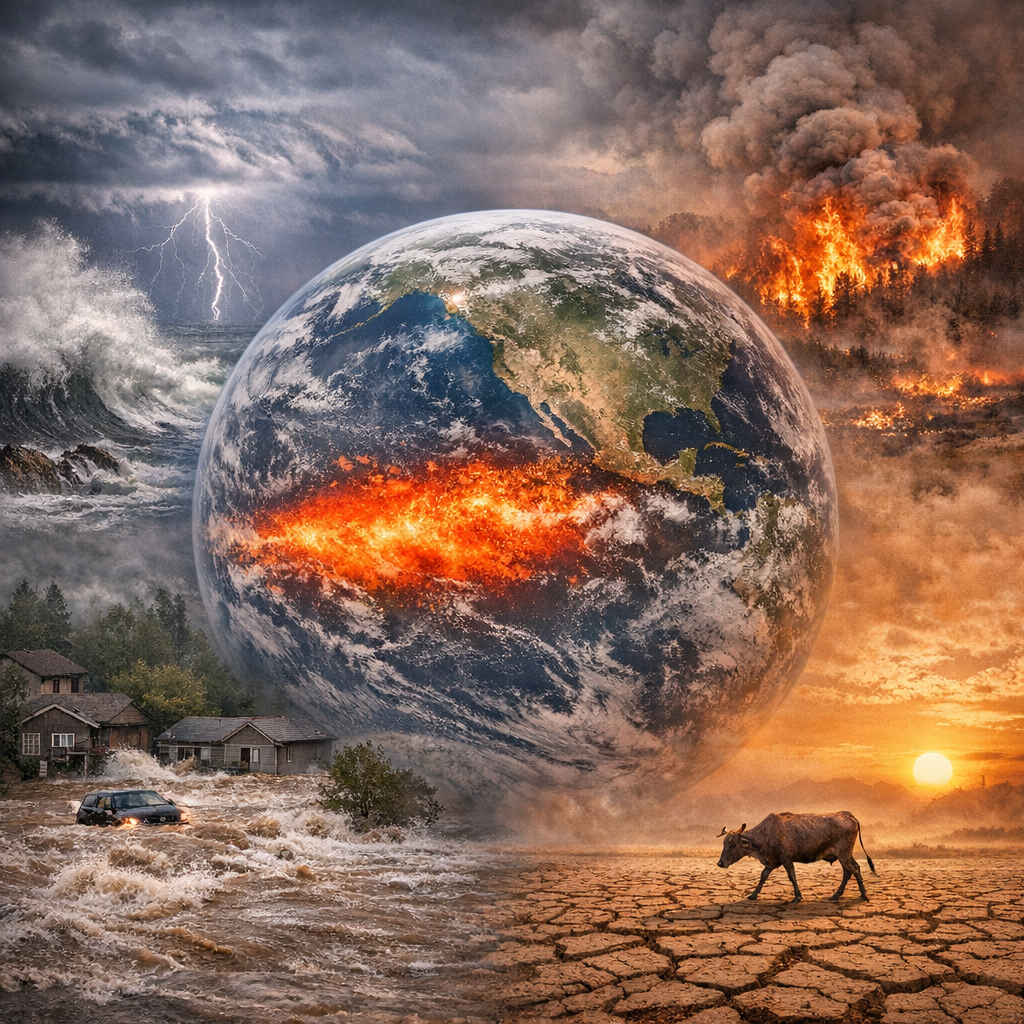
El Niño occurs when surface waters in the central and eastern equatorial Pacific become unusually warm, altering atmospheric circulation on a planetary scale. According to the NOAA Climate.gov ENSO overview, in its stronger forms, often described as “super” El Niño events, the phenomenon can trigger cascading effects: heavy rains and flooding in some regions, severe drought in others, and shifts in storm tracks that affect agriculture, water supplies, and public health.
What distinguishes the current event, researchers say, is the way it interacts with long-term climate change. Global temperatures have been trending upward due to greenhouse gas emissions, as documented by the IPCC Sixth Assessment Report, meaning El Niño now acts on an already elevated baseline. This combination increases the likelihood of record-breaking heat and more unpredictable weather extremes. Scientists cited in the Wired report note that the atmosphere can hold more moisture as it warms, raising the risk of intense rainfall when conditions align, a concept also explained by NASA’s Earth Observatory.
Recent months have already shown the hallmark disruptions. Parts of South America have experienced unusually heavy precipitation, while regions such as Southeast Asia and Australia face heightened drought risk. In North America, El Niño has historically brought wetter winters to the southern United States and milder conditions to the north, though outcomes can vary depending on the event’s strength and timing, as outlined by the National Oceanic and Atmospheric Administration. Meanwhile, marine ecosystems are also under strain, with warmer waters threatening coral reefs and altering fish migration patterns, an issue highlighted by the UN Environment Programme.
The broader concern among climatologists is not simply the immediate impacts but the compounding effects. When extreme weather events occur in rapid succession or overlap—such as heatwaves coinciding with drought—they can strain food systems, energy demand, and disaster response capacity. The Wired article emphasizes that these compound risks are becoming more likely in a climate system influenced simultaneously by natural variability and human-driven warming.
Forecasting El Niño’s precise trajectory remains challenging, but advances in climate modeling have improved scientists’ ability to anticipate general trends months in advance. Organizations like the World Meteorological Organization now issue seasonal outlooks that help governments and international agencies prepare mitigation strategies. Still, preparedness varies significantly across regions, with developing countries often facing the highest vulnerability.
The current event serves as another reminder that natural climate cycles do not operate in isolation. As the Wired report underscores, the interplay between El Niño and long-term warming is reshaping expectations for what constitutes “normal” weather. For policymakers and scientists alike, the challenge is no longer just to understand these dynamics but to adapt to a future in which extremes are less exception than rule.