Something significant just shifted in the world of pure mathematics, and the academic community is still figuring out how to feel about it. AI systems are no longer just passing grade-school arithmetic tests or acing standardized exams — they are now cracking problems at the frontier of human mathematical knowledge, the kind that have stumped professional mathematicians for years. If you have been tracking the broader superintelligence debate, this is the moment where the abstract starts feeling very concrete.
According to The Verge’s reporting, the story centers on OpenAI and a cluster of competing labs pushing AI systems to solve genuinely hard mathematical problems — not textbook exercises, but research-grade proofs and olympiad-level challenges that represent the cutting edge of human reasoning.
Gold Medals and Genuine Proofs: What AI Actually Did
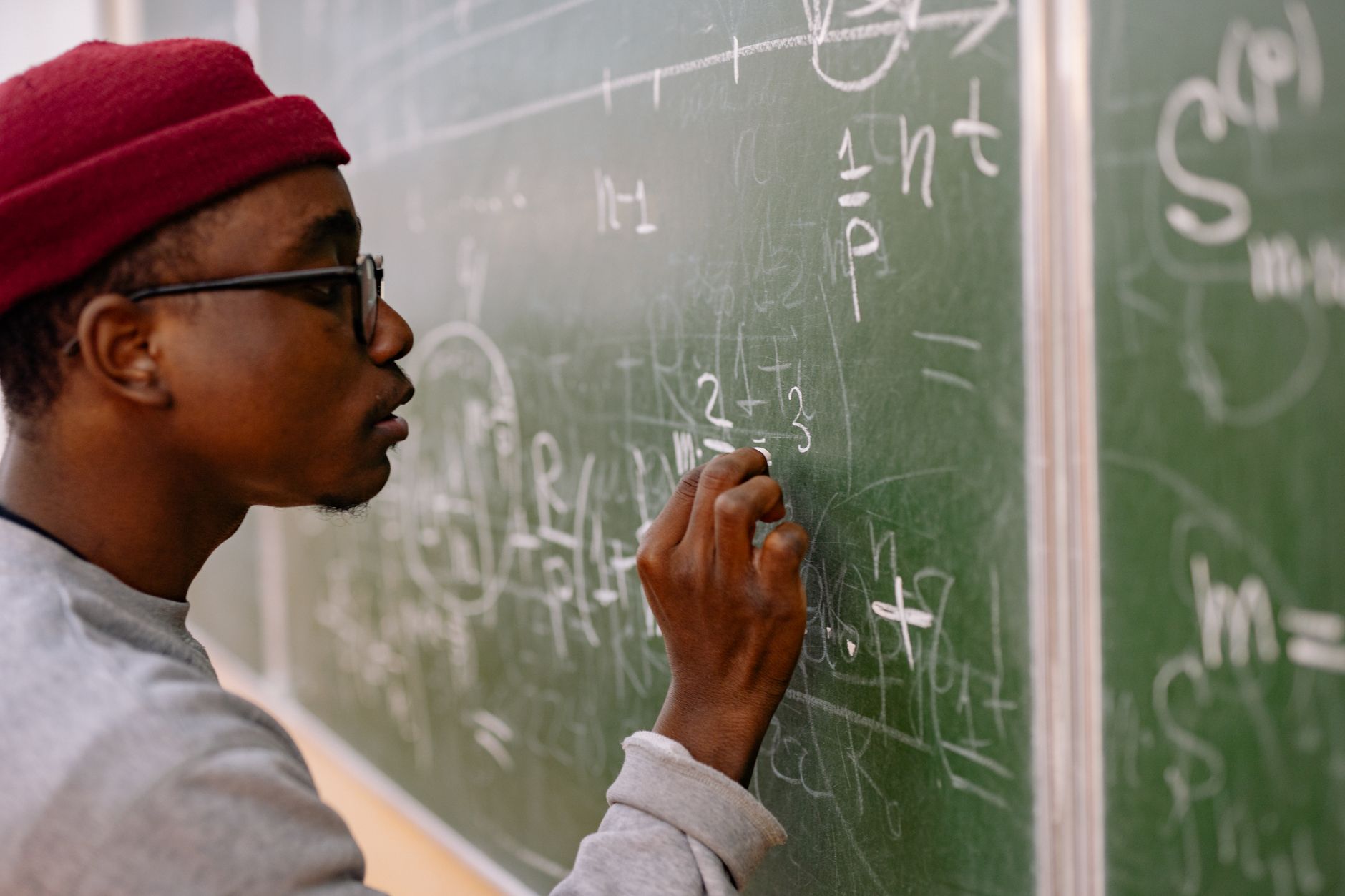
The headline moment came when AI systems achieved gold-medal-level performance on problems from the International Mathematical Olympiad, a competition that has historically been the proving ground for the world’s most gifted young mathematicians. These are not multiple-choice questions. They require constructing rigorous, multi-step proofs — the kind of logical architecture that even brilliant humans spend hours building.
OpenAI’s models and Google DeepMind’s AlphaProof system have both demonstrated the ability to generate verifiable proofs, meaning mathematicians can actually check the AI’s work and confirm it holds up. That is a crucial distinction from earlier AI systems that would produce confident-sounding but ultimately flawed mathematical reasoning. The field has moved from plausible-looking nonsense to outputs that can survive peer scrutiny. That matters enormously for whether mathematics departments will take any of this seriously.
Why Mathematicians Are Simultaneously Excited and Nervous
The reaction inside mathematics has been complicated. Some researchers see AI as a powerful collaborator — a tool that could accelerate the discovery of new theorems, handle the mechanical drudgery of verification, and open up problem spaces that were previously too laborious to explore. Others are more guarded, worried about what it means for the training and identity of the next generation of mathematicians if the core craft of proof-writing becomes something a machine does faster and more reliably.

There is also a legitimate epistemological concern: when an AI produces a proof, does anyone actually understand it? A proof that no human can intuitively follow may be technically correct but scientifically hollow — it closes a question without illuminating why the answer is true. That distinction, between verification and understanding, is where the real philosophical friction is building. The drama is not just about benchmark scores. It is about what mathematics is actually for, and whether a machine solving a problem counts as the problem being solved in any meaningful sense.
The competitive stakes are equally high. OpenAI, Google DeepMind, and others are treating mathematical reasoning as a proxy for general intelligence — if your model can construct airtight proofs, the argument goes, it can handle almost any structured reasoning task. That framing has enormous implications for enterprise AI adoption, scientific research pipelines, and the long-running argument over how close the industry actually is to artificial general intelligence. The math wars are really a proxy battle for something much larger, and the results so far suggest nobody is going to win that argument quietly.