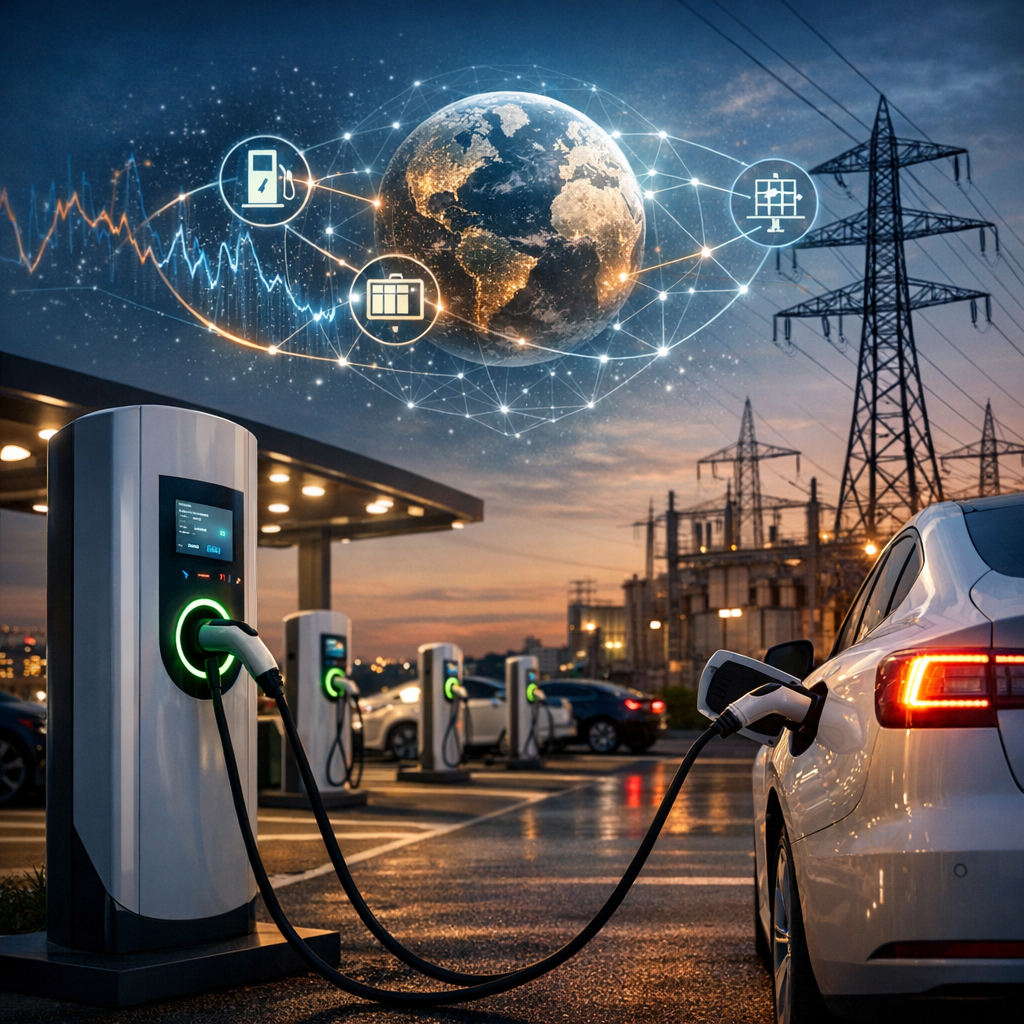
A recent article published by Innovation News Network, titled “AI-informed integration of electric vehicles charging infrastructure for resilient distribution grids,” examines how artificial intelligence is increasingly central to managing the growing strain that electric vehicle (EV) adoption places on power distribution systems. As EV uptake accelerates worldwide, as highlighted in reports such as the IEA Global EV Outlook, the piece highlights both the opportunities and risks emerging for grid operators facing unprecedented demand patterns.
The article underscores that the rapid expansion of EV charging infrastructure, if unmanaged, could significantly stress local distribution grids. Resources like the U.S. Department of Energy’s overview of EVs and the grid note similar concerns. Clusters of high-demand charging—particularly during peak hours—have the potential to overload networks designed for more predictable consumption patterns. This challenge is especially acute in urban areas and along major transportation corridors, where charging demand can become highly concentrated and volatile.
Artificial intelligence, according to the report, offers a pathway to mitigate these pressures by enabling more dynamic and responsive grid management. Through advanced forecasting models—similar to those explored by institutions like NREL’s grid forecasting research—AI systems can anticipate charging demand based on variables such as time of day, traffic flows, weather conditions, and user behavior. This predictive capability allows utilities to better allocate resources and avoid bottlenecks before they occur.
The Innovation News Network article also points to the role of AI in optimizing the placement and operation of charging infrastructure. Rather than deploying chargers based solely on current demand or geographic convenience, AI-driven planning tools can identify locations that balance load across the grid while still meeting user needs. This approach helps prevent the formation of localized grid stress points and improves overall system resilience.
Another key theme is the integration of smart charging strategies. AI can coordinate charging times and rates across large numbers of vehicles, shifting demand away from peak periods and aligning it with times of lower grid utilization or higher renewable energy availability, as explored in NREL’s smart charging research. In some cases, this includes vehicle-to-grid technologies, where EVs can temporarily supply energy back to the grid—an approach detailed by the U.S. Department of Energy’s vehicle-to-grid integration resources—effectively acting as distributed storage assets. The article suggests that AI is essential in managing the complexity of these bidirectional energy flows.
However, the piece also notes that the implementation of AI-informed systems is not without challenges. Data availability and quality remain significant hurdles, as effective machine learning models require large, reliable datasets. Interoperability between different charging networks and grid management platforms presents another obstacle, as does the need for robust cybersecurity measures to protect increasingly digitalized energy infrastructure.
Regulatory and policy frameworks are identified as equally important in shaping outcomes. The article emphasizes that coordinated standards and incentives will be necessary to encourage the adoption of intelligent charging systems while ensuring fairness and accessibility for consumers. Without such frameworks, there is a risk that benefits could be unevenly distributed or that grid vulnerabilities could persist.
Ultimately, the Innovation News Network report portrays AI not as a standalone solution but as a critical enabler within a broader transformation of energy and transport systems. As electrification accelerates, the convergence of digital intelligence and infrastructure planning is expected to determine whether grids can evolve to meet demand reliably and sustainably.