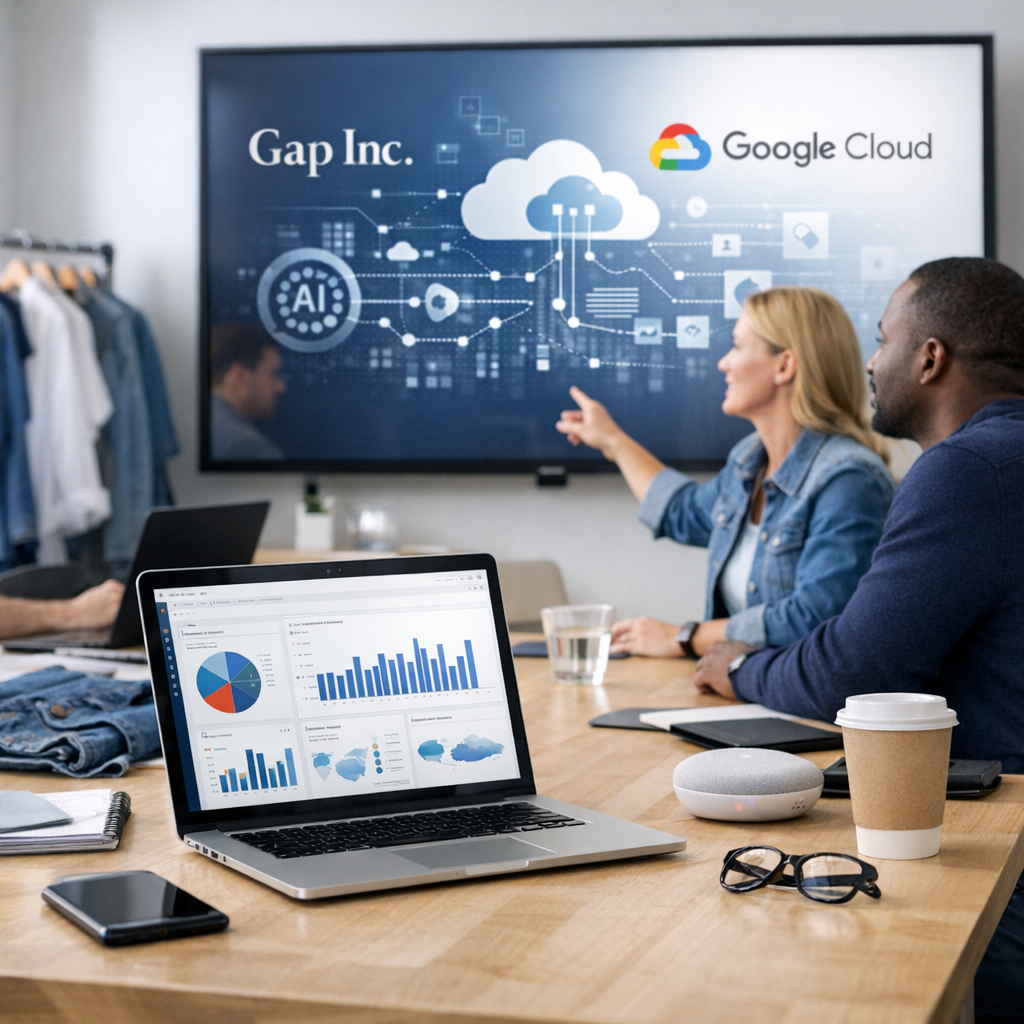
Gap Inc. is expanding its use of artificial intelligence to reshape how it engages customers, deepening a partnership with Google Cloud in a move that reflects a broader shift across the retail sector toward data-driven marketing.
According to the article “Gap taps Google Cloud to bridge AI marketing gap” published by MarketingTechNews, the apparel retailer is working with Google Cloud to deploy advanced AI tools aimed at improving personalization, optimizing marketing campaigns, and enhancing customer insights. The initiative signals Gap’s intent to modernize its digital capabilities at a time when brands are under increasing pressure to deliver more relevant, real-time interactions.
The collaboration centers on integrating Google Cloud’s AI and data analytics services into Gap’s marketing operations. By leveraging these tools, the company aims to better analyze customer behavior, predict purchasing patterns, and tailor messaging across multiple channels. This includes refining how promotions are targeted and how product recommendations are generated, with the goal of increasing both engagement and conversion rates.
Retailers have been investing heavily in AI in recent years, but the practical application of these technologies often lags behind their theoretical potential. As noted in broader industry research from McKinsey’s State of AI report, many companies struggle to move from experimentation to full-scale implementation. Gap’s approach highlights an effort to close that gap by embedding AI directly into operational workflows rather than treating it as a standalone innovation project. The reported strategy involves unifying customer data from various touchpoints, allowing for a more cohesive and responsive marketing system.
The MarketingTechNews report suggests that this move is also about efficiency. Automating aspects of campaign management and analysis can reduce manual workloads and accelerate decision-making, enabling marketing teams to respond more quickly to changing consumer trends. In an environment where consumer preferences can shift rapidly, this responsiveness is increasingly viewed as a competitive necessity, a trend also highlighted by Harvard Business Review in its coverage of AI-driven customer experience.
At the same time, the initiative underscores the growing influence of major cloud providers in shaping the future of retail. By relying on Google Cloud’s infrastructure and AI capabilities, Gap is aligning itself with a broader ecosystem that is becoming central to digital transformation efforts across industries, similar to trends outlined by Gartner’s cloud strategy insights.
While the long-term impact of the partnership will depend on execution, the strategy reflects a clear recognition that personalization and data integration are no longer optional in modern retail. As brands compete for attention in crowded digital marketplaces, the ability to translate data into meaningful customer experiences is emerging as a key differentiator.