The European High Performance Computing Joint Undertaking (EuroHPC JU) has announced a new phase in its push to strengthen Europe’s computing capabilities, combining advances in both quantum and classical supercomputing infrastructure. As reported by Innovation News Network in its article “EuroHPC launches SOL quantum computer and LISA AI upgrade in Italy,” the initiative marks a significant investment in emerging technologies designed to enhance Europe’s scientific competitiveness and digital sovereignty.
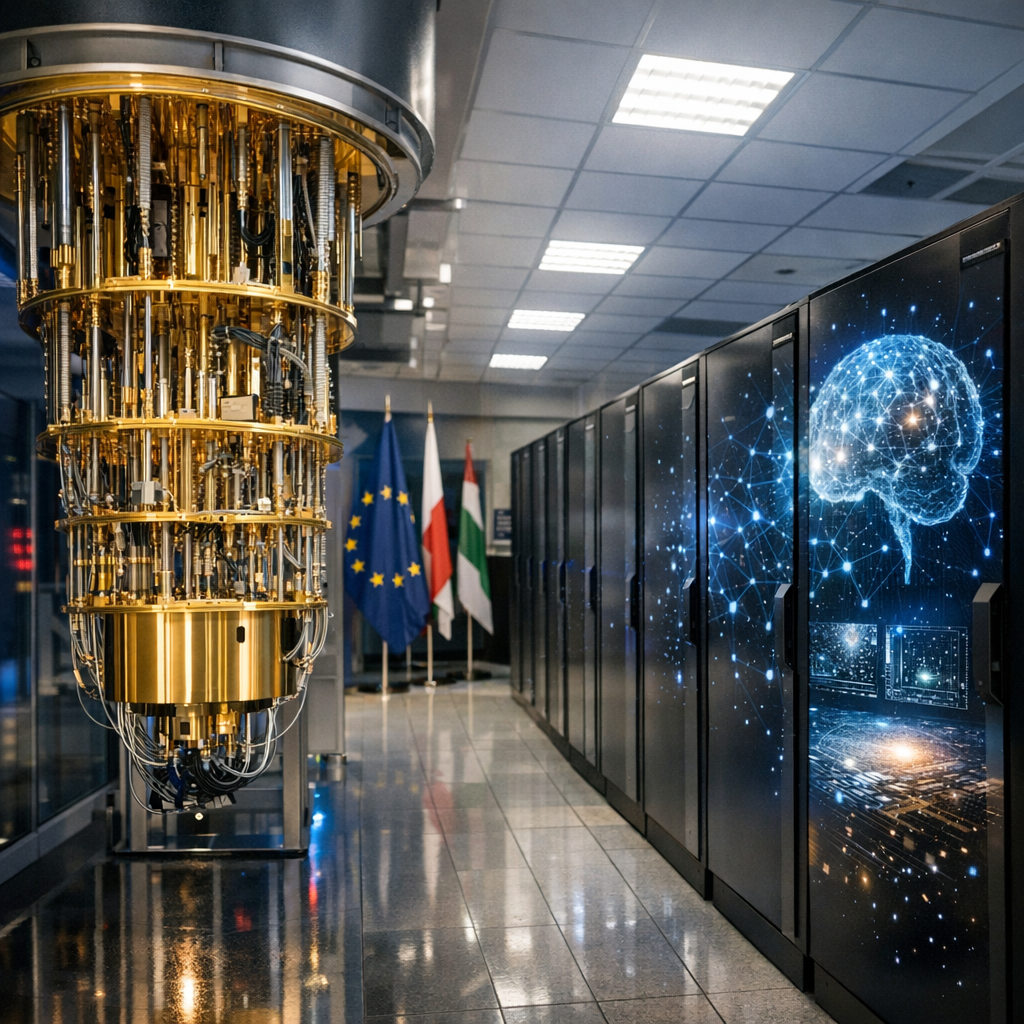
At the center of the announcement is the deployment of SOL, a new quantum computing system to be hosted in Italy. The system is expected to integrate with existing high-performance computing (HPC) resources, enabling hybrid workflows that combine classical and quantum processing. This approach reflects a broader European strategy aimed at accelerating the practical use of quantum technologies, particularly in areas such as materials science, cryptography, and complex system modeling.
Quantum systems like SOL remain at an early stage of development, but policymakers and researchers increasingly view them as a critical complement to conventional supercomputers. By embedding such systems within established HPC environments, EuroHPC aims to lower barriers to experimentation and foster collaboration across research institutions, industry, and government.
Alongside the quantum initiative, EuroHPC is also upgrading the LISA supercomputer in Italy to enhance its artificial intelligence capabilities. The upgrade is expected to significantly increase computational power available for AI-related workloads, including machine learning, data analytics, and simulation tasks. This dual investment in quantum and AI infrastructure reflects a recognition that future breakthroughs are likely to emerge from the intersection of multiple advanced computing paradigms rather than a single technological pathway.
The LISA upgrade is part of a broader European effort to ensure that AI development is supported by robust and accessible infrastructure. By expanding processing capacity and improving performance, the upgraded system is expected to support a wide range of applications, from climate modeling and medical research to industrial design and urban planning.
EuroHPC officials have emphasized that these developments are not isolated projects but components of a coordinated strategy to build an integrated European computing ecosystem. This includes fostering interoperability between systems, promoting open access for researchers, and strengthening supply chains within Europe’s technology sector. The initiative also aligns with wider EU goals of reducing reliance on non-European technologies and enhancing resilience in critical digital infrastructure.
Italy’s role as host for both the SOL quantum system and the enhanced LISA supercomputer highlights the country’s growing importance within Europe’s HPC landscape. The move is expected to bolster local research capabilities while contributing to broader continental objectives. It also underscores the collaborative nature of EuroHPC, which pools resources and expertise from multiple member states to fund and operate shared infrastructure.
Despite the promise of these developments, challenges remain. Quantum computing in particular faces technical hurdles, including error correction and scalability, that must be overcome before widespread commercial deployment becomes feasible. Similarly, the rapid expansion of AI workloads raises concerns about energy consumption and sustainability, areas that EuroHPC and its partners will need to address as infrastructure grows.
Nevertheless, the launch of the SOL quantum computer and the upgrade of the LISA system represent a clear signal of Europe’s intentions. By investing in both cutting-edge and established computing technologies, EuroHPC is positioning itself to play a central role in the next phase of global technological competition. As Innovation News Network’s coverage suggests, these initiatives are likely to shape the trajectory of European research and innovation for years to come.