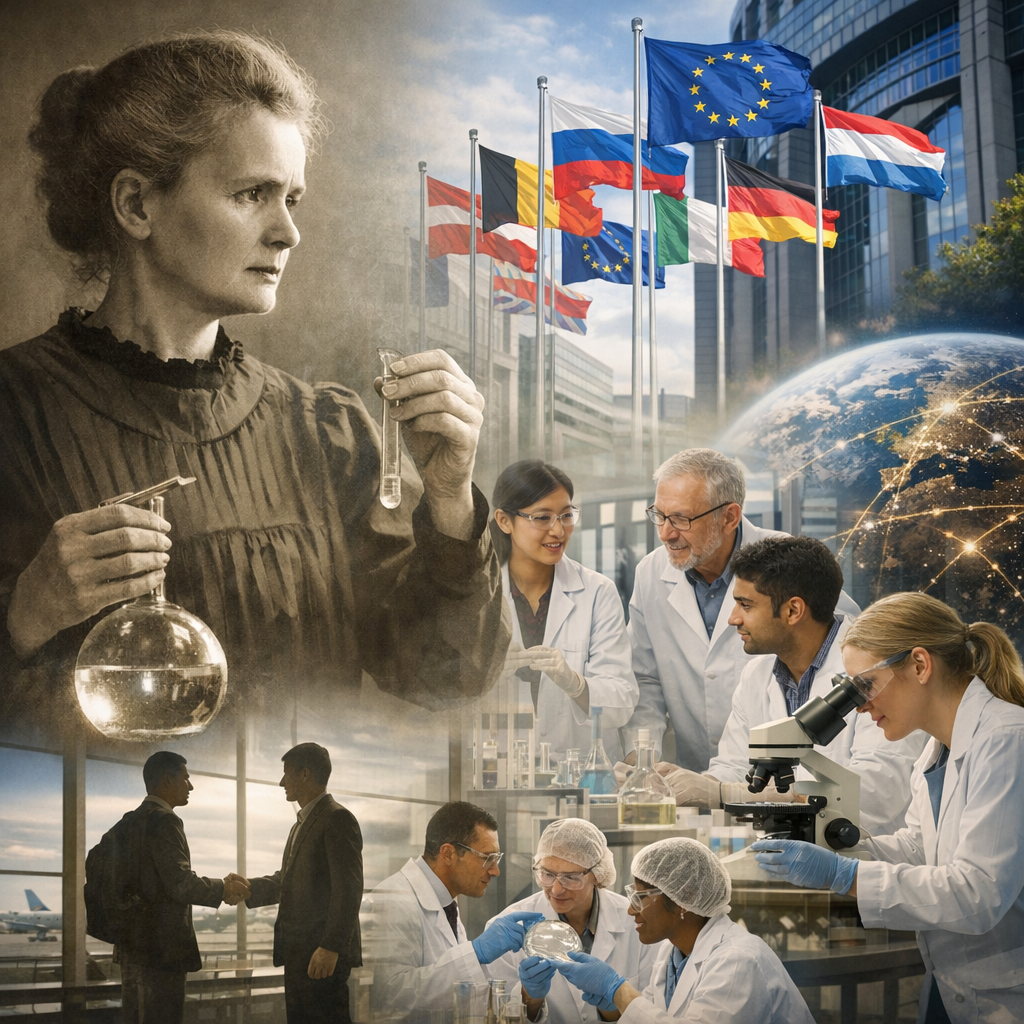
An article published by Innovation News Network, titled “Science without borders: the lasting legacy of Marie Skłodowska-Curie,” highlights how one of Europe’s most influential scientific funding programmes continues to shape international research collaboration decades after its inception. The piece underscores the enduring relevance of the Marie Skłodowska-Curie Actions (MSCA), which remain a cornerstone of the European Union’s efforts to foster cross-border mobility, interdisciplinary work, and scientific excellence.
Named after the pioneering physicist and chemist Marie Skłodowska-Curie, the programme reflects her legacy not only in scientific achievement but also in intellectual openness and internationalism. Since its establishment in 1996, the MSCA has supported hundreds of thousands of researchers at all career stages, enabling them to work across institutions, sectors, and national boundaries. The Innovation News Network article emphasizes that this mobility is not merely logistical but transformative, helping to build a more interconnected and resilient global research ecosystem.
At a time when geopolitical tensions and shifting research priorities threaten to fragment scientific collaboration, the MSCA model stands out for its sustained commitment to openness. Researchers funded under the programme frequently work on projects that address shared global challenges, from climate change and health crises to digital transformation, as highlighted by institutions like the European Commission’s research and innovation portal. By encouraging partnerships between academia, industry, and public institutions, the scheme aims to translate scientific knowledge into tangible societal benefits.
The article also notes that the programme’s success lies in its adaptability. Over the years, it has evolved to address emerging needs in the scientific community, including support for early-career researchers and initiatives to promote gender equality and diversity in STEM fields, aligning with broader goals such as those outlined by UNESCO’s gender equality in science initiatives. These efforts align with broader European policy objectives while maintaining a focus on excellence and innovation.
A key feature of the MSCA is its emphasis on training and career development. Fellows are not only supported financially but also gain access to mentorship, networking opportunities, and exposure to different research environments. This holistic approach is designed to equip scientists with the skills needed to navigate increasingly complex and interdisciplinary fields. According to the Innovation News Network article, many alumni of the programme go on to occupy leadership positions in academia, industry, and policymaking, further amplifying its impact; similar outcomes are often reported in global mobility studies such as those by the OECD on talent mobility.
The legacy of Marie Skłodowska-Curie herself looms large in the programme’s ethos. As a scientist who conducted groundbreaking research across national borders and overcame significant barriers, she embodies the ideals of curiosity, perseverance, and collaboration. The MSCA seeks to mirror these values by breaking down structural and geographic barriers that can limit scientific progress.
In an era defined by global challenges that no single country can address alone, the continued investment in transnational research initiatives appears increasingly vital. As the Innovation News Network article makes clear, the Marie Skłodowska-Curie Actions are more than a funding mechanism; they are a long-term commitment to fostering a scientific community that is as interconnected as the problems it seeks to solve.
By sustaining this model, the European Union not only honors the legacy of one of history’s most influential scientists but also reinforces the principle that knowledge thrives when it moves freely across borders.