
The networking backbone of tomorrow’s largest AI clusters was designed in Israel. Nvidia’s Spectrum-X ethernet switching platform — engineered primarily by the company’s Israeli team, the former Mellanox workforce absorbed into Nvidia after its $6.9 billion acquisition — is now heading into hyperscale AI data center deployments around the world, according to a Calcalist Tech report.
The milestone marks a significant commercial moment for Nvidia’s Israeli R&D operation, which has quietly become the spine of the company’s data center networking strategy. Spectrum-X is purpose-built for AI workloads — specifically designed to tackle the congestion and latency problems that standard ethernet infrastructure struggles with when thousands of GPUs need to communicate simultaneously at scale.
Built for the GPU Cluster Era
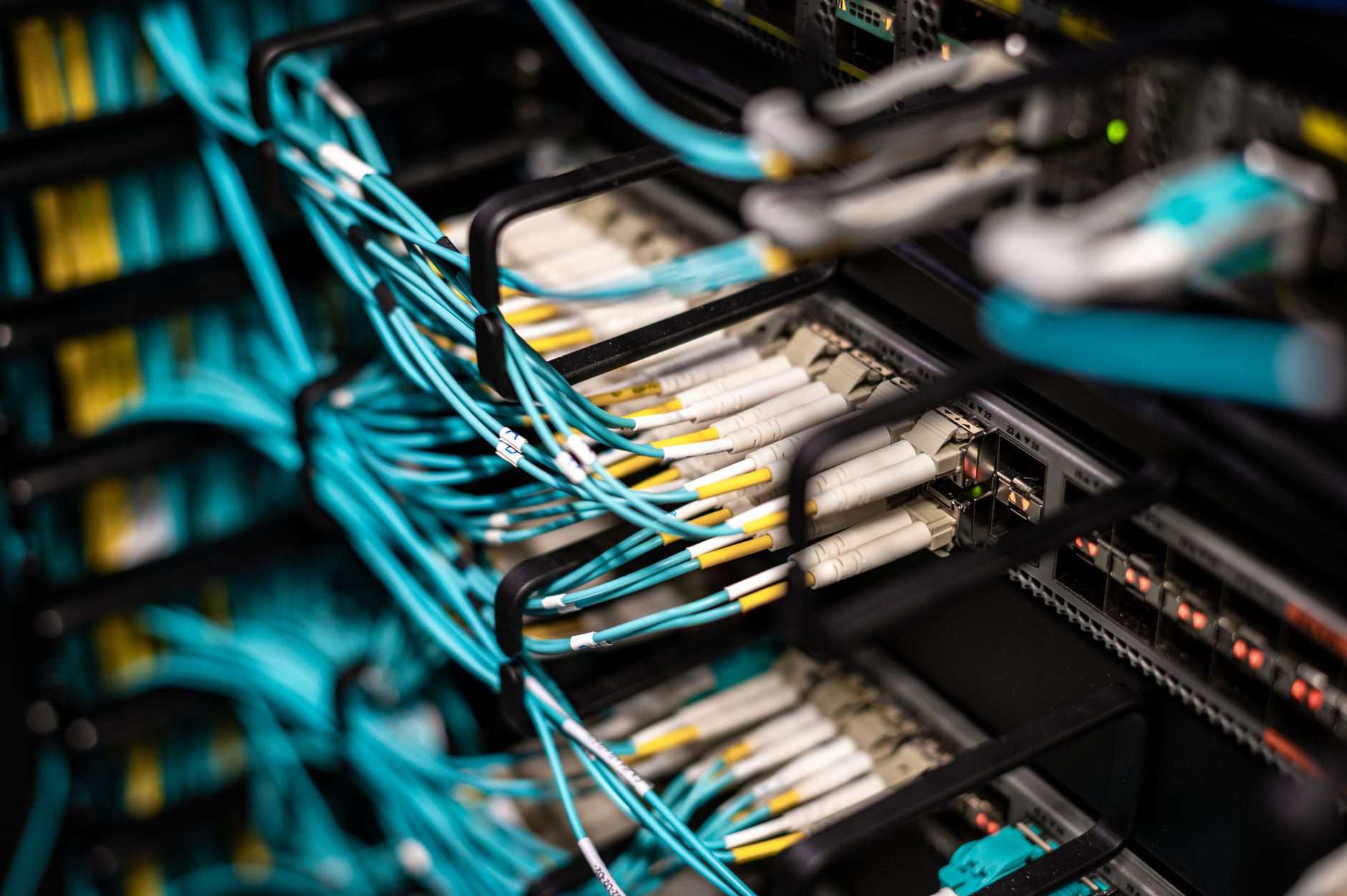
What makes Spectrum-X notable isn’t just who built it — it’s what it solves. Large-scale GPU clusters training frontier AI models generate enormous east-west traffic between accelerators. Traditional ethernet networks aren’t optimized for that pattern, leading to throughput loss that compounds as cluster sizes grow. Nvidia’s Spectrum-X addresses this with adaptive routing and a congestion-control architecture designed specifically around GPU-to-GPU communication demands.
The platform is positioned as an ethernet-native alternative to InfiniBand for AI factories, meaning customers who want open, standards-compatible networking at hyperscale no longer have to sacrifice performance to get it. That’s a meaningful proposition for the cloud giants and colocations building out clusters with tens of thousands of Nvidia H100 and H200 GPUs — facilities where networking inefficiency at even a fraction of a percent translates to millions of dollars in wasted compute time.
Why Hyperscalers Are Paying Attention
Nvidia has been explicit that Spectrum-X is one of its core bets for the data center networking market, and the Israeli engineering center in Yokneam and Tel Aviv is central to that product line. The Mellanox acquisition didn’t just give Nvidia an InfiniBand monopoly — it handed the company a deep bench of networking engineers who now define how AI traffic moves inside the world’s most powerful computers.

The commercial traction reported by Calcalist Tech signals that the largest AI infrastructure buyers — the hyperscalers and sovereign AI projects spending billions on GPU capacity — are adopting Spectrum-X as a primary fabric. That validates Nvidia’s strategy of owning not just the GPU but the entire compute stack around it: the interconnect, the networking silicon, and now the switching layer. For rivals in the data center ethernet space, including Arista and Broadcom, it raises the competitive stakes considerably.
The broader context matters too. As AI model training runs get larger and inference infrastructure scales to meet enterprise demand, the network switch stops being a commodity component and becomes a performance variable. A switch that was engineered specifically for GPU cluster dynamics — rather than adapted from general-purpose data center designs — has a structural advantage that compounds the bigger the cluster gets. That’s the bet Nvidia’s Israeli team built into Spectrum-X, and hyperscalers appear to be buying it.

One thought on “Nvidia’s Most Powerful AI Switch Was Engineered in Tel Aviv — and It’s About to Run the World’s Biggest Clusters”