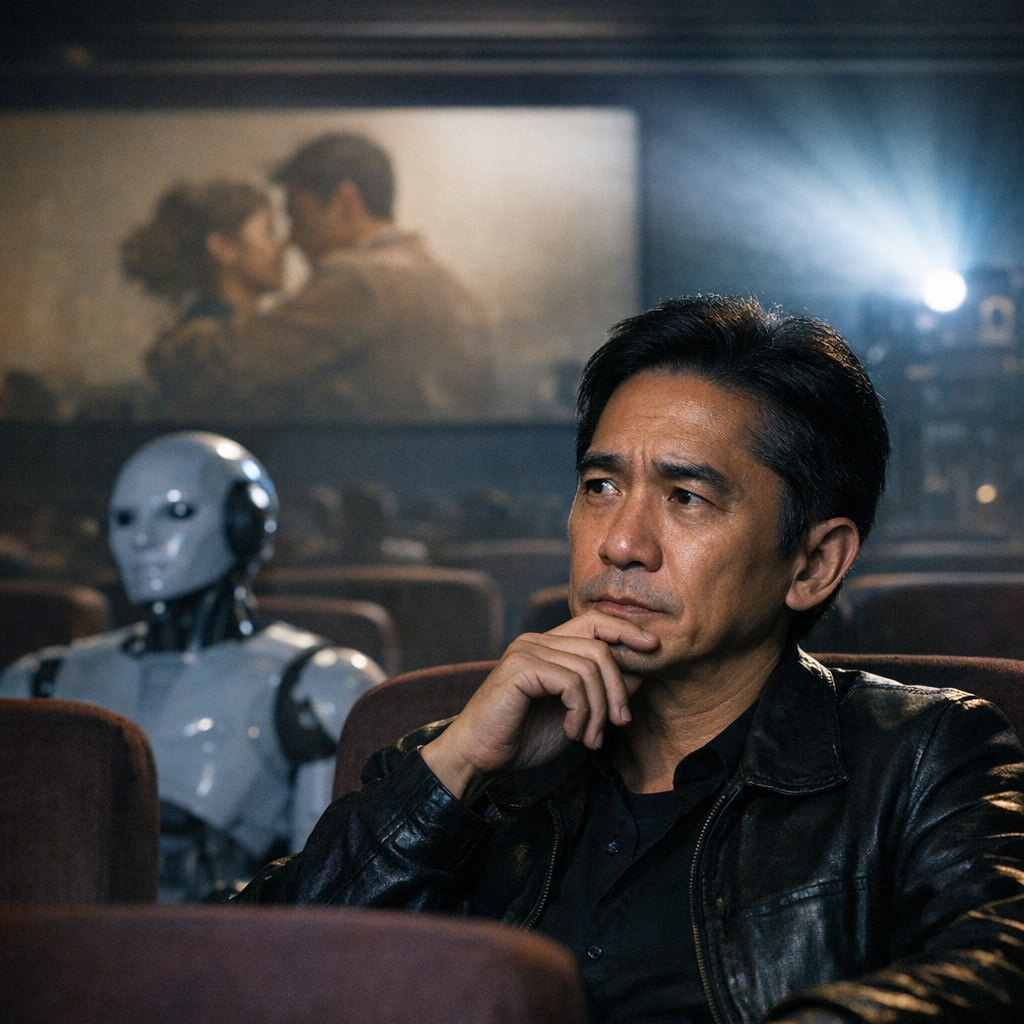
Hong Kong actor Tony Leung has weighed in on the growing use of artificial intelligence in cinema, expressing skepticism about its capacity to replicate the emotional depth of human performance. In an article titled “There’s no soul: Tony Leung weighs in on AI in filmmaking,” published by The Economic Times, the acclaimed actor underscored the limitations of machine-generated art, particularly in an industry built on nuance, intuition, and human connection.
Leung, widely regarded as one of Asia’s finest actors, argued that while AI may bring efficiencies to technical aspects of filmmaking, it lacks the intangible qualities that define compelling storytelling. His remarks come at a time when studios and production companies worldwide are experimenting with generative tools for scripting, visual effects, and even digital performers, sparking both excitement and unease across the creative industries.
According to the Economic Times report, Leung acknowledged that artificial intelligence could serve as a useful complement in production workflows, but cautioned against overreliance on technology at the expense of artistic authenticity. He emphasized that the emotional resonance of a film—its ability to move audiences and convey complex human experiences—cannot be easily replicated by algorithms trained on existing data.
The actor’s perspective reflects a broader debate within global cinema. As AI-driven tools become increasingly sophisticated, questions about authorship, originality, and the future of creative labor have intensified. Industry professionals have raised concerns about job displacement, the erosion of creative ownership, and the ethical implications of using AI to simulate performers’ likenesses without consent.
Leung’s comments also highlight a cultural dimension to the discussion. In many film traditions, particularly those rooted in performance-driven storytelling, the individuality of an actor is seen as inseparable from the narrative itself. The suggestion that such individuality could be approximated or replaced by machine-generated outputs challenges long-held assumptions about the nature of art and expression.
Despite his reservations, Leung did not dismiss technological progress outright. Instead, his remarks suggest a call for balance—an approach in which innovation enhances rather than supplants human creativity. As the Economic Times article notes, this middle ground is increasingly being advocated by filmmakers who see AI as a tool rather than a substitute for artistic vision.
The debate is unlikely to subside as studios continue to explore cost-saving and efficiency-driven applications of AI. Yet voices like Leung’s serve as a reminder that cinema’s enduring power lies not in its technology, but in its capacity to reflect the human condition. Whether the industry can integrate artificial intelligence without diluting that essence remains an open question.