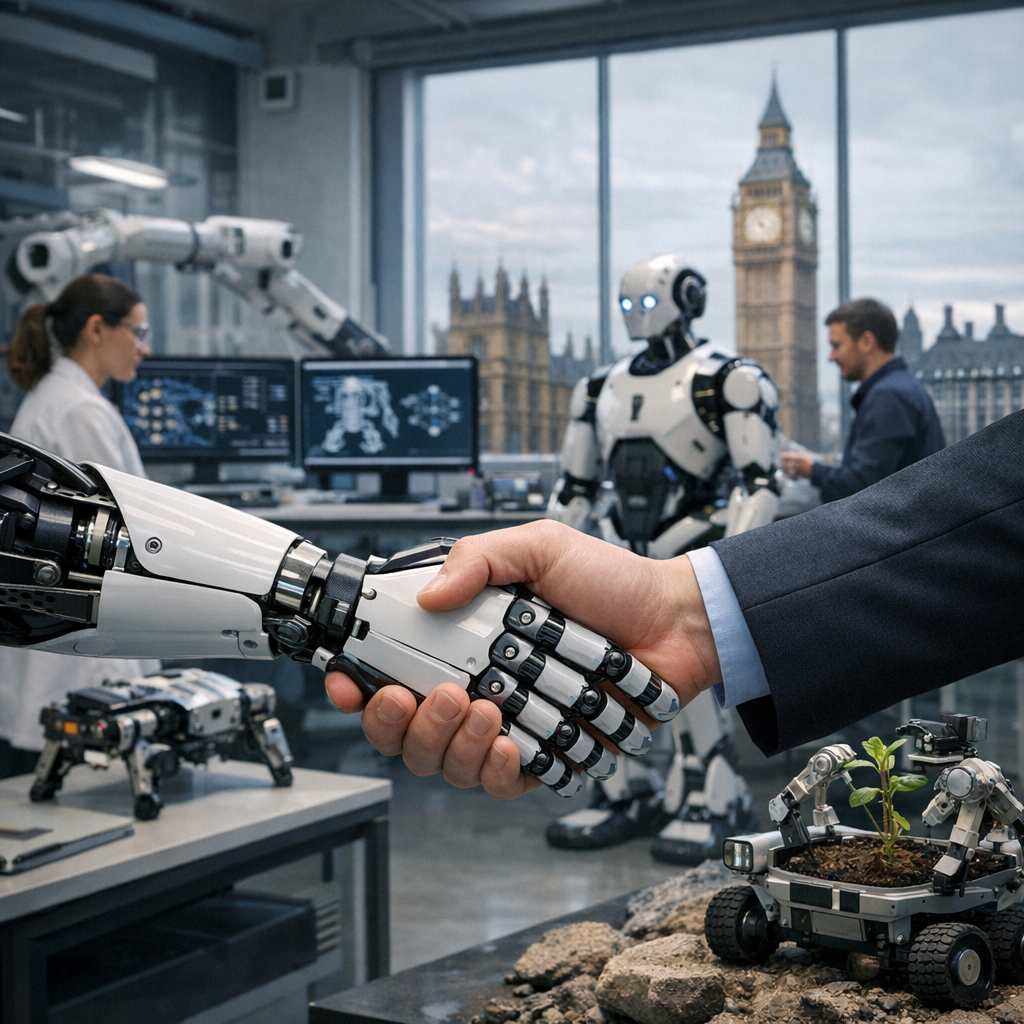
The United Kingdom is entering a new phase in the development of so-called “physical AI,” as businesses move beyond early experimentation toward more structured and trusted deployment of intelligent systems in the real world. That shift, marked by growing confidence but tempered by caution, reflects broader changes in infrastructure, policy, and organisational readiness across the country.
An article titled “Physical AI in the UK: From cautious exploration to trusted adoption,” published by Innovation News Network, highlights how this emerging category of artificial intelligence — which connects machine learning models to physical environments such as factories, logistics networks, and urban systems — is beginning to mature. Organisations are no longer treating physical AI as a speculative frontier, but as a practical tool for improving efficiency, resilience, and safety.
Industry observers point to the convergence of several enabling factors. Advances in sensors, robotics, edge computing, and connectivity have made it easier to integrate AI systems with physical processes. At the same time, businesses are gaining greater clarity on regulatory expectations and risk management, allowing them to move forward with more confidence.
In manufacturing, for example, physical AI is being used to optimise production lines, predict equipment failures, and enhance quality control. Logistics companies are deploying AI-driven automation in warehouses and delivery networks, while infrastructure operators are exploring its role in monitoring assets and managing energy systems. These applications suggest a gradual transition from isolated pilot projects to embedded, business-critical functions.
Yet the pace of adoption remains uneven. The Innovation News Network article notes that many organisations are still proceeding carefully, particularly where safety, accountability, and public trust are at stake. Concerns about system reliability, cybersecurity, and ethical oversight continue to shape decision-making, especially in sectors such as transport and healthcare.
Government policy is playing a supporting role, with the UK positioning itself as a hub for responsible AI innovation. Regulatory frameworks are evolving to address the specific challenges of physical AI, which differs from purely digital applications by directly affecting real-world environments and human safety. This has prompted calls for clearer standards, stronger testing protocols, and collaborative approaches between industry, regulators, and academia, as reflected in initiatives like the UK’s pro-innovation approach to AI regulation.
Workforce implications are also coming into sharper focus. While physical AI promises productivity gains, it requires new skills in system integration, data analysis, and robotics. Businesses are increasingly investing in training and upskilling to ensure employees can work alongside intelligent machines, rather than be displaced by them, echoing findings from the World Economic Forum’s Future of Jobs Report.
The transition described by Innovation News Network suggests that trust is becoming the central factor in determining the trajectory of physical AI in the UK. Technical capability alone is no longer sufficient; organisations must demonstrate reliability, transparency, and alignment with societal expectations. That includes addressing public concerns about surveillance, safety, and job impacts.
As adoption deepens, the UK’s experience may offer a model for balancing innovation with oversight. The move from cautious exploration to more trusted implementation indicates that physical AI is approaching a tipping point, where its benefits are clearer but its risks remain under close scrutiny. How effectively institutions manage that balance is likely to shape not only the technology’s future, but also the public’s willingness to embrace it.